
 登录
登录
8 Common Myths About Borderline Personality Disorder
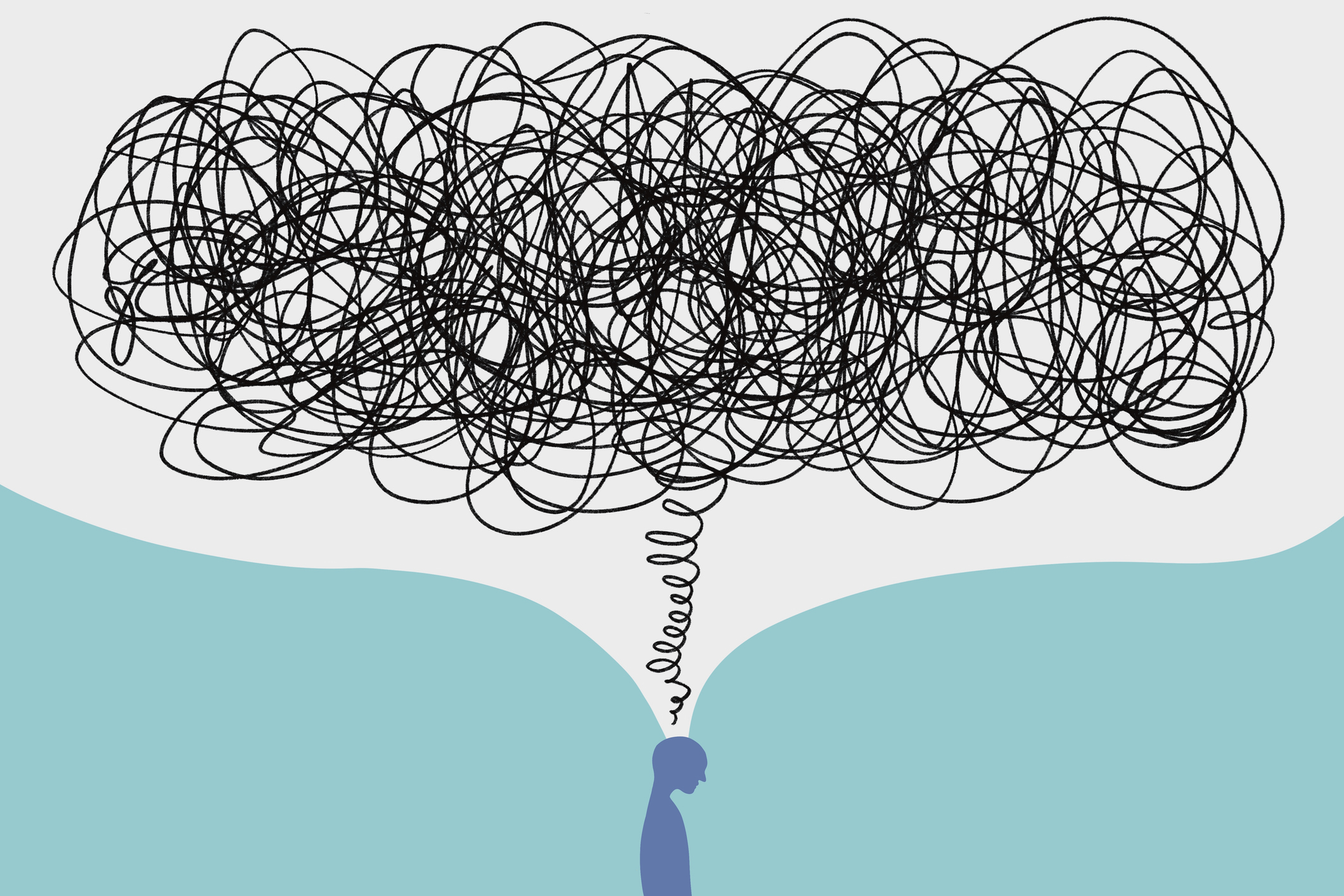
For most people, an unreturned text is a minor frustration—a sign that a friend or partner is busy and will respond eventually. For someone living with borderline personality disorder (BPD), that same silence can feel like evidence that something is terribly wrong.
“Your perceptions are off, and as a result of that you read signals in ways that are incorrect,” says Rebbie Ratner, who has BPD and directed the documentary Borderline, along with running the YouTube channel BorderlinerNotes. “And based on those incorrect reads, you react.”
That reaction might be a furious message—Why aren’t you texting me back? It’s so rude that you don’t think about me enough to respond—or a less-obvious freeze-out: pulling away, keeping score, deciding not to respond the next time the other person reaches out. “Not only am I not going to answer, I’m going to make them pay next time,” Ratner says, describing the pattern she lived inside for years. That might mean “sending zingers their way to try to wound them because they've wounded me.”
It’s the kind of pattern that gets misread constantly—written off as manipulation, drama, or someone being “too much.” Over time, it can wreck the very thing the person is trying to protect. “Do it enough, and you blow your relationships,” Ratner says. “You blow your ability to build connections. You get lonely. You lose your ties to people.”
BPD affects an estimated 2.4% of people globally. The condition is marked by intense emotional swings, a chronic feeling of emptiness, and a deep fear of abandonment. It's also one of the most misunderstood diagnoses in mental health—often confused with bipolar disorder, dismissed as a character flaw, or thought of as untreatable.
None of that is accurate. We asked experts and people with BPD to break down the most common myths about the condition—and what they wish more people understood.
Myth: People with BPD lack empathy
If anything, the opposite tends to be true. People with borderline personality disorder often feel other people’s emotions so deeply that those feelings become indistinguishable from their own.
“They are deep, deep feelers,” says Lauren Hunter, a psychotherapist in New York who treats BPD and whose father has the condition. “If somebody shared a devastating scenario, they would almost take on those feelings.”
That sensitivity may help explain why so many people with BPD are drawn to caregiving roles. “I see so many people in helping professions who have BPD,” says Sara Rose Masland, an associate professor of psychological science at Pomona College in Claremont, Calif., who specializes in BPD. “Nurses, vets, vet techs—professions where they're trying to help others.”
Part of why this myth persists, Masland says, is that the hardest moments are the most visible ones. Someone in the grip of intense emotion might lash out or say something cutting, and that can be mistaken for not caring. “It’s not coming from a place of actually trying to hurt anyone else,” she says. “It’s coming from this place of dysregulation.”
Myth: People with BPD are manipulative or attention-seeking
The phrase “attention-seeking” gets thrown around constantly in discussions about borderline personality disorder—but experts say it obscures what’s actually happening.
“Something that may seem like attention-seeking might actually be help-seeking,” says Priscilla María Gutiérrez, a mental-health advocate in Sarasota, Fla., who was diagnosed with BPD in 2018. “Safety-seeking. Connection-seeking. Relief-from-pain seeking.”
Behaviors that look dramatic from the outside—late-night texts, over-the-top exits, even self-harm—are often attempts to manage emotions that feel intolerable. “Self-harm actually has a function for that person to decrease that painful emotional intensity,” Masland says. The person might be trying to stop someone from leaving, distract themselves from overwhelming panic, or make their pain visible enough that someone finally responds.
The cycles Ratner fell into with romantic partners—lashing out, then apologizing, then resenting herself for apologizing—often looked, from the outside, like calculated efforts to manipulate. “I don’t think that’s what was going on,” she says. “It was much more about doing behaviors to assist in regulating and managing my feelings.”
Myth: Everyone with BPD acts the same
The cultural image of borderline personality disorder—loud, volatile, Winona Ryder in Girl, Interrupted—captures only one possible presentation of a much more varied condition. According to the Diagnostic and Statistical Manual of Mental Disorders, a person needs to meet at least five of nine criteria to receive a diagnosis, which means there are hundreds of possible symptom combinations. The criteria include frantic efforts to avoid abandonment, having unstable relationships, identity disturbance, impulsive behavior, chronic feelings of emptiness, intense anger, emotional instability, paranoia or dissociation under stress, and recurrent suicidal behavior or self-harm.
“Not everyone is going to have the same five out of nine,” Gutiérrez says. Her own presentation was what some clinicians informally call “quiet BPD”—the volatility turned inward rather than outward. “My outbursts were kind of rare but very intense,” she says. “A lot of it was internal. I took it out on myself.” She has never attempted suicide, she notes, though suicidal ideation and self-harm are common among people with the condition.
That variation is part of why the diagnosis is often missed. Someone whose symptoms don’t match the popular image—throwing things during arguments, screaming at partners, storming out of rooms—may go years without anyone recognizing what they’re experiencing. “From different people that I’ve met,” Gutiérrez says, “none of us are the same.”
Myth: BPD is just another name for bipolar disorder
The two conditions get confused all the time—partly because of the similar acronyms, and partly because both involve intense mood shifts. But they’re fundamentally different, and the distinction matters because the treatments aren’t the same.
“Bipolar disorder is a disorder of mood regulation, and borderline personality disorder is a disorder of personality,” Hunter says. People with bipolar disorder cycle through extended periods of mania and depression, often accompanied by grandiosity or elevated self-esteem during manic phases. People with BPD, by contrast, often struggle with a persistent sense of emptiness and low self-worth, she says. And their emotional swings are more likely to be set off by something that happens—a perceived rejection, a fight, an unanswered text—than by an internal mood cycle.
Myth: BPD is always caused by childhood trauma
Trauma is a major risk factor for BPD; many people with the condition have experienced physical, sexual, or emotional abuse. But it doesn’t apply to everyone, and assuming it does can create problems of its own.
“This is not necessarily a trauma disorder,” Masland says. What’s more consistent, she explains, is a pattern of chronic emotional invalidation—growing up in an environment where big feelings were dismissed, minimized, or punished rather than helped. “You can imagine a child who has baseline high emotional intensity,” she says, “and the parent is not equipped to help with that emotional intensity. They may do things that are well-meaning, but still invalidate the child.”
The messages aren't always intentionally cruel. Sometimes they sound like attempts to calm a child down: It's not a big deal. Don't make such a fuss. But over time, they teach kids that their emotions aren’t legitimate, Masland says, and as a result, they never develop the tools to manage what they’re feeling.
That nuance also matters for how families approach treatment. If clinicians assume abuse where there wasn't any, it can derail recovery and falsely indict parents who were trying their best. “Symptoms make sense even without a significant trauma,” Masland says. “Even that well-meaning chronic invalidation can create these kinds of problems.”
Myth: People with BPD can’t have healthy relationships
Relationships can be especially challenging for people with BPD; the fear of abandonment runs so deep that even small ruptures can feel catastrophic. But the idea that healthy connection is off the table is wrong.
“These are people who deeply care about relationships,” Masland says. “That fear of abandonment comes from a place of really caring about interpersonal connections.” With the right treatment, she adds, many people with BPD build meaningful relationships—and developing the skills to maintain them is often a central piece of recovery.
Gutiérrez, who has done years of dialectical behavior therapy (DBT, the most effective treatment for the disorder), says she had to work hard at the relationship skills most people absorb in childhood. “We feel things deeply, and so it’s not that we’re incapable of loving or learning boundaries or learning how to regulate our emotions,” she says. “It’s just that we didn’t really have that foundation growing up. But we’re more than capable of growing and learning and healing.”
Myth: BPD only affects women
About 75% of people diagnosed with borderline personality disorder are women, but research suggests the condition actually affects men and women at roughly the same rates.
“When we look at good epidemiological studies, it actually turns out that the prevalence is equal for men and women,” Masland says. “It’s just that men are not getting the diagnosis.” Men, she explains, are less likely to seek treatment in the first place—and when they do, clinicians often default to other diagnoses because the cultural image of BPD is so heavily gendered. Pete Davidson and former NFL player Brandon Marshall are two of the few male public figures who have spoken openly about having the condition.
Myth: BPD can’t be treated
DBT is the gold-standard treatment for borderline personality disorder. The approach was developed by psychologist Marsha Linehan (who has publicly disclosed her own BPD diagnosis). It’s intensive—typically at least 24 weeks—but the results are striking. Research has found that after a year of DBT, the majority of patients no longer meet the criteria for a BPD diagnosis.
At its core, DBT teaches skills that many people with BPD never had the chance to learn. It’s “a whole curriculum of distress tolerance, of coping skills, of how to talk to people—just really foundational human skills,” says Gutiérrez, who began DBT shortly after her diagnosis. Combined with medication and ongoing therapy, she says, the work has been transformative. “I would describe my BPD as in remission. If a psychiatrist were to analyze me, I wouldn’t meet the criteria.”
The behavioral symptoms—like self-harm, impulsivity, and extreme mood swings—tend to improve first, Masland says. More internal symptoms, like chronic emptiness and an unstable sense of self, take longer to shift. “It can take ongoing work for years, because this is a really severe mental illness,” she says. “But there are people who make really fantastic recoveries from BPD. It’s definitely treatable.”
Ratner especially appreciates learning how to question her initial reactions. “One of the core capacities that’s brought forth when one gets treatment is learning how to cast doubt into your perceptions,” she says. The unreturned text she once read as rejection? Now she can pause to consider other possibilities—her friend was busy, didn’t see the message as urgent, or simply didn’t get to it yet.
And she refuses to let stigma slow her recovery down. “It is really not my business what other people think about [BPD] or me,” she says. “I will be damned if I am to be distracted by their opinion of it to the extent that it in any way impacts my efforts at recovery.”