
阅读视图

Trump Cancels Iran Peace Talks at Last Minute: 'We Have All the Cards'
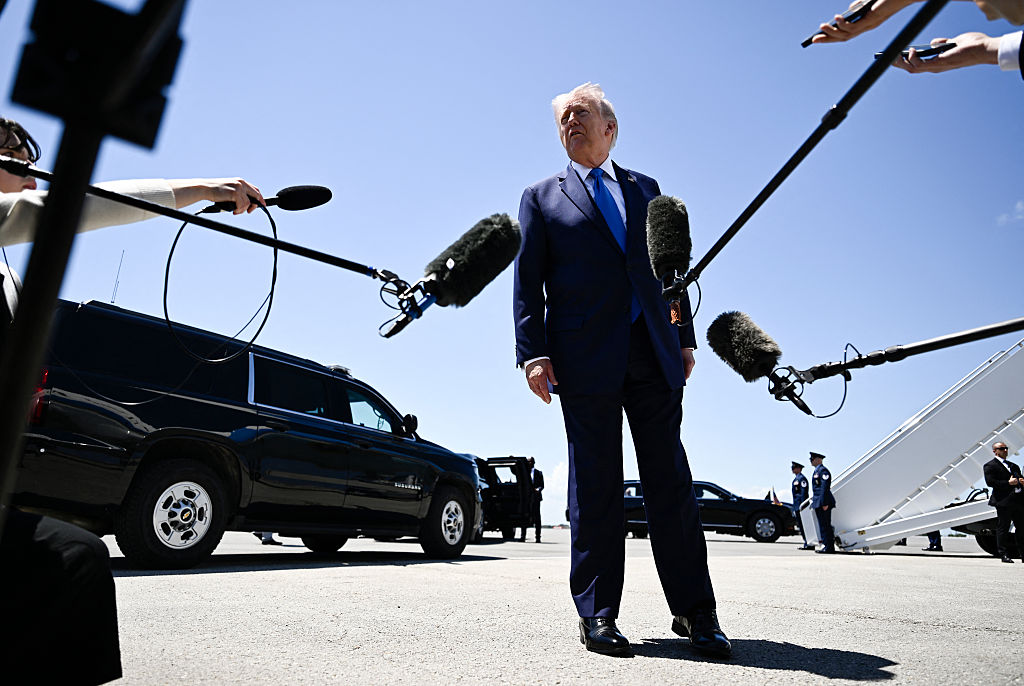
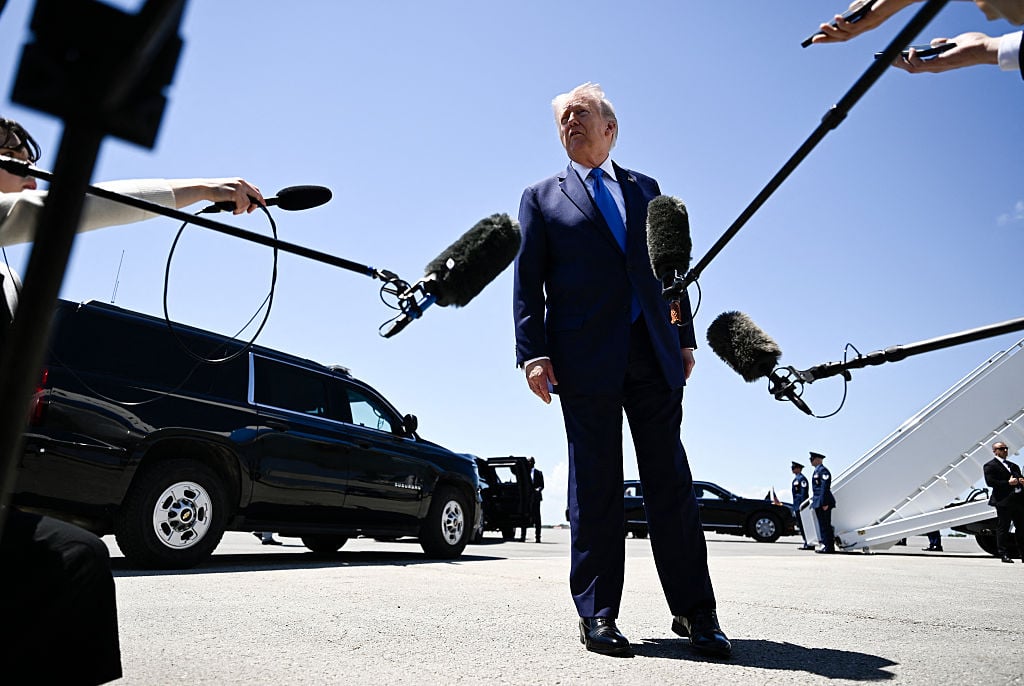
US President Donald Trump speaks to journalists before boarding Air Force One at Palm Beach International Airport in West Palm Beach, Florida, on April 25, 2026. President Trump is on his way back to Washington where he will be attending the White House Correspondents' dinner for the first time while in office —Kent NISHIMURA—AFP

President Donald Trump abruptly canceled plans for U.S. envoys to travel to Pakistan for peace talks with Iran on Saturday, throwing the latest round of negotiations aimed at ending the war in doubt. 

Special envoy Steve Witkoff and Jared Kushner, the president’s son-in-law, were due to travel to Islamabad for talks with Iranian leaders later Saturday, but Trump called them off at the last minute, blaming “infighting” among Iran’s leadership.

“Too much time wasted on traveling, too much work!” he wrote on Truth Social. “Besides which, there is tremendous infighting and confusion within their ‘leadership.’ Nobody knows who is in charge, including them.”

“Also, we have all the cards,” he wrote.

Read more: Tehran Says 'No Decision Yet' on Joining Peace Talks as Iranian President Flags Distrust of Washington

He reiterated that point when speaking to reporters in West Palm Beach on Saturday before boarding Air Force One.

“We have all the cards. We’re not going to spend 15 hours in airplanes all the time, going back and forth, to be given a document that was not good enough,” he said, adding that Iran could just “call” the U.S.

The news comes a day after White House press secretary Karoline Leavitt told Fox News that the president directed the duo to fly to Pakistan for in-person talks as the conflict nears two months, and a tentative cease-fire was extended by Trump this past week. Leavitt said there had been some progress with the Iranians in recent days and the Administration had been hoping for further movement after Witkoff and Kushner’s meetings.

But hours before they were due to depart, Iranian Foreign Minister Abbas Araghchi left Islamabad for Oman after negotiating for almost a full day with Pakistani officials, who have become unlikely peace brokers between the two sides in the war.

He said in a post on X after leaving that Iran has  “yet to see if the U.S. is truly serious about diplomacy.”

Trump’s cancellation of the trip is the second time in a week he has called off a planned trip by U.S. officials. Vice President J.D. Vance was expected to travel to Islamabad earlier this week, but the trip was canceled at the last minute.    

Meanwhile, Israel has continued its assault on southern Lebanon, intensifying on Saturday with two raids in the Nabatieh district and killing four people.

Israeli Prime Minister Benjamin Netanyahu’s office said in a statement that he had instructed the military to carry out “powerful strikes” against Hezbollah targets in Lebanon, despite a cease-fire being in place.

The Strait of Hormuz is still closed

Iran’s control of the Strait of Hormuz has become central to the negotiations aimed at ending the war. Iran has effectively closed the Strait, through which one-fifth of the world’s oil flowed before the fighting began, allowing only its allies to traverse the vital waterway, and others if they paid a toll. The U.S. has since imposed its own blockade on all traffic in an attempt to pressure Iran to open the Strait.

Shipping data on Friday shows that just five ships sailed through the Strait, a far cry from the more than 130 ships that would pass through before the war began on Feb. 28. The Strait’s closure has caused a global energy crisis and a wave of fuel rationing.

Oil prices have risen by more than 11% in the past week as diplomacy has failed to end the conflict, and Brent crude futures rose to more than $105 a barrel in early trading on Friday.
© Kent NISHIMURA—AFP
US President Donald Trump speaks to journalists before boarding Air Force One at Palm Beach International Airport in West Palm Beach, Florida, on April 25, 2026. President Trump is on his way back to Washington where he will be attending the White House Correspondents' dinner for the first time while in office
  •  

Argentina Eyes the Falklands Again. This Time, the U.S. May Not Back Britain

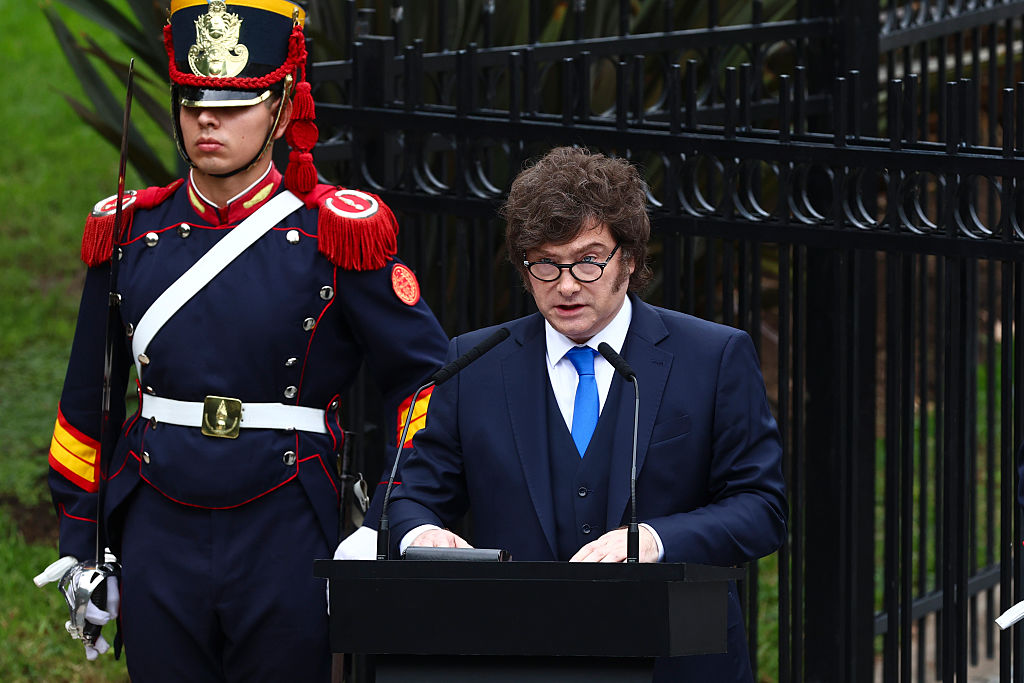
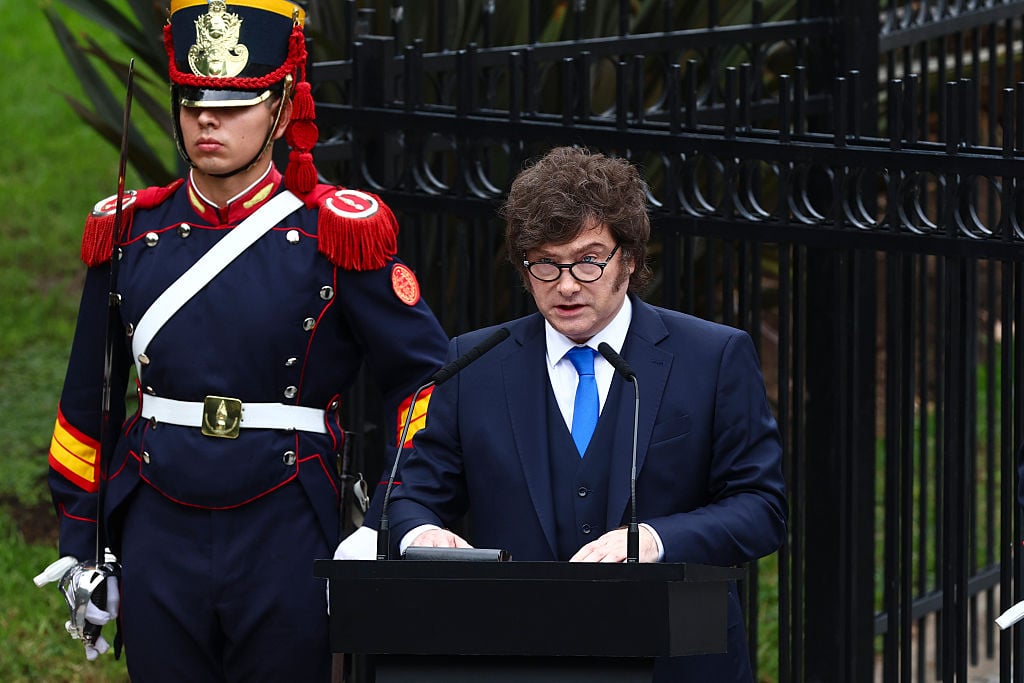
Argentina's President Javier Milei attends a ceremony to honor victims of the 1982 war between Argentina and Britain in the Malvinas Islands, marking the 44th anniversary of the conflict, in Buenos Aires, Argentina, on April 2, 2026. —Matias Baglietto—NurPhoto via Getty Images

Argentine President Javier Milei has launched a new effort to claim control of the Falkland Islands, reigniting a long-standing dispute with the United Kingdom over the archipelago, which once led to war. 

"THE MALVINAS WERE, ARE, AND ALWAYS WILL BE ARGENTINE,” Milei said on X in Spanish on Friday, using the Argentine name for the islands.  

In a separate interview with the Argentine digital channel Neura posted by Milei on Friday, he said that the country was doing “everything humanly possible” to return the Falklands to Argentina. 

Read More: Falkland Islands: A Melancholy Anniversary

“Sovereignty is non-negotiable, but it must be handled judiciously, with brains,” said Milei, a staunch ally of President Donald Trump. 

The Falkland Islands are a small group of islands some 300 miles east of Argentina, with a population of around 3,600. 

Both Britain and Argentina have historic claims to the islands, and the two countries fought a short but fierce war in 1982 after Argentina tried to seize control of them. Argentina eventually surrendered in June of that year after at least 900 people were killed.  

Milei’s renewed push for Argentine control of the islands comes after it emerged that the United States is considering a review of its support for the U.K.’s historic claim to the islands. 

Relations between the U.S. and the U.K. have been strained since European and NATO allies refused to provide aid to America and Israel’s war with Iran. According to an internal Pentagon email reported by Reuters, the U.S. is considering a review of U.S. diplomatic support for European countries’ "imperial possessions," such as the ⁠Falkland Islands, in response. 

Prime Minister Keir Starmer’s official spokesman said on Friday that the Falklands’ “sovereignty rests with the U.K.” and that “the islanders' right to self-determination is paramount.”

“We've expressed this position previously clearly and consistently to successive U.S. administrations and nothing is going to change that,” he added. 

That position has support across the aisle in Britain. Kemi Badenoch, leader of the opposition Conservative Party, said, “The Falklands are British. Full stop.”

“We fought for them when it mattered most and paid the price,” she continued on X. “And because the islanders have chosen it, clearly and repeatedly.”

The State Department currently recognizes the U.K.’s sovereignty over the islands, but Trump’s relationship with London has soured in recent months. 

Trump wants to punish NATO for its lack of support in the Iran War

The leaked Pentagon memo, prepared by Elbridge Colby, the Pentagon's top policy adviser, cites a “sense of entitlement” among NATO allies that Trump is looking to punish.

Trump has expressed his frustration with NATO allies publicly over their refusal to join the Iran War, warning them of a “very bad” future if they did not help him open the Strait of Hormuz. When Europe called for resistance and declined to send warships to the Strait, he called NATO “useless.”

Read More: Leaving NATO Would Be National Self-Sabotage

Trump’s words prompted a response from Starmer, who said he was “fed up” with people in the U.K. struggling to pay  for gas and energy bills ever since the war sparked a worldwide energy crisis, raising prices across the world.

“Whatever the pressure on me and others, whatever the noise, I'm going to act in the British national interest in all the decisions that I make, and that's why I've been absolutely clear that this is not our war, or we're not going to get dragged into it,” Starmer said during a press briefing on April 1, justifying his decision not to contribute to the attack on Iran

Argentina and the U.K. fought a war over the islands

The competing claims to the island date back hundreds of years, to a period when the British Empire stretched across the world. 

The archipelago, which lies 8,000 miles away from the British Isles, was settled by the British in the mid-18th century. Britain withdrew amid a power struggle with Spain over control of the islands. When Argentina declared independence from Spain in 1816, it claimed sovereignty over the islands and established a small settlement there in the 1820s.

Eventually, the British expelled Argentina from the islands in 1833 and established the Falklands as an official colony. 

Argentina never gave up its claim to the islands, and in 1982, Argentina’s military junta, led by Lieutenant General Leopoldo Galtieri, launched an effort to recapture them.   

Galtieri saw his chance when Argentine scrap metal workers occupied and raised the Argentinian flag at an abandoned whaling station on the British territory of South Georgia, a small island east of the Falklands. When they refused British orders to leave, Argentina sent warships ostensibly to protect the workers. The U.K. sent its own naval vessel in response. 

Believing the U.K. would not respond militarily, and facing an economic crisis and mass protests at home, Galtieri ordered a full-scale invasion to retake the islands on April 2, 1982. 

British Prime Minister Margaret Thatcher's government then sent its own naval task force to recapture them.

A war ensued between Argentina and the U.K. over control of the Falkland Islands, with the U.S. under President Ronald Reagan backing Britain.

After a 74-day conflict, Argentina eventually surrendered to British forces. Some 900 people died in the war, including 649 Argentines, 255 British troops and three civilian islanders.

© Matias Baglietto—NurPhoto via Getty Images

Argentina's President Javier Milei attends a ceremony to honor victims of the 1982 war between Argentina and Britain in the Malvinas Islands, marking the 44th anniversary of the conflict, in Buenos Aires, Argentina, on April 2, 2026.
  •