
阅读视图

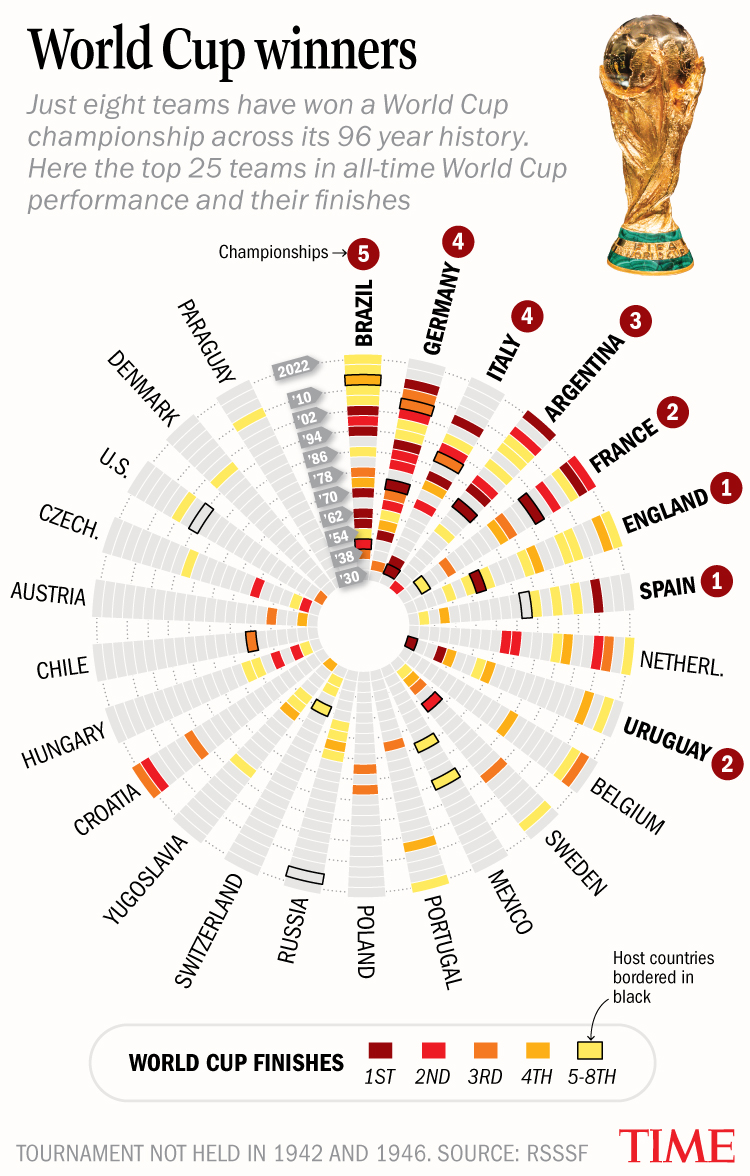
What You Need to Know About the 2026 World Cup Final Halftime Show
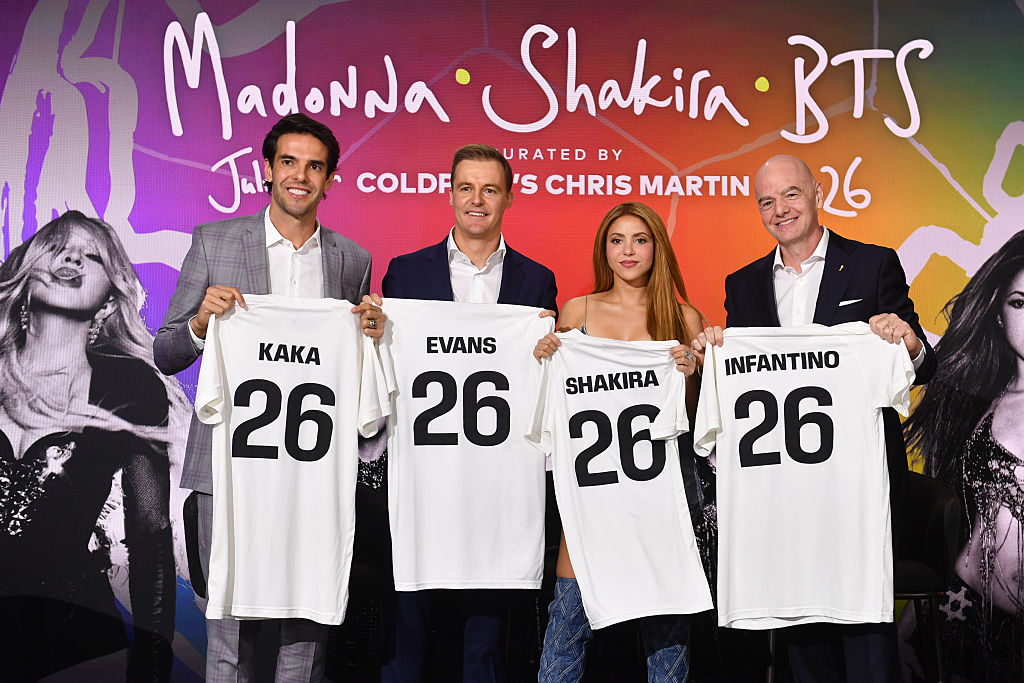
Kaká, Hugh Evans, Founder & CEO of Global Citizen, Shakira, and FIFA president Gianni Infantino appear at the announcement of the FIFA World Cup final halftime show in New York City on on May 14, 2026. —Noam Galai––Getty Images for Global Citizen

For the first time ever, the FIFA World Cup final will feature a star-studded halftime show.

In what is being compared to a Super Bowl spectacular, the performances are set to be broadcast live to millions of soccer fans.

The 2022 final in Qatar was the most-watched in FIFA World Cup history, attracting 1.5 billion viewers around the world. This year’s final in New Jersey is expected to break those records.

Curated by Coldplay’s Chris Martin, the halftime show will support the FIFA Global Citizen Education Fund.

FIFA president Gianni Infantino has promised “a historic moment for the World Cup and a show befitting the biggest sporting event in the world.”

With the World Cup underway in its three host countries—Canada, Mexico, and the U.S.—here’s what you need to know about the final’s hotly-anticipated halftime show.
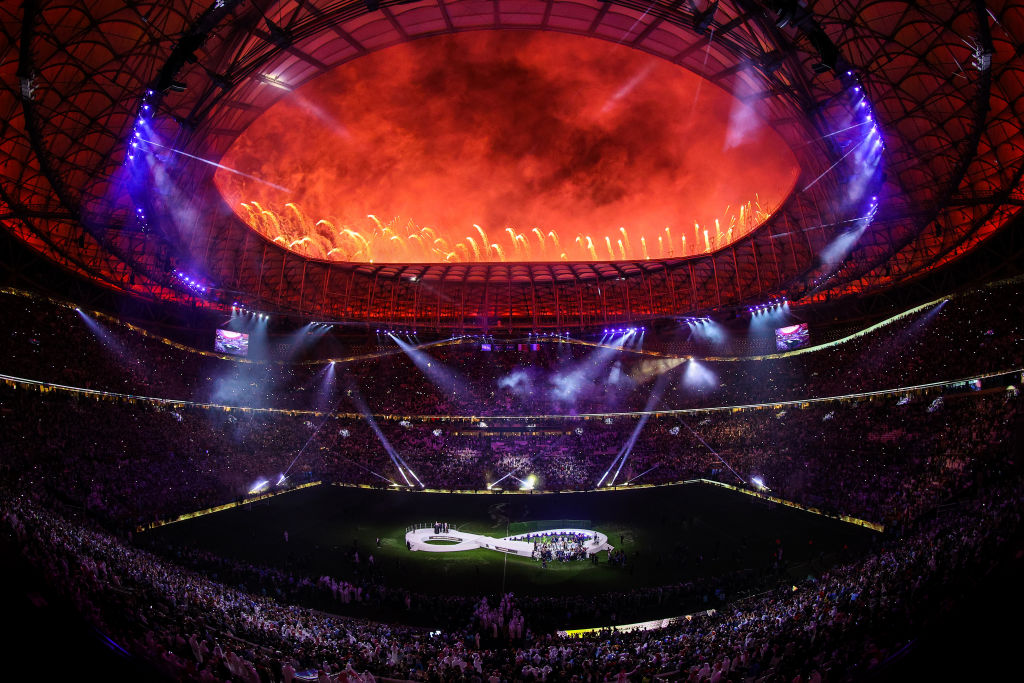
Fireworks go off at the FIFA World Cup Qatar 2022 final match between Argentina and France at Lusail Stadium on Dec. 18, 2022. —Richard Heathcote––Getty Images

When is the World Cup final halftime show—and how can I watch it?

The show will take place during the FIFA World Cup final which is set to start at 3 p.m. ET on Sunday, July 19.

It’s happening at the MetLife Stadium in New Jersey, which is temporarily being called the New York New Jersey Stadium due to the World Cup’s rules on endorsements.

In the United States, viewers will be able to watch the show live on Fox Sports, with the match airing on the FOX network.

Spanish-language viewers can watch through NBCUniversal’s Peacock streaming service with a Premium or Premium Plus subscription. The match will also air on Telemundo.

New York City Mayor Zohran Mamdani has announced a free World Cup final watch-party for 50,000 New Yorkers.

“You don’t need to drop thousands of dollars to watch the World Cup final. And you don't need to be a professional to play in the World Cup. You just need to head to Central Park,” Mamdani said.
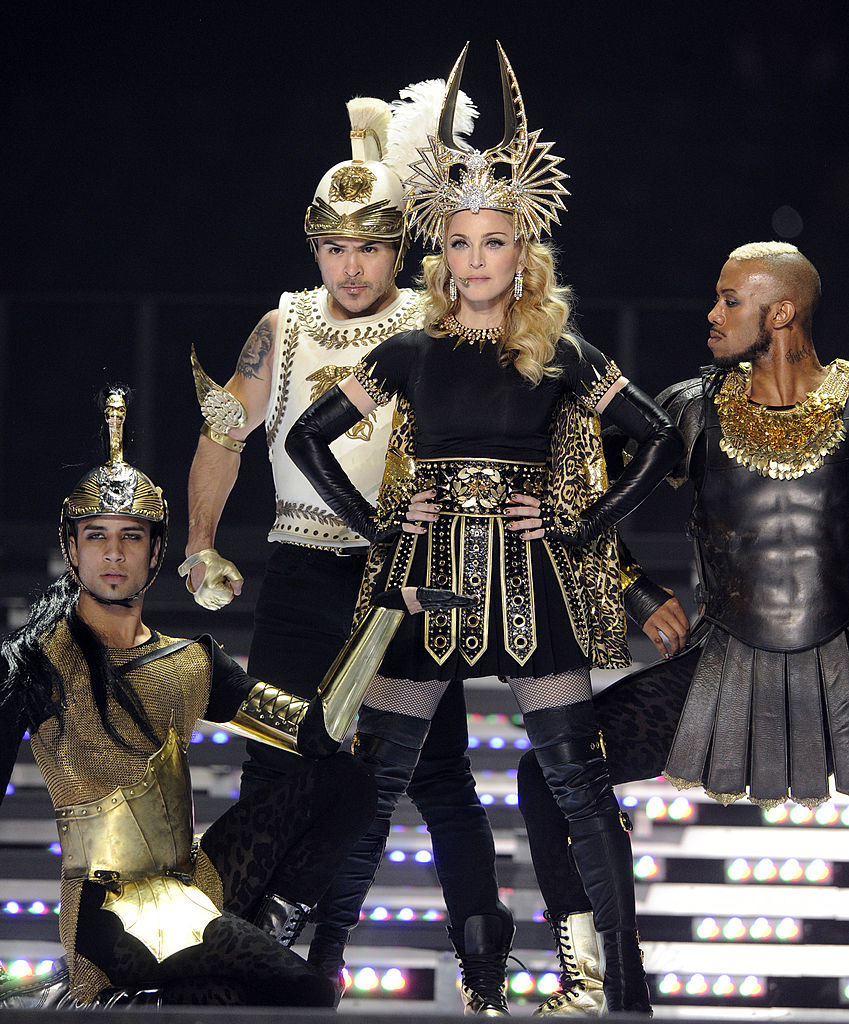
Madonna performs during the Super Bowl at Lucas Oil Stadium in Indianapolis, Indiana, on Feb. 5, 2012. —Kevin Mazur––Getty Images

Who is performing at the FIFA World Cup halftime show?

The show will be co-headlined by Shakira, Madonna, and K-pop supergroup BTS.

Shakira, who also led the line-up for the tournament’s opening ceremony in Mexico City on June 11, serves on the advisory board of the FIFA Global Citizen Education Fund.

Shakira and Nigerian singer-songwriter Burna Boy partnered up for this year’s official World Cup anthem, “Dai Dai.” 

Royalties from the song will support the education fund, with Sony Music pledging to match the first $250,000 raised with a donation.

Shakira will be joined by the Ghetto Kids, a Ugandan dance troupe that rose to prominence following appearances on America’s Got Talent in 2024.

Shakira is no stranger to either the World Cup or halftime performances.  In 2010, she cemented her place in soccer culture with Waka Waka, the chart-topping anthem of that tournament. 

A decade later, she headlined the Super Bowl halftime show alongside Jennifer Lopez.

Madonna also has experience leading a halftime event, as she famously headlined the 2012 Super Bowl show.

BTS, the seven-person K-pop group who recently returned to the scene following a three-year hiatus to complete mandatory military service obligations, will be taking the night off from their global tour to perform at the soccer event of the year.
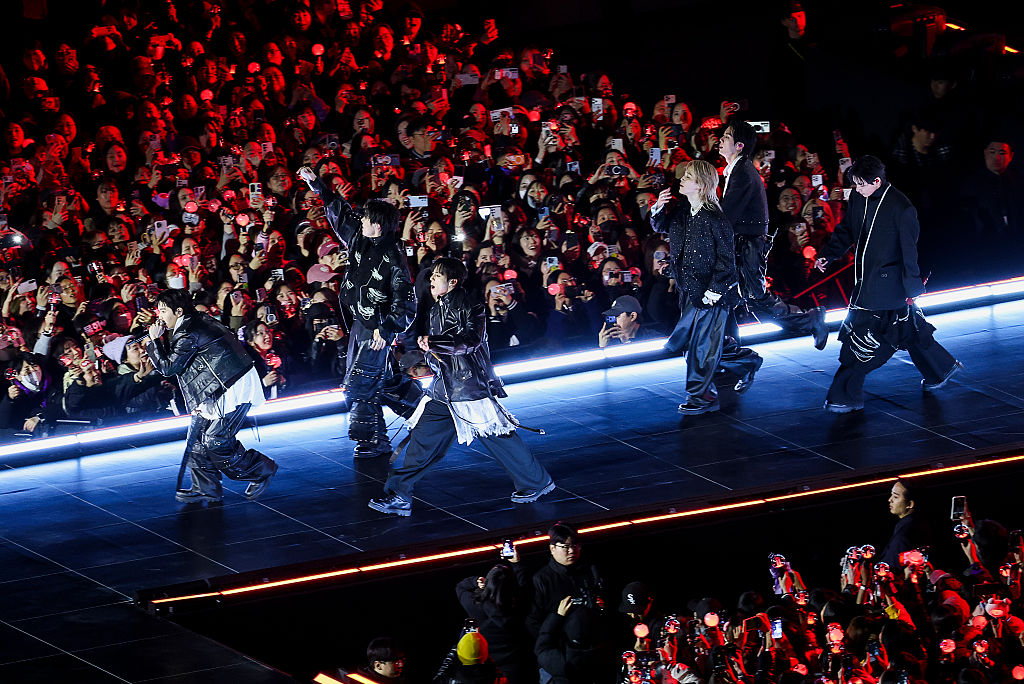
K-pop boy band BTS perform onstage during comeback concert at Gwanghwamun Square in Seoul, South Korea, on March 21, 2026. —Kim Hong-Ji––Getty Images

Why has Global Citizen partnered with FIFA—and how is Chris Martin involved?

The FIFA Global Citizen Education Fund aims to support grassroots programs in more than 200 countries, expanding access to education and soccer.

The initiative is “aiming to raise $100 million to expand access to quality education and football [soccer] opportunities for children worldwide.” 

Global Citizen has previously partnered with governments, businesses, and entertainers on large-scale fundraising efforts, such as the Stand Up for Ukraine event launched in 2022.

Martin became involved after he reached out to the initiative during the previous World Cup. 

“Four years ago, at the time of the Qatar World Cup, Chris Martin called me and said, ‘wouldn’t it be amazing if we could do a halftime show for the World Cup, because it is this moment that brings all of humanity together,’” explained Global Citizen CEO Hugh Evans.

When asked whether Martin himself would perform at the halftime show, Evans did not confirm either way, but said that the audience is in “for some big surprises.”
—Eva Marie Uzcategui—Getty Images

International hesitations over the halftime show

British television networks BBC and ITV, which are broadcasting the World Cup for U.K. fans, are reportedly considering not airing the halftime show in real-time. 

Instead, the broadcasters are expected to stick with their traditional format of using the slot to air commentary from pundits analyzing the first half of the match.

The performances would instead be viewable via the networks’ respective digital platforms.

The interval for soccer matches is typically timed to 15 minutes. It’s understood FIFA has yet to confirm exactly how long the halftime show will be.

TIME has contacted the BBC and ITV for comment.
  •  

Trump Says He Has 'Canceled' Strikes Against Iran After Threatening 'Very Hard' Attack

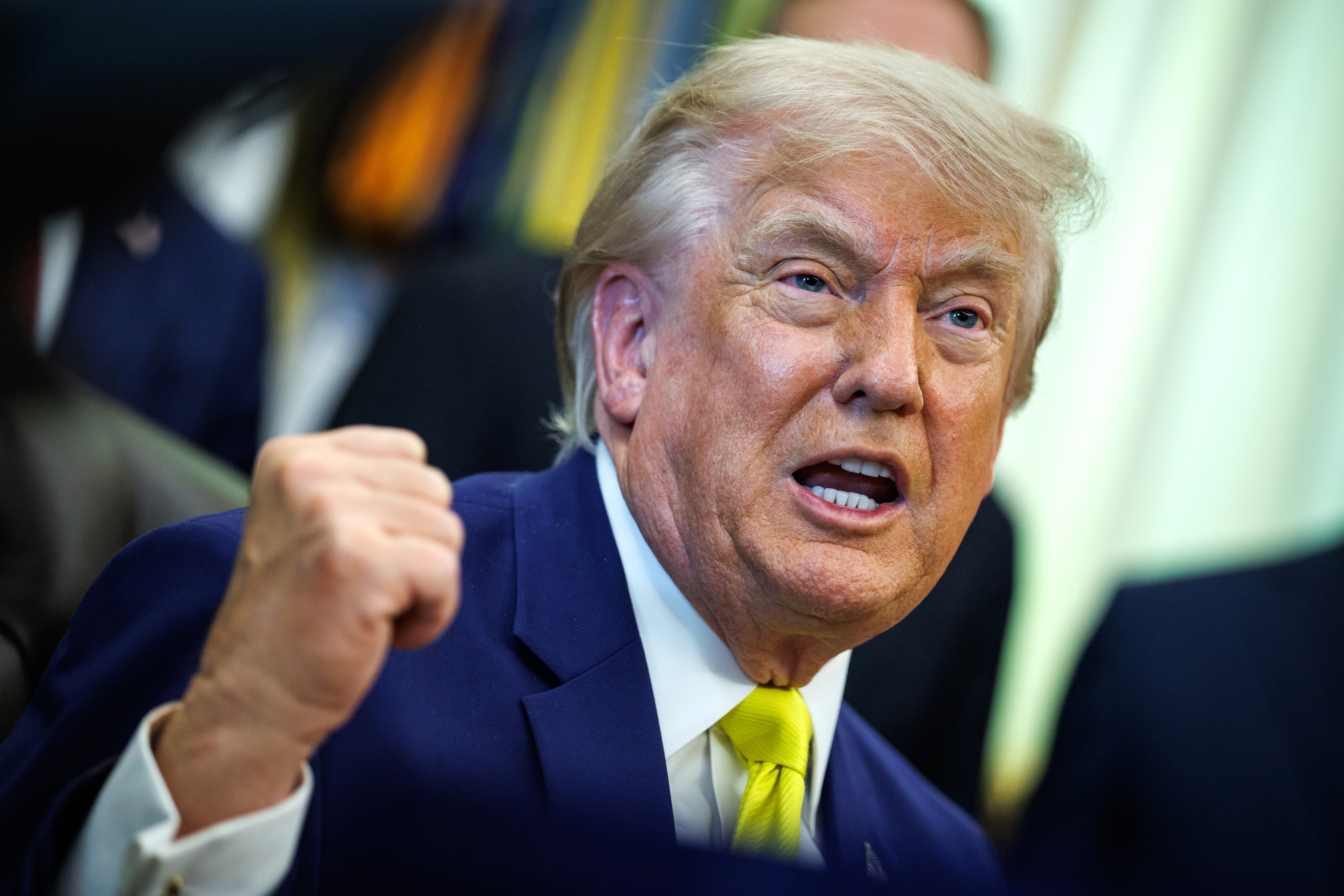
President Donald Trump in the Oval Office of the White House in Washington, D.C., on June 4, 2026. —Samuel Corum—Getty Images

President Donald Trump said he has canceled strikes planned against Iran on Thursday, citing progress in the peace deal negotiations.

"Based on the fact that discussions with the Islamic Republic of Iran have been brought to the highest level of Iranian leadership and approved, I have, as President of the United States of America, canceled the scheduled strikes and bombings against Iran this evening," he said.

Trump added that "discussions and final points" have been approved by all parties involved, including the U.S., Israel, Saudi Arabia, UAE, Qatar, Turkey, Pakistan, Bahrain, Kuwait, Jordan, and Egypt.

The U.S. naval blockade of the Strait of Hormuz will remain in effect until after the deal is finalized, he said, with further details of the signing set to be "announced shortly."

Iranian officials have yet to comment on Trump's assertion that a long-awaited deal is imminent. Iran has also yet to publicly make any major concessions related to its nuclear capabilities, nor has it retreated on its ambition to manage naval navigation in the Strait of Hormuz.

Trump's course reversal came hours after he vowed to hit "Iran very hard tonight" and threatened to take control of the country’s oil infrastructure.

“At some point in the not too distant future, we will be taking Kharg Island and other oil infrastructure points, and assume total control of their oil and gas markets,” warned Trump, likening the plan to what the U.S. has done in Venezuela.

This isn't the first time Trump has singled out Kharg Island in the Persian Gulf, which serves as Iran’s main oil terminal. The U.S. bombed targets on the island in March to serve as a warning to Tehran, without striking the oil infrastructure.

Tehran responded to Trump's earlier threats with strongly-worded cautions, advising against further strikes.

Iran's top joint military command warned “either oil ‌and ⁠gas exports are for everyone or they will be available ​for ​no ⁠one,” in a statement carried by state media.

The command said any further strikes from the U.S. would receive a stronger response than before, leading to insecurity in the ​region.

Iran’s parliament speaker Mohammad Ghalibaf also said that any targeting of infrastructure would offset an “endless quagmire."

The prospect of a finalized agreement comes after two days of tit-for-tat strikes between Washington and Tehran in the Middle East region.

U.S. Central Command (CENTCOM) forces launched what it called “self-defense strikes” against Iran on Tuesday, after holding Tehran responsible for the downing of a U.S. Army helicopter over the Strait of Hormuz.

Iran retaliated with strikes targeting U.S. bases across Jordan and several Gulf nations, renewing concerns of instability in the region and testing the already fragile cease-fire.

Hostilities continued to escalate into the early hours of Thursday morning, as Trump argued Tehran had “taken too long to negotiate a deal” and would “have to pay the price.”

Is the Strait of Hormuz closed?

Tehran’s Persian Gulf Strait Authority (PGSA) declared the "complete" closure of the Strait on Thursday, blaming "tensions caused by the aggressive U.S. forces."

CENTCOM issued a rebuttal, insisting that the "Strait of Hormuz remains open for transit." Trump has maintained that the U.S. blockade of Iranian ports in the Strait will continue until a peace deal is finalized.

The PGSA is a body Iran set up to manage requests ​for passage through the Strait, in an effort to maintain its sway over the vital waterway, through which around a fifth of global oil production flows.

Iran's continued choke hold on the transit of oil and gas has upended the global economy, causing major instability to energy prices and supply needs.

Last month, the U.S. Treasury sanctioned the authority, stipulating that anyone cooperating ​with the body may be providing support to, and ‌receiving ⁠services from, Iran's Islamic Revolutionary Guard Corps, "which ultimately benefits from this attempted extortion, and may therefore be exposed to sanctions risk."

Treasury Secretary Scott Bessent issued a follow-up warning Thursday, stating that any "tolls paid to the Persian Gulf Strait Authority will be offset by funds extracted from their accounts. Every attack Iran launches will only deepen the economic and financial consequences it faces."

  •