普通视图

Received today — 2026年6月13日未分类

What to Know About the States Skipping Trump’s ‘Great American State Fair’
2026年6月13日 05:06
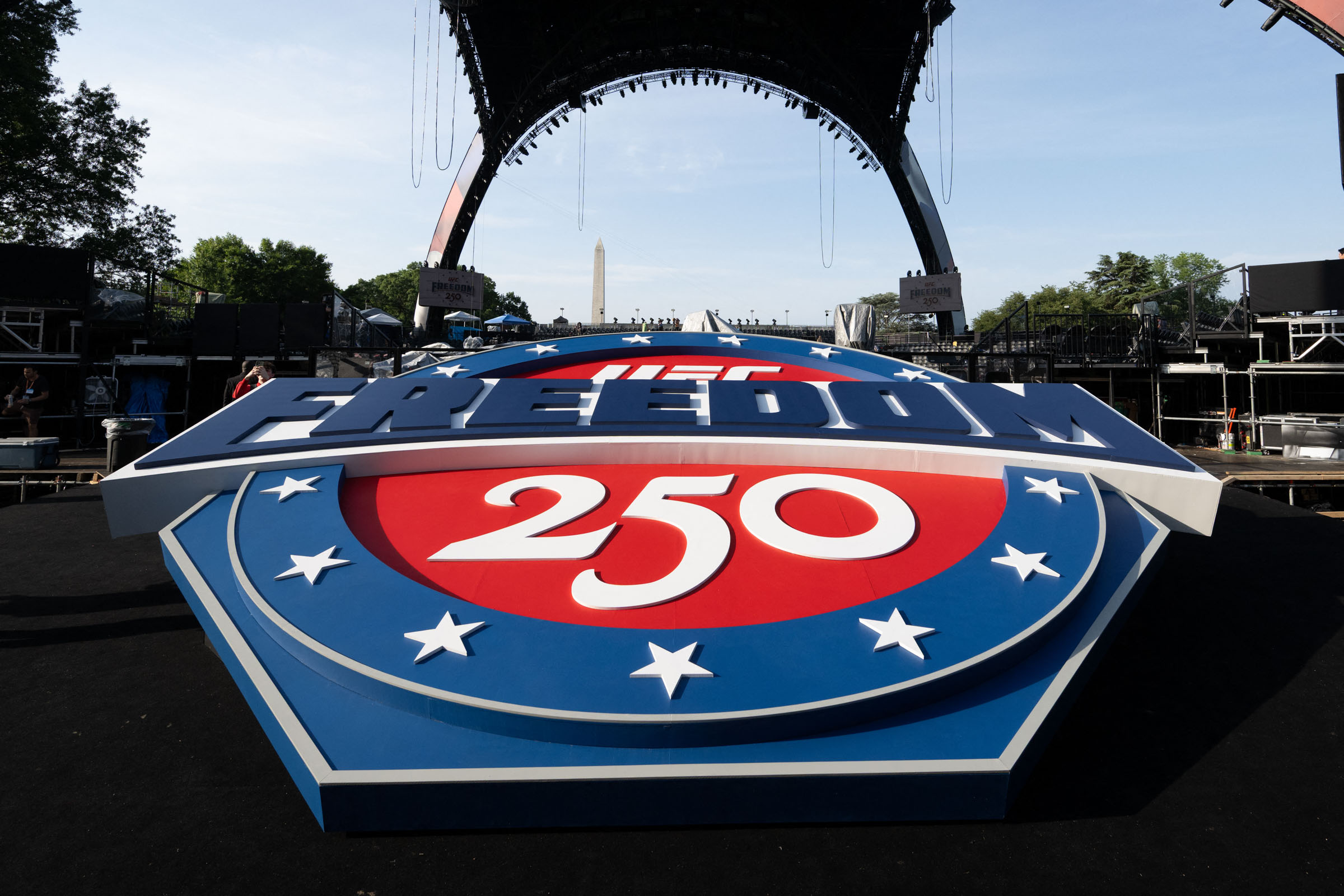
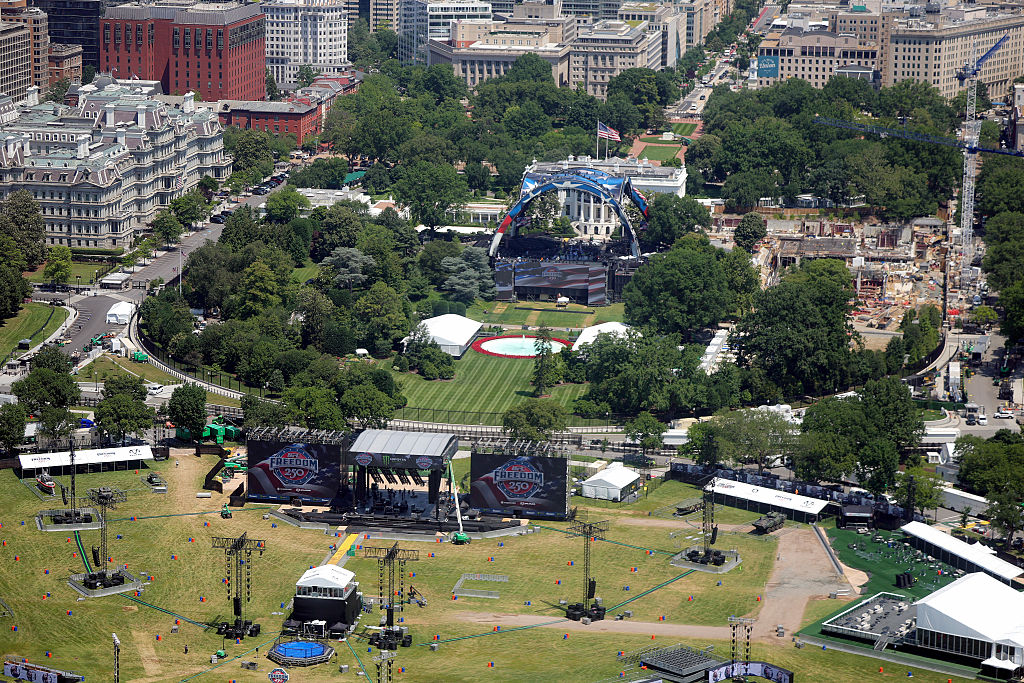
Preparations continue for the Ultimate Fighting Championship Freedom 250 event on the White House South Lawn on June 12, 2026 in Washington, DC. President Donald Trump is hosting a series of fighting matches on the South Lawn on Flag Day and his 80th birthday, June 14, which the White House is calling "a once-in-a-generation celebration of the American fighting spirit." —(Photo by Kevin Dietsch/Getty Images)

One of President Donald Trump’s signature plans for celebrating the country’s 250th birthday is the “Great American State Fair,” a 16-day showcase on the National Mall meant to feature every state and territory. But days before the event is set to begin, several states have declined to participate. 

Read more: The White House UFC Event Is Costing $60 Million

At least eight states—Connecticut, Illinois, Massachusetts, North Carolina, Maine, Oregon, Washington, and Pennsylvania—have said they will not take part in the fair, according to statements from state officials or comments to media outlets.

The reasons vary. Some states have cited budget concerns, while others have declined without offering a detailed explanation, even as they pledged to hold their own in-state celebrations.

Still, organizers say every state will be represented in some form at the fair. 

“Whether represented by a governor’s office, a tourism board, or a beloved state company or organization, every community will be celebrated, and every American will see themselves in this once-in-a-generation event,” a spokesperson for Freedom 250, a federal taskforce organizing the celebration, said in a statement. 

The fair, organizers say, will “showcase the very best of America” through more than 150 exhibits put on by the 56 states and territories. Trump has described the fair—which will begin on June 25—as “an enormous year-long nationwide celebration of our heritage.” Another planned event—a UFC fight on the White House grounds—has caused controversy.  

Here is what to know about the states that have opted out.

Massachusetts

Massachusetts Gov. Maura Healey’s office confirmed to TIME that the state would not be attending, but declined to provide a reason for the decision. 

Healey, a Democrat and frequent critic of Trump, has expressed frustration with the President’s handling of the anniversary celebrations, particularly the expectation that states pay to participate. 

In an interview with Boston Public Radio, Healey said Trump is “too busy with his Great American State Fair down there that everybody’s bailing on… He invited all the states to participate and wants to charge us—charge us!—to put something on his exhibit, whatever he’s creating for Freedom 250. It’s just ridiculous. This is taxpayer money.”

Oregon

Oregon Gov. Tina Kotek's office told KATU, an ABC affiliate, in a statement that the state withdrew due to “the cost of participating in the Fair and growing concerns that the event in Washington, D.C. is shaping up to be a more partisan affair than originally presented."

Though like other states, Oregon plans to host its own celebrations for the country’s birthday.

"The Governor will still be proudly celebrating America's semiquincentennial here in Oregon and is looking forward to all of the great exhibitions and events the America 250 Oregon Commission will be planning through the summer and beyond," the statement continued.

North Carolina

North Carolina has also opted out, citing cost concerns. 

The state would have had to spend $100,000 to put on an exhibition on the National Mall, and the state “decided early in the process that we do not have the capacity to participate,” Michele Walker, a communications director for the state, said in an email to NOTUS. 

"Our limited resources are focused on America 250 events across North Carolina, including one at the State Capitol in Raleigh on July 4," Walker said to several outlets.

Connecticut

Connecticut officials similarly said that the state chose to focus its resources on its own local celebrations. 

"Connecticut’s decision to decline participation in the Great American State Fair came down to resources," Cathryn Vaulman, director of communications for Gov. Ned Lamont, said in a statement to USA Today. "The federal government has asked states to foot the bill to participate, including staffing a multiweek exhibition."

Illinois

Illinois officials told CNN that they had declined an invitation to participate in the state fair. But Illinois is still expected to have a presence at the fair through the Peoria Riverfront Museum, which will represent the state.

“State funds were not used to pay for the Museum’s travel, registration, or exhibit design and giveaways,” Jayette Bolinski, the communications director for the Illinois Department of Natural Resources, told the outlet. 

The state does not know why or how the Peoria Riverfront Museum was chosen by Freedom 250 to represent Illinois in the fair, according to Natalie Boscia, the vice president of PR for Enjoy Illinois, the official platform of the Illinois Office of Tourism. 

Maine, Pennsylvania, and Washington 

Maine reportedly said to NOTUS it won’t be sending a delegation to the fair, without offering an explanation. Pennsylvania officials told The New York Times the state would not participate, and CNN reported officials from Washington said the same. 
What a U.S. Spy Law’s Expiration Means for Gathering Intelligence Abroad

2026年6月13日 04:34
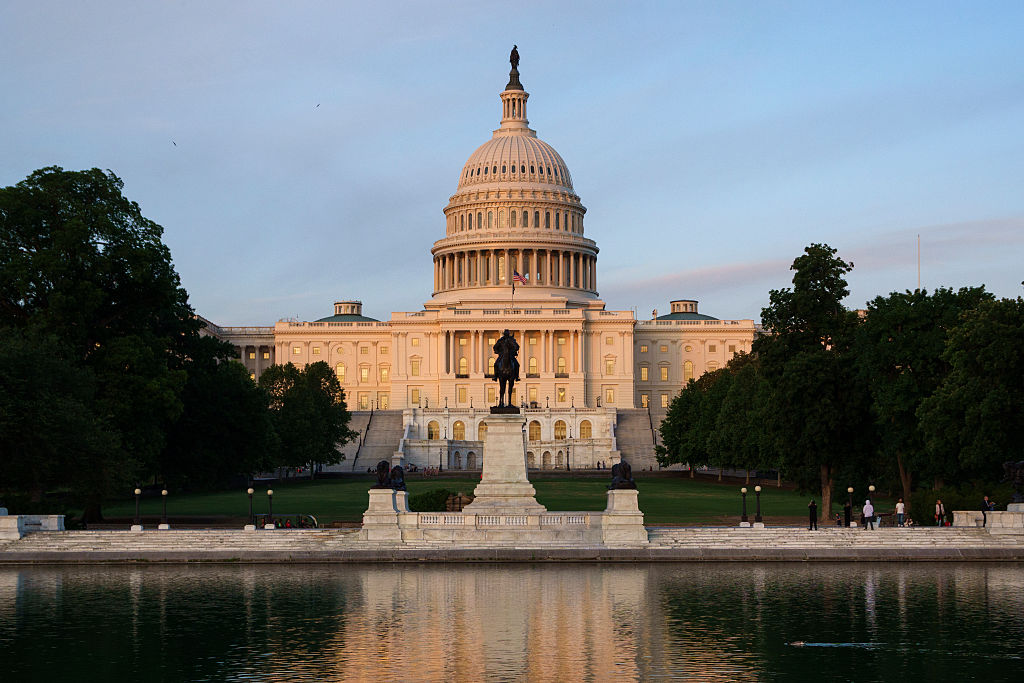
The U.S. Capitol Building is seen at sunset behind the Capitol Reflecting Pool on June 2, 2026 in Washington, DC. —(Photo by Kevin Carter/Getty Images)

A surveillance law that allows U.S. intelligence agencies to collect the communications of foreign targets abroad without a warrant is set to expire at midnight on Friday, prompting warnings from current and former officials that a lapse could endanger national security.

The immediate effect of allowing Section 702 of the Foreign Intelligence Surveillance Act (FISA) to expire would be limited. That’s because a judge on the Foreign Intelligence Surveillance Court renewed the government’s surveillance certifications in March, allowing intelligence agencies to continue using the authority until March 2027. 

But supporters of the law say a lapse risks creating uncertainty for the government and the companies it relies on to provide information. If Congress has not renewed the law by 2027, they argue, the government could lose access to one of its most important intelligence-gathering tools.

Critics, however, contend that the warnings overstate the immediate risk and obscure the reason the law has become so politically contentious: Section 702 is aimed at foreign targets abroad, but it has been used to search Americans’ communications collected in the course of that surveillance.

Why are officials calling for Section 702 to be extended?  

Glenn Gerstell, a former general counsel of the National Security Agency (NSA), tells TIME the risk of a lapse should not be dismissed. Crucially, he explains, the intelligence acquired through Section 702 makes up roughly 70% of the President's daily brief. 

“In other words, it covers everything from sanctions evaders, to narco-terrorists, to ISIS terrorists, to what Iran might be up to, North Korea, etc,” he says during a phone interview. “So it's probably the critical national security tool. So if it lapses, it stands to reason that we'd be worried about what we're missing.”

Technology companies would also become more reluctant to comply with government requests, he argues, in particular if they fear violating privacy agreements or being sued. This resistance, he says, could slow the collection of intelligence and create gaps.  

“[Companies] want to make sure that they're not going to get sued if they go ahead and comply with a court order,” he explains. “The question is, what are we going to be missing in that period of time—during the time of litigation, whether it's three days or six weeks … it only takes one small piece of information about a terrorist plot or a sanctions evader or a North Korean missile to have a potentially profound effect on national security.” 

Republican lawmakers have also issued similar warnings.

Secretary of State Rubio and Defense Secretary Pete Hegseth urged Democrats on Monday to support an extension, with Rubio warning that allowing the spy powers to lapse would be “devastating to our national security.” 

In a letter to Rubio, Sen. Chuck Grassley of Iowa and Sen. Tom Cotton of Arkansas urged the Secretary of State to “plan for a potential significant gap in foreign intelligence collection” if Section 702 expired. 

“Letting 702 lapse is a real gamble that we can’t afford to take,” Grassley said while speaking on the Senate floor on Monday. “Let’s be very clear: if Section 702 lapses, our adversaries will benefit greatly, and Americans will suffer.”

A White House official told TIME in a statement on Wednesday that “the Administration always recognized this would be a complex issue which is why negotiations continue with Congressional Members to find long-term consensus.”

“The Administration strongly supports full reauthorization to allow us to gather foreign intelligence, and protects our country from malign actors,” the official added.

A group of former intelligence officials, which included Gerstell, earlier called on Congress to reauthorize the law.

"We cannot afford to let our Intelligence Community lose this tool that helps keep our nation safe, even for a day,” the group wrote in April. 

Why lawmakers want Section 702 reformed

But critics of Section 702 say the warnings overstate the immediate threat because the current certifications will remain in effect until 2027. They have pushed for Congress to use the coming months to impose new limits on the program, including a requirement for the government to acquire warrants before accessing Americans’ communications incidentally collected through the surveillance program. 

The current process for FBI searches of Section 702 data using U.S.-person query terms requires internal approval, and two rounds of internal audits would follow, according to a watchdog report. Although Section 702 prohibits direct spying on Americans, some communications between U.S. citizens and foreigners will be incidentally collected, which the FBI is allowed to retain and later look into. Some lawmakers have argued that the internal signoffs are not enough to place a check on the executive branch’s power. 

Read More: The FBI Is Quietly Spying on Americans Without Warrants. The FISA Fight Could Stop It

“Congress should not give Donald Trump, Stephen Miller, and Kash Patel unchecked power to spy on Americans,” said Democratic Sen. Dick Durbin of Illinois in April about the President, the White House deputy chief of staff, and FBI director, further accusing the government of using Section 702 “as a back door for warrantless spying on Americans here at home.” 

Democratic Sen. Ron Wyden of Oregon stated in a “Dear Colleague” letter also from April that Section 702 “must be reformed to better protect Americans’ Constitutional rights and include new safeguards against abuse before it is renewed.”

“At a time when our democracy is under tremendous threat, we owe it to our constituents to have a real, open debate about surveillance authorities that directly affect both their security and their fundamental freedoms,” he wrote. “And we should not exclude Americans from that debate.”

Proponents of an extension are pushing it “based on this specter that Section 702 will go dark,” Elizabeth Goitein, an expert on national security and a senior director at the Brennan Center, tells TIME, noting “the law is clear that the certifications remain in effect even if the underlying statute lapses,” which, she contends, gives ample time to implement reforms that prevent the government from accessing Americans’ data without warrants.

“No government official should have warrantless access to Americans' private communications,” she argues. “The potential for abuse is simply too great.”

-Philip Wang contributed reporting.

Judge Rejects Late Bid to Keep Trump's Name on Kennedy Center as Deadline Looms

2026年6月12日 23:56
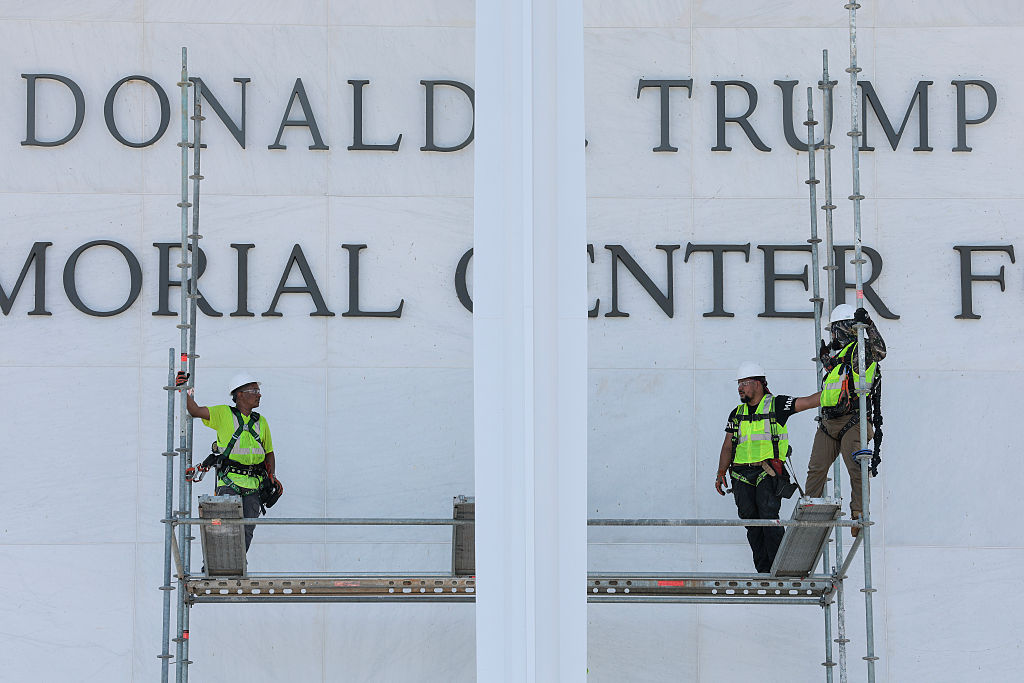
On Friday, June 12, the day judge had ordered the Kennedy Center to restore its original signage, construction workers were building scaffolding near the sign. The building's facade still read The Donald J. Trump and John F. Kennedy Memorial Center for the Performing Arts. —Anna Moneymaker—Getty Images

President Donald Trump’s name remained affixed to the Kennedy Center on Friday, the deadline a federal judge had set for the letters to be taken down. But a federal judge denied a last-minute effort by the Center's Board of Trustees to keep the signage in place for now, as workers were putting up scaffolding under the sign, suggesting removal could be imminent.

On Thursday evening, the Board of Trustees of the Kennedy Center appealed a ruling that ordered the removal of Trump’s name from the center’s building and the center’s online materials and accounts by Friday. U.S. District Judge Christopher Cooper previously ruled that only Congress, not the Board, has the authority to change the center’s name. In recent days, Trump’s name had been removed from the center’s official website, voicemail and YouTube channel. Nonetheless, a person with knowledge of the legal fight expressed skepticism that Trump's sign would come down Friday.

In the filing, the Kennedy Center said the court should grant a stay of the judge’s order, because it has “strong arguments to raise on appeal,” and that removing Trump’s name would be “both wasteful for the Center and confusing for the public.”

“The far more sensible course is to allow the D.C. Circuit to adjudicate this appeal before requiring these sorts of compliance measures,” the center argued.

The latest legal back and forth stood to lengthen a drama that began six months ago, when the Kennedy Center’s Board of Trustees, which is packed with Trump’s allies, voted “unanimously” to rename the cultural center to the Trump Kennedy Center. Instead of replacing the building’s signage, workers added the words “The Donald J. Trump and” above the existing lettering, changing the building’s name to “The Donald J. Trump and The John F. Kennedy Memorial Center for the Performing Arts.”

The move drew immediate backlash and a lawsuit from Rep. Joyce Beatty of Ohio, one of the board’s ex-officio members who had been stripped of voting power on the board. 

Norman Eisen, one of the attorneys representing Rep. Beatty, said the center’s last-minute appeal “evinces desperation.”

“That is what they should be feeling because they don’t have a legal leg to stand on. We are vigorously contesting this latest ploy, as we have throughout the case, on behalf of Congresswoman Beatty and the American people,” Eisen added. 

Washingtonians have been keeping a close eye on the Kennedy Center as the court-ordered deadline nears. A live camera mounted outside of the Watergate hotel balcony has been monitoring the exterior wall of the Kennedy Center for days. The livestream is set up by Hands Off the Art, an activist group that has been leading weekly protests outside the center this spring. 

Andrew Martin, a DC resident also known as “Drybrarian” on Threads, has been taking a daily picture outside of the Kennedy Center since the beginning of June. The account quickly garnered thousands of likes each day and more than 30,000 followers.

“We are so hungry for even the tiniest smidge of hope,” Martin told The Washington Post, “of something that indicates that the bad days might be over.”

Received yesterday — 2026年6月12日未分类

Congress to Hold Special Gathering in Philadelphia to Mark 250th Anniversary

2026年6月12日 05:00
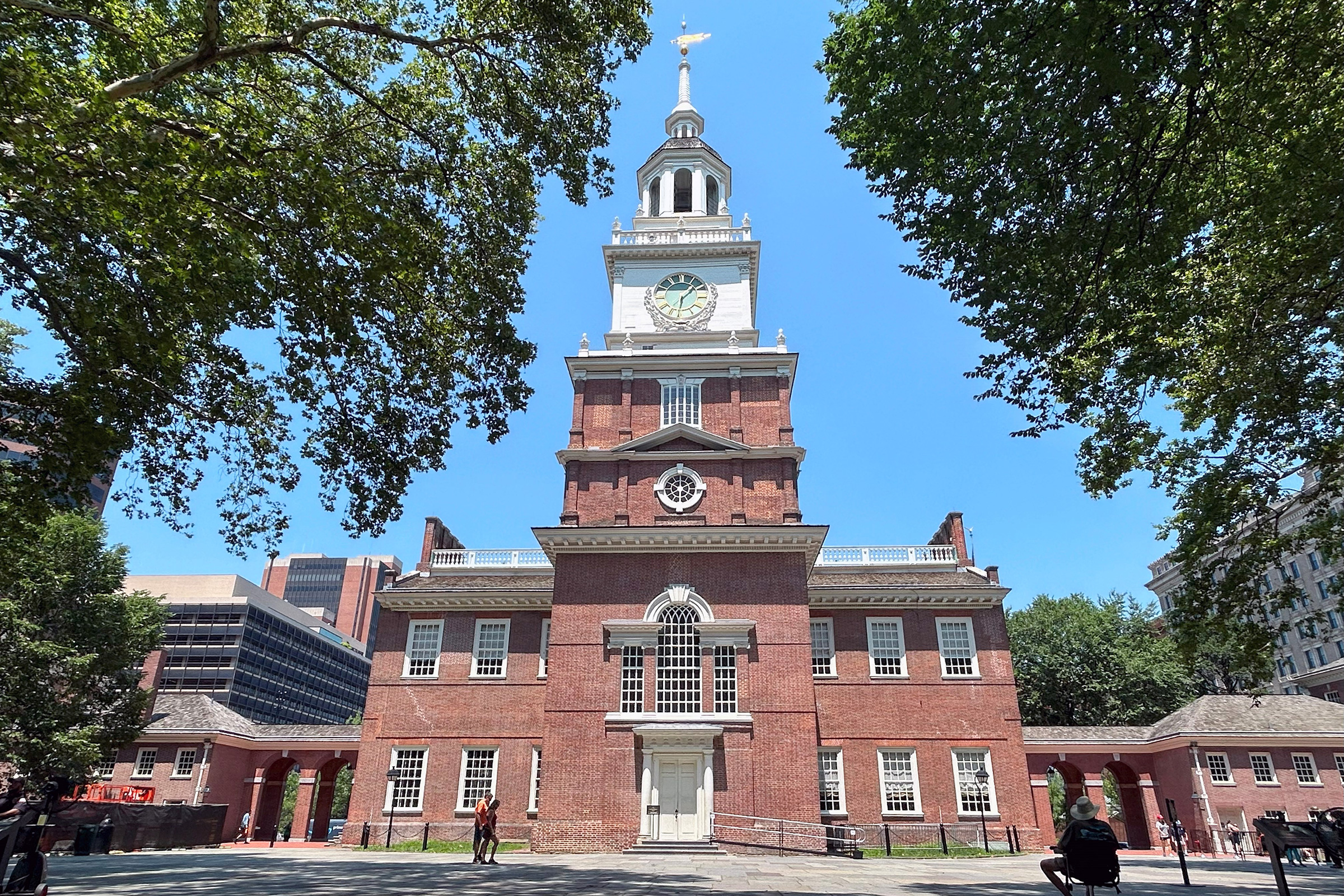
View of Independence Hall in Philadelphia on July 3, 2025. —Juan Mabromata—AFP/Getty Images

Congress is heading back to its roots in Philadelphia for a historic offsite gathering on July 2 to celebrate the 250th anniversary of the signing of the Declaration of Independence, according to the U.S. representative organizing the event and a local official with knowledge of its planning.

U.S. Rep. Brendan Boyle, a Democrat whose district includes Philadelphia, is spearheading the gathering. “Exactly two years ago I launched this effort to bring Members of Congress, both Democrats and Republicans, back to the place where it all began 250 years ago: Independence Hall,” Boyle said in a statement to TIME. “I am very proud and excited this special event is happening. It will be a unifying moment for the Congress and our country, at a time when we need it most.”

The President & CEO of the Philadelphia Visitor Center, Kathryn Ott Lovell, told TIME she was aware that members of Congress were planning to convene at Independence Hall on July 2. 

Boyle first proposed holding a special joint session at Independence Hall in June 2024. But his initial resolution hadn’t moved forward with just three short weeks to go. Instead, the visit is slated to go ahead as a ceremonial event, according to Boyle’s office, which doesn’t require an official act of Congress. It’s being organized as part of America250, the bipartisan national commemoration of the 250th anniversary, the office said.

Ceremonial or not, the event will still be a historic gathering of lawmakers outside of Washington. Such offsite meetings are extremely rare. In Sept. 2002, Congress held a commemorative session in New York City to mark the anniversary of the 9/11 terrorist attacks. Congress also convened a ceremonial session at Independence Hall in 1987 to commemorate the bicentennial of the U.S. Constitution. That event marked the first time since 1800—the year the federal government moved from Philadelphia to Washington—that Congress met somewhere other than on the banks of the Potomac. 

Plans for the 1987 session were to include every member of the 100th Congress, but security, space, and cost made that impossible. Each state delegation appointed one lawmaker to attend the gathering. Thousands of people gathered on the mall outside Independence Hall to watch the proceedings on big screens.

Independence Hall cannot accommodate all 535 members of Congress, so a smaller delegation is expected to visit Philadelphia next month. Neither House Speaker Mike Johnson nor Minority Leader Hakeem Jeffries' offices immediately responded to requests for comment.

The planned gathering comes amid celebrations across the country to mark the nation’s 250th birthday. President Donald Trump has organized a UFC fight June 14th at the White House, part of a slate of celebratory "Freedom 250" events taking place from June 25 to July 10.

In Philadelphia, a national march of mayors is also planned for July 2, with mayors from around the U.S. marching from City Hall to Independence Hall. Pope Leo is also receiving (virtually) the medal of honor at the National Constitution Center that day. On July 4 Philadelphia will host a Round of 16 World Cup game and a large free outdoor concert on the parkway.

There's significance to holding the Congressional event on July 2. While the U.S. celebrates Independence Day on July 4, officially, the Continental Congress declared its freedom from Great Britain on July 2, 1776, when it voted to approve a resolution submitted by delegate Richard Henry Lee of Virginia. The Congress drafted a document explaining the vote to the public and it was sent to the printer on July 4. The first public reading of the document occurred outside Independence Hall on July 8, 1776.

The White House UFC Event Is Costing $60 Million

2026年6月12日 03:32

The Ultimate Fighting Championship (UFC) event scheduled to take place at the White House on President Donald Trump’s birthday this weekend is costing more than $60 million, according to a recent court filing.

Dubbed UFC Freedom 250, the fights are part of a lineup of events scheduled for this summer and promoted by the Trump Administration to celebrate the 250th anniversary of the adoption of the Declaration of Independence on July 4, 1776. The UFC event, though, is facing a legal challenge: the Public Integrity Project has filed a lawsuit against it, arguing that it would be an improper use of public property. Trump Administration officials have said the lawsuit is baseless. The federal government filed a court document on Tuesday in the case, in which it outlined some of the preparations for the fights, calling the event “a collaboration between the White House, executive agencies,” and the UFC.

“In preparation, well over $60 million and tens of thousands of hours of labor have been expended,” the document reads. “More than 4,000 spectators are expected to attend on the South Lawn, including more than 1,000 members of our armed services, and more than 120,000 visitors are expected to watch from the nearby Ellipse after winning free tickets in a lottery.”

Read More: Inside the Massive Arena Constructed for the UFC’s White House Cage Match

More than seven federal government agencies “have allocated significant resources and manpower” for the event, including the Department of the Interior, the Department of Homeland Security, and the Federal Aviation Administration, according to the court filing.

"UFC is funding and paying for this entire event," a White House official said in a statement to TIME. "There are no taxpayer dollars being used outside of what would be applied towards employees normal duties and responsibilities."

The UFC has previously told media outlets that it is covering the full production price tag. Dana White, president and chief executive officer of the UFC, previously told TIME that the company expects to lose about $30 million on the event.

The event has sparked widespread controversy. Only 16% of Americans support the fights being held on the White House grounds, according to a Reuters/Ipsos poll released on Thursday. In comparison, 46% of Americans said they thought that holding the fights was inappropriate.

Other America250 events promoted by the Trump Administration have also generated backlash. In May, several performers pulled out of a concert series planned to commemorate the country’s 250th anniversary, accusing the event of being politically charged. The President publicly lambasted those artists on Truth Social, and later announced “A Rally to end all Rallies” that will be held in the nation’s capital this month.

Inside the Massive Arena Constructed for the UFC’s White House Cage Match

作者Nik Popli
2026年6月12日 02:10

Three days before the first punches are set to be thrown at a White House-UFC event, the South Lawn is unrecognizable. A space that has over the decades hosted world leaders, prisoners of war, and children hunting Easter eggs, is now dominated by a massive, spider-like arch. It towers over the White House, which now seems almost modest by comparison.

For those in Washington, it has been impossible to miss the hulking 92-foot canopy known as “the claw” being raised behind the White House in preparation for a literal cage match. Up close, its scale becomes more disorienting, with lighting rigs and catwalks layered into a single suspended frame that organizers say can hold 4,000 people. A giant LED screen stands at the southern edge of the temporary arena, pointed toward spectators gathering on the Ellipse. Beyond the structure, the Washington Monument looms in the distance.

The scale of the production is startling, even by the standards of a presidency that has often embraced spectacle. The Octagon stands only a short distance from the Executive Mansion and not far from the Oval Office, where presidents make decisions about war, peace and national crises.

The elaborate production came with an equally eye-catching price tag. The UFC spent roughly $60 million to transform the South Lawn into a temporary arena and has said it expects to lose money on the undertaking, TIME previously reported. Executives have described the event instead as a once-in-a-generation marketing opportunity.

More than 4,000 spectators are expected to attend the fights on the South Lawn, with at least 1,200 seats reserved for active-duty military personnel. Organizers also created standing-room areas to maximize capacity, while a fan festival and viewing party on the Ellipse could accommodate tens of thousands more.

Read more: How Dana White Took the UFC From the Fringes to the White House

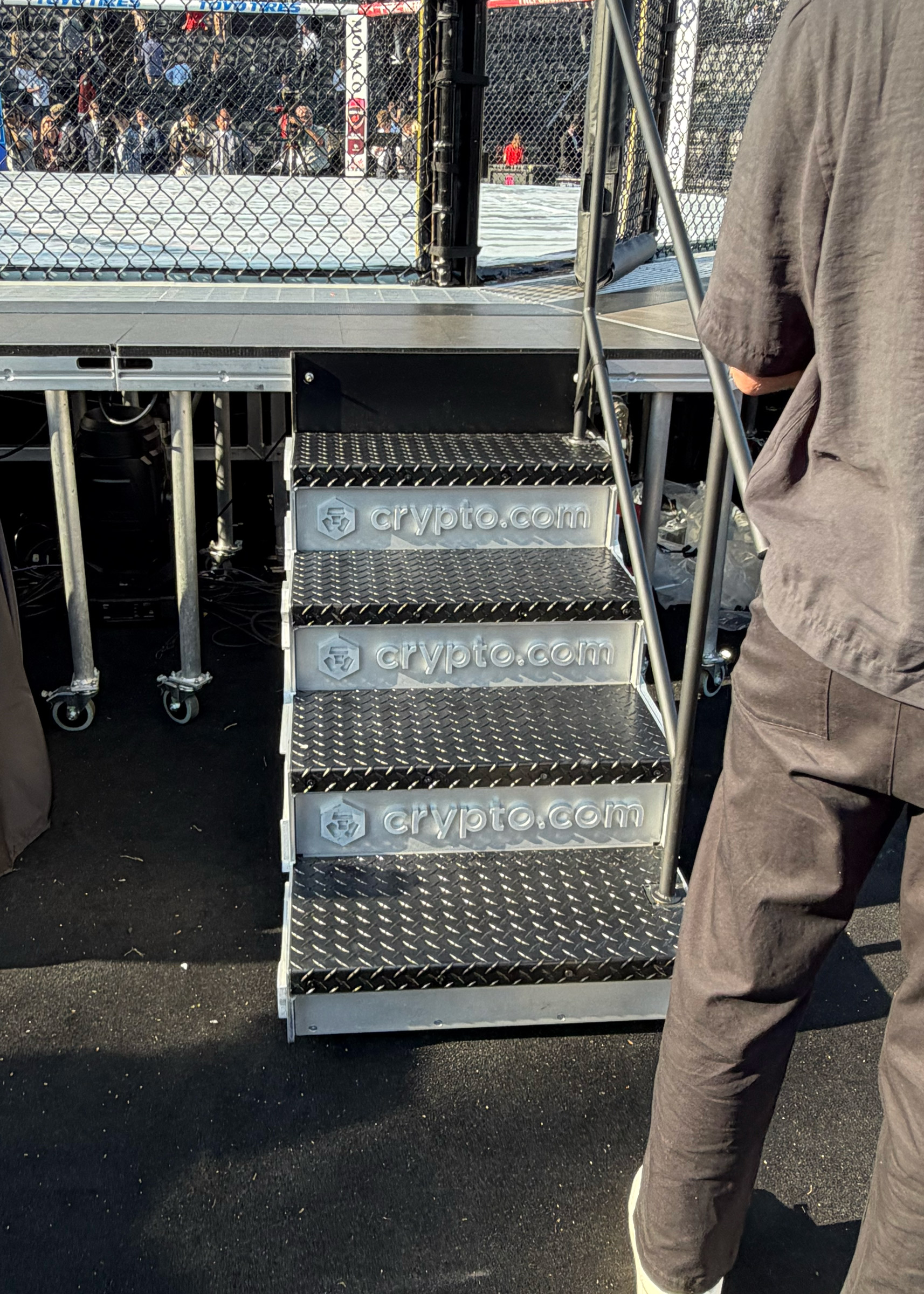
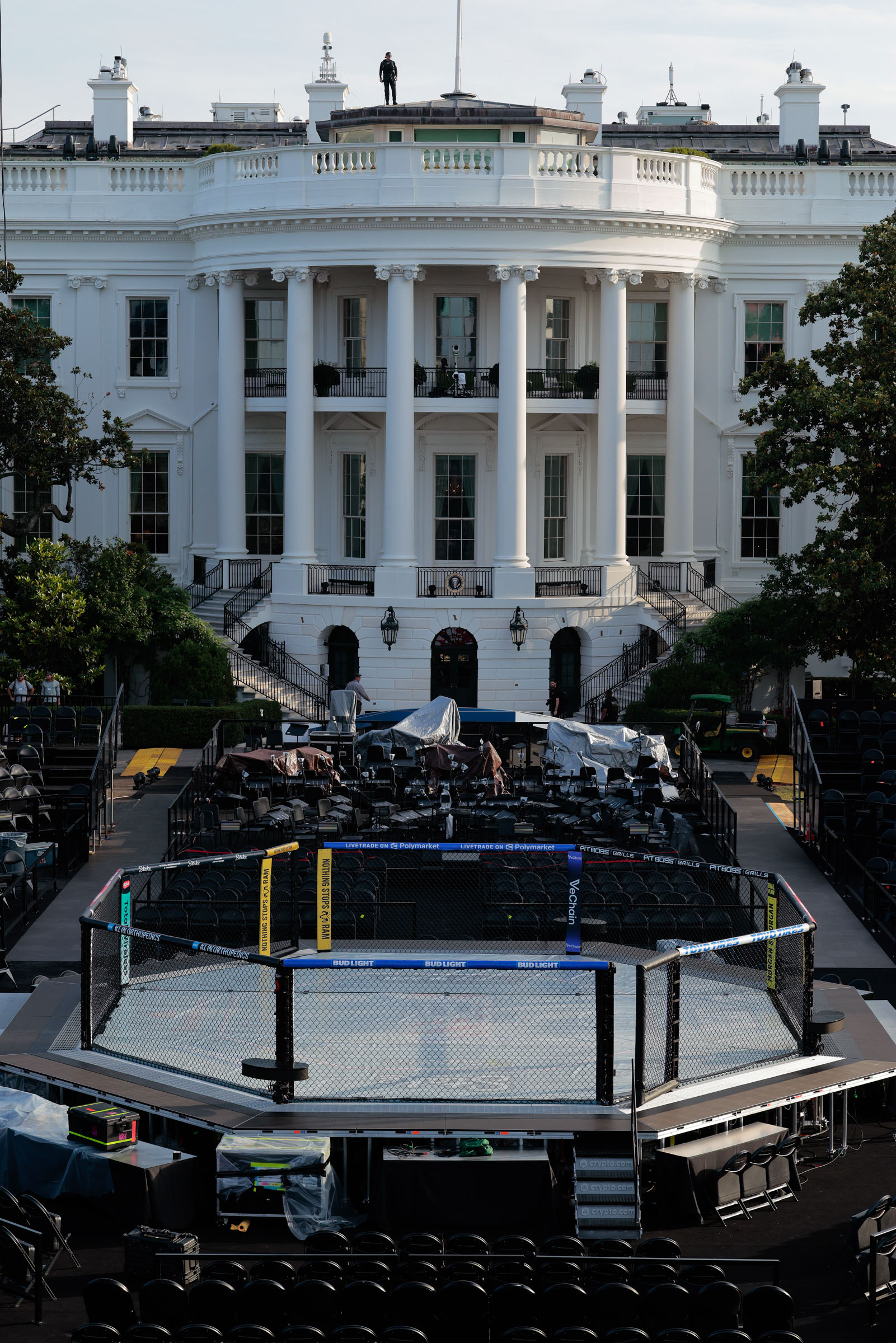
Around the cage, corporate logos line the rails. Polymarket, Stake, VeChain, Bud Light, FRE Nicotine Pouches, and dozen other sponsors are prominently displayed. Even the steps leading onto the stage have been turned into a branding opportunity for Crypto.com.

—Nik Popli
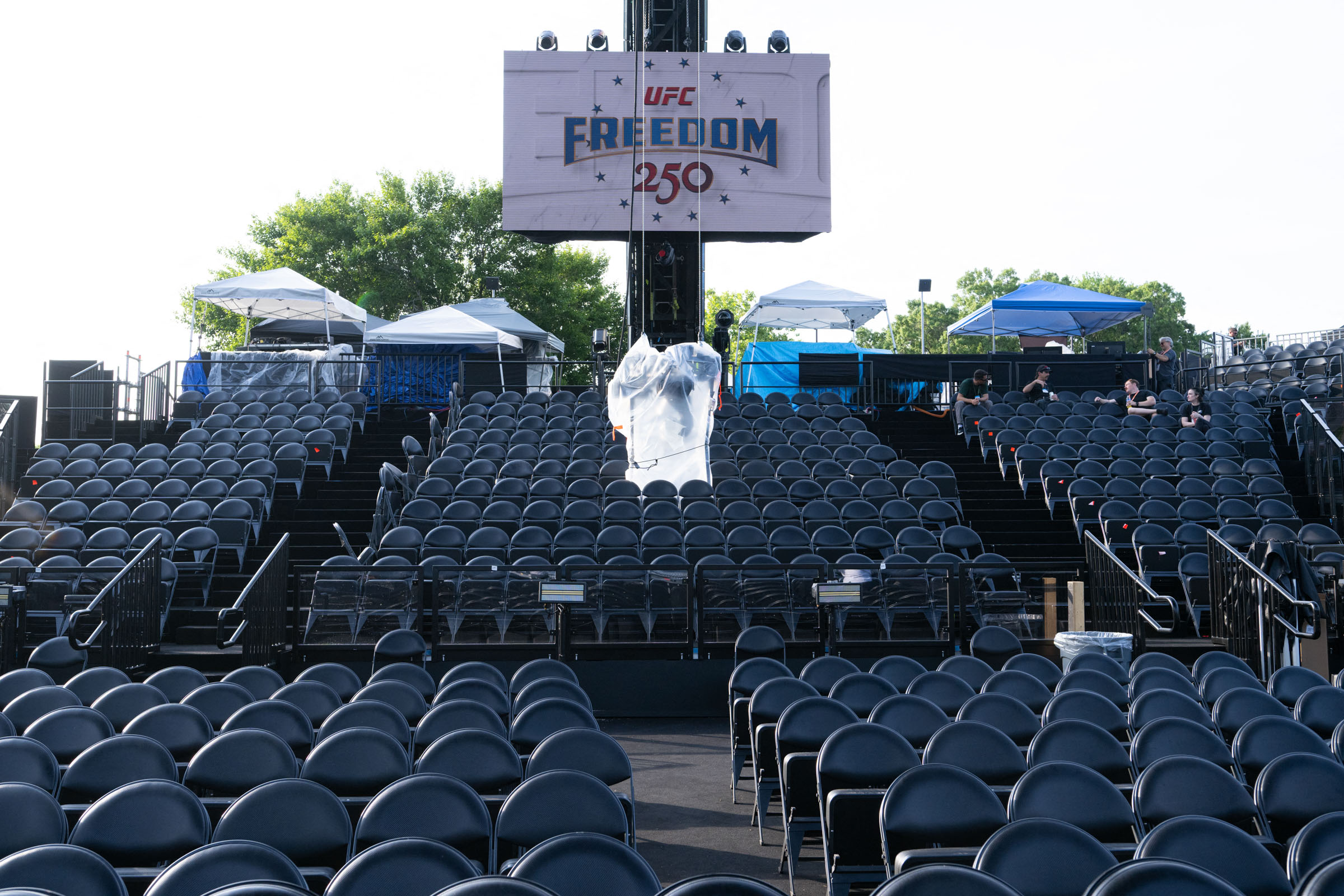
Seating for the upcoming UFC fight that US President Donald Trump will host as part of the 250th anniversary of the United States is seen on the South Lawn of the White House during a media preview in Washington, DC, June 11, 2026. —Saul Loeb—AFP/Getty Images
A "UFC Freedom 250" logo and the structure, known as "The Claw," for the upcoming UFC fight that US President Donald Trump will host as part of the 250th anniversary of the United States is seen on the South Lawn of the White House during a media preview in Washington, DC, June 11, 2026. —Saul Loeb—AFP/Getty Images
Construction continues on the Ultimate Fighting Championship (UFC) "Claw" and the octagon fighting ring on the South Lawn of the White House on June 11, 2026 in Washington, DC. —Chip Somodevilla—Getty Images

Inside a conventional UFC venue, the sponsorships would scarcely merit notice. Advertising has long been woven into the visual fabric of sports. But on White House grounds, they take on a different, more complicated character. Some ethics experts have questioned whether corporate branding from companies operating in industries subject to federal regulation creates uncomfortable optics when displayed on government property. 

A White House official says it has not been involved in any sponsorship discussions around the event. "UFC is funding and paying for this entire event. There are no taxpayer dollars being used outside of what would be applied towards employees normal duties and responsibilities," they added. 

Critics have raised concerns about sponsorship packages reportedly costing more than $1 million and the possibility that they could become another avenue through which wealthy executives seek access to the president. A separate $1 million-per-person fundraiser benefiting Trump allies is scheduled for the previous evening, according to NBC News. Organizers maintain that the events are entirely separate, and the same White House official rejected suggestions of impropriety.

“The federal government is not making any money,” the official said. “We are hosting like any other POTUS or FLOTUS hosted event.”

Yet the symbolism proved difficult to ignore.

As TIME recently reported, Trump first planted the seeds for a UFC event at the White House days after his 2024 election, envisioning a series of fights to mark his 80th birthday and inaugurate the broader celebration of the nation's 250th anniversary. The event, known as UFC Freedom 250, also represents the culmination of a relationship that stretches back more than two decades between Trump and Dana White, the president of the UFC.

Long before either man occupied his current position, Trump offered the fledgling mixed martial arts organization a home at the Trump Taj Mahal in Atlantic City when many mainstream venues viewed the sport with skepticism. White never forgot the gesture. Over the years, he evolved from a business ally into one of Trump's most loyal supporters, speaking at Republican conventions, helping Trump reach younger male audiences during the 2024 campaign and becoming a fixture in his political orbit.

A lawsuit filed by the Public Integrity Project seeks to block the fights, arguing that allowing a private company to stage what it describes as a for-profit event on White House grounds amounts to an improper use of public property. White House officials have dismissed the suit as baseless.

White has described the undertaking as a celebration of America rather than a political act. Trump supporters have embraced the event as an expression of national pride and a showcase for a distinctly American sport. But even some admirers of the UFC have acknowledged the unusual optics. Joe Rogan, the longtime commentator and podcaster, described the White House event as a "gimmick." 

While the stage appears to be set, UFC and White House officials are watching the weather forecasts closely. As of Thursday, forecasts show a chance of thunderstorms Sunday evening. The canopy over the Octagon is designed to shield fighters and portions of the audience from rain, but most seating remains exposed—as well as the tens of thousands expected to gather around the Ellipse. Lightning within eight miles of the South Lawn would trigger a mandatory evacuation and a 30-minute delay. Persistent strikes could disrupt or even halt the proceedings. 

Pentagon Lifts Partial Lockdown Over ‘Air Quality’ Alert, Determining ‘No Hazard Exists’

2026年6月12日 00:00
The Pentagon, heaquarters of the U.S. Department of Defense, is seen from the air in Washington, D.C., on February 8, 2025. —J. David Ake—Getty Images

The Pentagon has lifted “precautionary safety measures” that it implemented Thursday morning, including a shelter-in-place order for parts of the complex, after determining that the reported “hazardous materials incident” that prompted the response was a false alarm.

“Earlier this morning, Pentagon occupants were notified of a potential air quality issue, prompting immediate precautionary safety measures and evaluation. Subsequent testing confirmed no hazard exists, and normal operations have resumed,” Pentagon spokesman Sean Parnell wrote on X at 1:31 p.m. ET, just under three hours after emergency response units reported that they were responding to the incident. “We express our sincere appreciation to the first responders for their swift actions to ensure the safety of all personnel.”

Earlier on Thursday, Parnell told TIME in a statement that the department was following protocols and enforcing a shelter-in-place order, among other measures, in response to the detection of the “air quality issue.”

"The Pentagon has sophisticated systems to ensure the safety of the building and its occupants. Those systems have detected an air quality issue necessitating precautionary measures until we determine its significance,” Parnell said. “The Department is executing standard protection protocols, including a shelter-in-place order for the affected area. Response teams are in place and ready to support building occupants." 

The Arlington County Fire Department (ACFD) posted on X at 10:41 a.m. that it was responding to the incident. 

“ACFD units, including our Hazardous Materials Team, are currently operating at the Pentagon,” the department wrote, noting that they were working in conjunction with the Pentagon Force Protection Agency (PFPA) Hazmat Team in response to a “hazardous materials incident.”

At 12:24 p.m., the PFPA wrote on X that the “shelter in place continues in affected areas in the Pentagon until all clear is given.”

Sources familiar with the matter told CNN Thursday morning that multiple floors and corridors at the Pentagon had been locked down, including floors two through five in the fourth through the seventh corridors. Others were being evacuated and police in the building were wearing full chemical protective gear and gas masks, sources told the outlet. 

CNN also reported that the Pentagon’s security team issued a message that said additional testing was needed following the detection of the “air quality issue.”  

“This additional testing could take one to two hours. Response teams are in place and ready to support building occupants if necessary. You may observe response personnel from multiple agencies and precautionary measures taking place in the center courtyard. Please do not interpret these activities,” said the message, according to CNN.

❌