
 登录
登录

Ceasefire Deal Within Reach, U.S. and Tehran Say
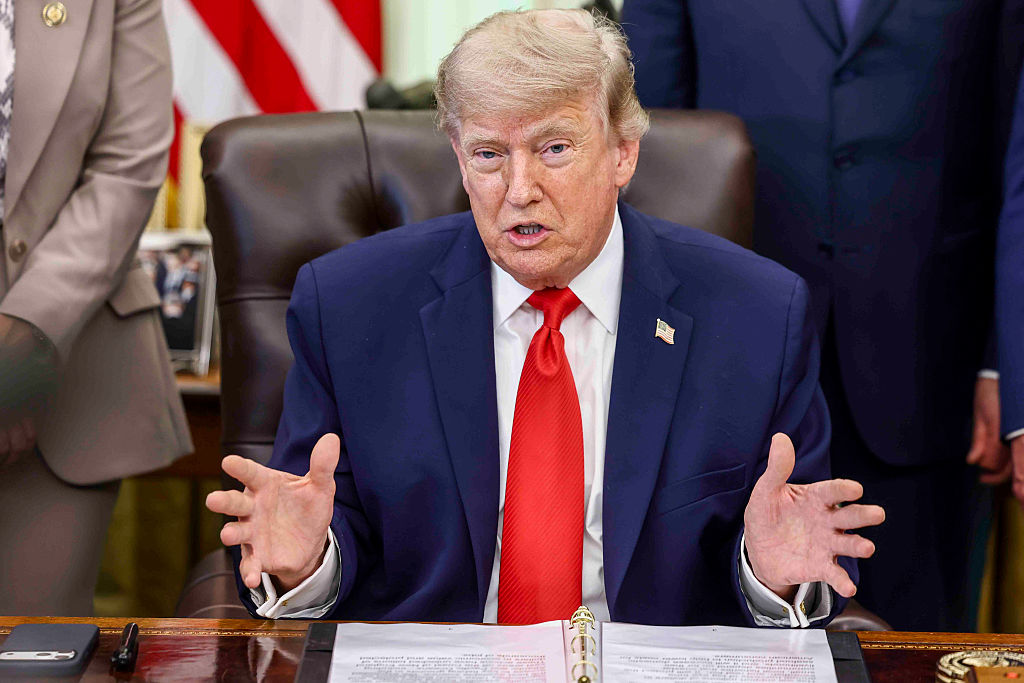
The United States and Iran may be close to a deal to at least pause the war, as officials from both countries and Pakistan signaled that negotiations were advancing well and nearing a final agreement.
But conflicting statements on how to characterize the details of the emerging deal suggested sticking points remained.
A senior Trump Administration official speaking on condition of anonymity on Friday described negotiations that had made “substantial progress” from broad understandings to a written framework that both sides now largely support, while acknowledging that difficult technical questions still remain.
Iranian Foreign Minister Abbas Araghchi said Friday that a “memorandum of understanding has never been closer.” “Pending its finalization, the media should refrain from entering speculation about its content,” he said, adding that details would be made public “in due course.”
The positive signs came after President Donald Trump on Friday rejected as fake a version of the agreement circulated by Iranian state media that suggested Washington had made significant concessions to Tehran. “The terms that Iran leaked out to the fake news have nothing to do with the terms that were agreed to, in writing,” Trump said. “What they said, including their weak and pathetic statement on having a deal, bears no relation to the truth. Very dishonorable people to deal with.”
Trump also accused Iran of continuing to target ships in the Strait of Hormuz and warned that “they better get their act together, and fast.”
A memorandum of understanding published by Iranian state media suggested Tehran had managed to negotiate regaining access to billions of dollars in frozen assets without ruling out exerting control over the Strait of Hormuz in the future.
Administration officials describe the agreement differently, portraying it as a five-point, performance-based framework under which Iran would receive economic benefits only after carrying out specific obligations. Economic incentives would be phased in as Tehran turns over nuclear material, dismantles nuclear facilities, and demonstrates a commitment to regional stability, the senior administration official said.
Tehran has long maintained that any broader cease-fire arrangement would need to include assurances regarding Israeli military operations against Hezbollah in Lebanon. Such provisions appeared in the version of the agreement reported by Iranian state media but not in the framework described by U.S. officials.
Shehbaz Sharif, the Prime Minister of Pakistan, whose government has played an intermediary role in the talks, also said that negotiators had reached an agreed-upon text and were working to finalize it. The contradictory accounts from Washington and Tehran come after several days of escalating violence.
The senior Trump administration official said the emerging deal includes Iran “committing indefinitely to never procure or develop nuclear weapons,” a commitment that previous rounds of diplomacy had envisioned lasting only 10 or 20 years. But the official emphasized that verification mechanisms remained essential and would be negotiated in detail. The official added that the U.S. has no objection to Iran maintaining civilian nuclear power generation, but opposes preserving infrastructure that could allow Tehran to move from civilian energy production to weapons development.
The senior official said the broader regional agreement encompasses Lebanon, Israel, and Gulf states but would not deprive Israel of the right to defend itself. If Iran failed to uphold its obligations, the official said, Israel would be expected to respond.
The Trump Administration is also expressing confidence that Israel would ultimately support the agreement, despite longstanding skepticism from Prime Minister Benjamin Netanyahu and concerns among Israeli officials that Washington might settle for terms they viewed as insufficiently stringent.
Trump spoke with Netanyahu on Thursday, according to the senior official, who said Israeli concerns had been fueled in part by inaccurate reports about the contents of the agreement.
“We feel confident that the deal that we’re actually going to strike, assuming we get there, is going to be a deal that everybody in the region can be comfortable with,” the senior official said.
The Administration also downplayed signs of discord inside Iran, saying it believed most of the country’s leadership supported the agreement even though hard-line factions remained opposed.
