普通视图

Received today — 2026年6月13日TIME

What to Know About the States Skipping Trump’s ‘Great American State Fair’
2026年6月13日 05:06
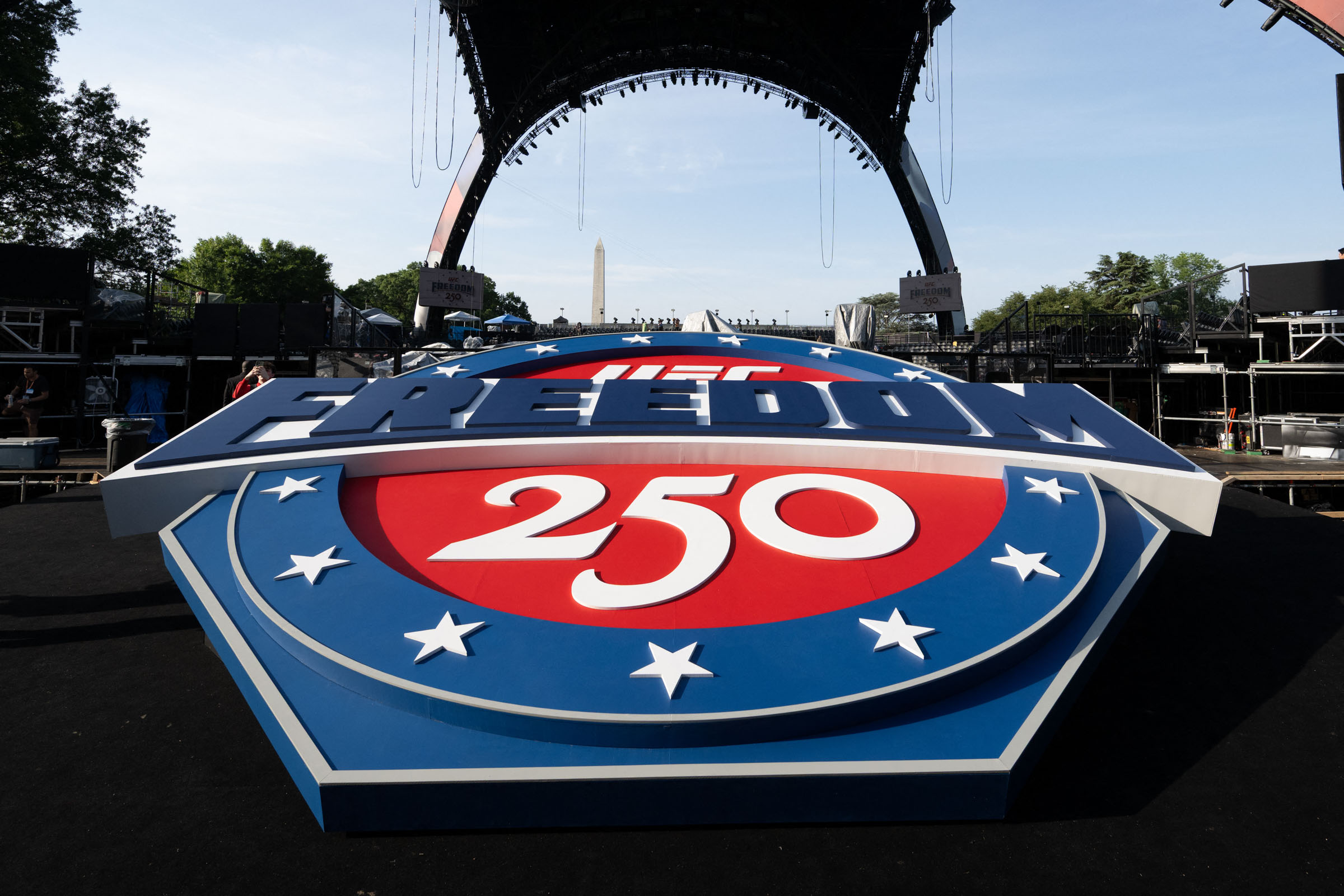
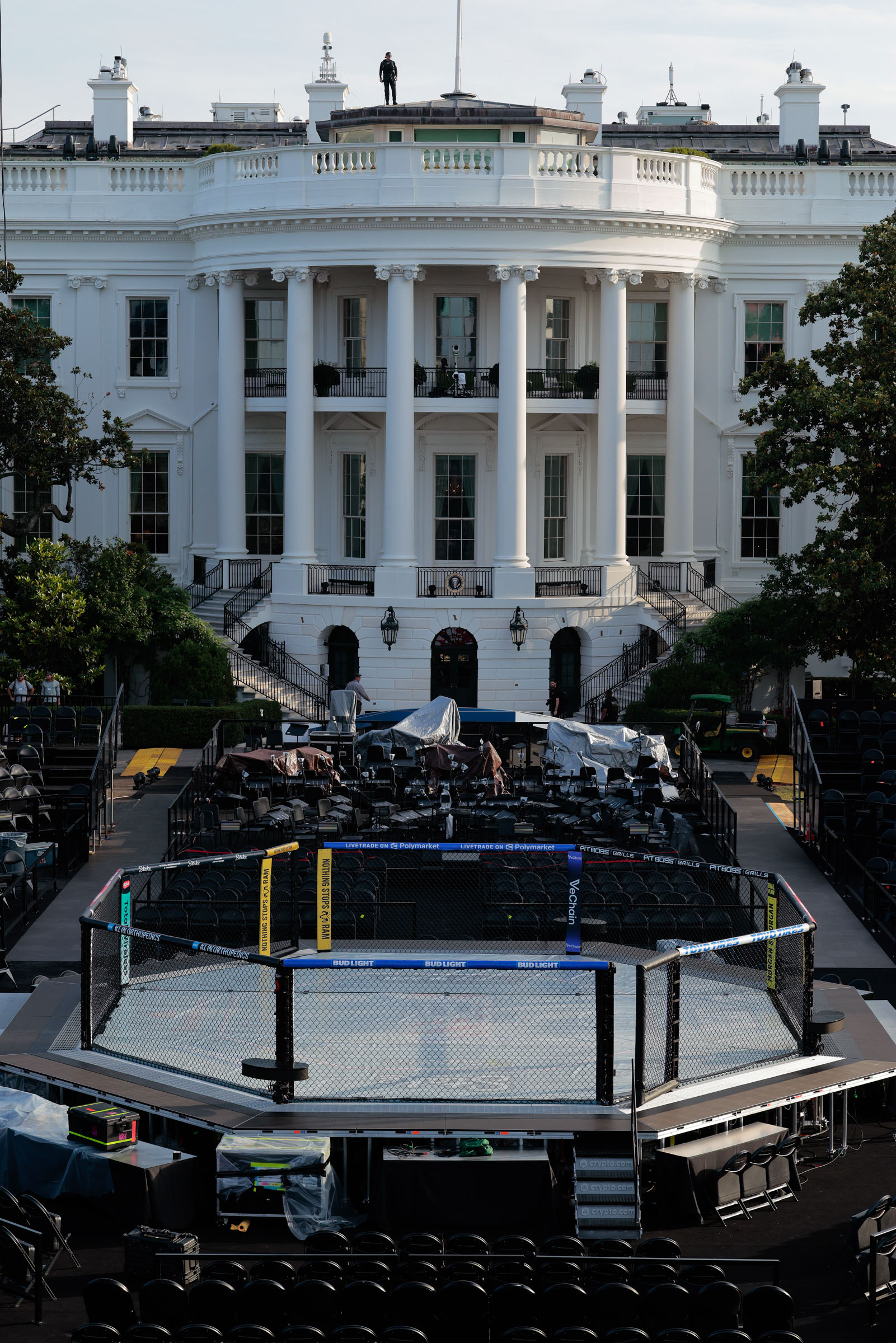
Preparations continue for the Ultimate Fighting Championship Freedom 250 event on the White House South Lawn on June 12, 2026 in Washington, DC. President Donald Trump is hosting a series of fighting matches on the South Lawn on Flag Day and his 80th birthday, June 14, which the White House is calling "a once-in-a-generation celebration of the American fighting spirit." —(Photo by Kevin Dietsch/Getty Images)

One of President Donald Trump’s signature plans for celebrating the country’s 250th birthday is the “Great American State Fair,” a 16-day showcase on the National Mall meant to feature every state and territory. But days before the event is set to begin, several states have declined to participate. 

Read more: The White House UFC Event Is Costing $60 Million

At least eight states—Connecticut, Illinois, Massachusetts, North Carolina, Maine, Oregon, Washington, and Pennsylvania—have said they will not take part in the fair, according to statements from state officials or comments to media outlets.

The reasons vary. Some states have cited budget concerns, while others have declined without offering a detailed explanation, even as they pledged to hold their own in-state celebrations.

Still, organizers say every state will be represented in some form at the fair. 

“Whether represented by a governor’s office, a tourism board, or a beloved state company or organization, every community will be celebrated, and every American will see themselves in this once-in-a-generation event,” a spokesperson for Freedom 250, a federal taskforce organizing the celebration, said in a statement. 

The fair, organizers say, will “showcase the very best of America” through more than 150 exhibits put on by the 56 states and territories. Trump has described the fair—which will begin on June 25—as “an enormous year-long nationwide celebration of our heritage.” Another planned event—a UFC fight on the White House grounds—has caused controversy.  

Here is what to know about the states that have opted out.

Massachusetts

Massachusetts Gov. Maura Healey’s office confirmed to TIME that the state would not be attending, but declined to provide a reason for the decision. 

Healey, a Democrat and frequent critic of Trump, has expressed frustration with the President’s handling of the anniversary celebrations, particularly the expectation that states pay to participate. 

In an interview with Boston Public Radio, Healey said Trump is “too busy with his Great American State Fair down there that everybody’s bailing on… He invited all the states to participate and wants to charge us—charge us!—to put something on his exhibit, whatever he’s creating for Freedom 250. It’s just ridiculous. This is taxpayer money.”

Oregon

Oregon Gov. Tina Kotek's office told KATU, an ABC affiliate, in a statement that the state withdrew due to “the cost of participating in the Fair and growing concerns that the event in Washington, D.C. is shaping up to be a more partisan affair than originally presented."

Though like other states, Oregon plans to host its own celebrations for the country’s birthday.

"The Governor will still be proudly celebrating America's semiquincentennial here in Oregon and is looking forward to all of the great exhibitions and events the America 250 Oregon Commission will be planning through the summer and beyond," the statement continued.

North Carolina

North Carolina has also opted out, citing cost concerns. 

The state would have had to spend $100,000 to put on an exhibition on the National Mall, and the state “decided early in the process that we do not have the capacity to participate,” Michele Walker, a communications director for the state, said in an email to NOTUS. 

"Our limited resources are focused on America 250 events across North Carolina, including one at the State Capitol in Raleigh on July 4," Walker said to several outlets.

Connecticut

Connecticut officials similarly said that the state chose to focus its resources on its own local celebrations. 

"Connecticut’s decision to decline participation in the Great American State Fair came down to resources," Cathryn Vaulman, director of communications for Gov. Ned Lamont, said in a statement to USA Today. "The federal government has asked states to foot the bill to participate, including staffing a multiweek exhibition."

Illinois

Illinois officials told CNN that they had declined an invitation to participate in the state fair. But Illinois is still expected to have a presence at the fair through the Peoria Riverfront Museum, which will represent the state.

“State funds were not used to pay for the Museum’s travel, registration, or exhibit design and giveaways,” Jayette Bolinski, the communications director for the Illinois Department of Natural Resources, told the outlet. 

The state does not know why or how the Peoria Riverfront Museum was chosen by Freedom 250 to represent Illinois in the fair, according to Natalie Boscia, the vice president of PR for Enjoy Illinois, the official platform of the Illinois Office of Tourism. 

Maine, Pennsylvania, and Washington 

Maine reportedly said to NOTUS it won’t be sending a delegation to the fair, without offering an explanation. Pennsylvania officials told The New York Times the state would not participate, and CNN reported officials from Washington said the same. 
What a U.S. Spy Law’s Expiration Means for Gathering Intelligence Abroad

2026年6月13日 04:34
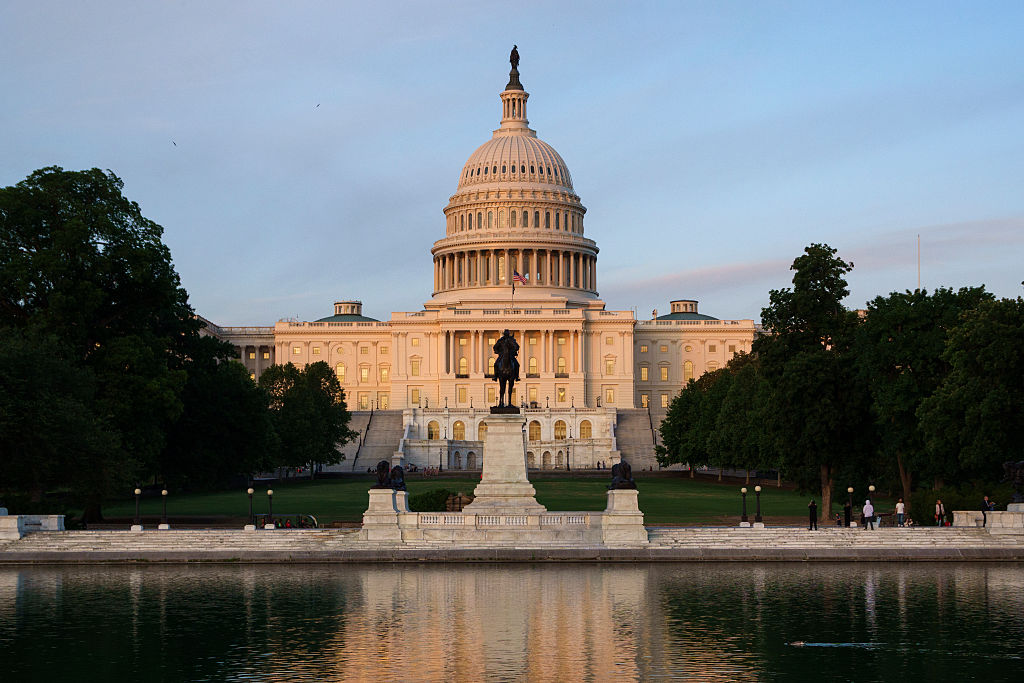
The U.S. Capitol Building is seen at sunset behind the Capitol Reflecting Pool on June 2, 2026 in Washington, DC. —(Photo by Kevin Carter/Getty Images)

A surveillance law that allows U.S. intelligence agencies to collect the communications of foreign targets abroad without a warrant is set to expire at midnight on Friday, prompting warnings from current and former officials that a lapse could endanger national security.

The immediate effect of allowing Section 702 of the Foreign Intelligence Surveillance Act (FISA) to expire would be limited. That’s because a judge on the Foreign Intelligence Surveillance Court renewed the government’s surveillance certifications in March, allowing intelligence agencies to continue using the authority until March 2027. 

But supporters of the law say a lapse risks creating uncertainty for the government and the companies it relies on to provide information. If Congress has not renewed the law by 2027, they argue, the government could lose access to one of its most important intelligence-gathering tools.

Critics, however, contend that the warnings overstate the immediate risk and obscure the reason the law has become so politically contentious: Section 702 is aimed at foreign targets abroad, but it has been used to search Americans’ communications collected in the course of that surveillance.

Why are officials calling for Section 702 to be extended?  

Glenn Gerstell, a former general counsel of the National Security Agency (NSA), tells TIME the risk of a lapse should not be dismissed. Crucially, he explains, the intelligence acquired through Section 702 makes up roughly 70% of the President's daily brief. 

“In other words, it covers everything from sanctions evaders, to narco-terrorists, to ISIS terrorists, to what Iran might be up to, North Korea, etc,” he says during a phone interview. “So it's probably the critical national security tool. So if it lapses, it stands to reason that we'd be worried about what we're missing.”

Technology companies would also become more reluctant to comply with government requests, he argues, in particular if they fear violating privacy agreements or being sued. This resistance, he says, could slow the collection of intelligence and create gaps.  

“[Companies] want to make sure that they're not going to get sued if they go ahead and comply with a court order,” he explains. “The question is, what are we going to be missing in that period of time—during the time of litigation, whether it's three days or six weeks … it only takes one small piece of information about a terrorist plot or a sanctions evader or a North Korean missile to have a potentially profound effect on national security.” 

Republican lawmakers have also issued similar warnings.

Secretary of State Rubio and Defense Secretary Pete Hegseth urged Democrats on Monday to support an extension, with Rubio warning that allowing the spy powers to lapse would be “devastating to our national security.” 

In a letter to Rubio, Sen. Chuck Grassley of Iowa and Sen. Tom Cotton of Arkansas urged the Secretary of State to “plan for a potential significant gap in foreign intelligence collection” if Section 702 expired. 

“Letting 702 lapse is a real gamble that we can’t afford to take,” Grassley said while speaking on the Senate floor on Monday. “Let’s be very clear: if Section 702 lapses, our adversaries will benefit greatly, and Americans will suffer.”

A White House official told TIME in a statement on Wednesday that “the Administration always recognized this would be a complex issue which is why negotiations continue with Congressional Members to find long-term consensus.”

“The Administration strongly supports full reauthorization to allow us to gather foreign intelligence, and protects our country from malign actors,” the official added.

A group of former intelligence officials, which included Gerstell, earlier called on Congress to reauthorize the law.

"We cannot afford to let our Intelligence Community lose this tool that helps keep our nation safe, even for a day,” the group wrote in April. 

Why lawmakers want Section 702 reformed

But critics of Section 702 say the warnings overstate the immediate threat because the current certifications will remain in effect until 2027. They have pushed for Congress to use the coming months to impose new limits on the program, including a requirement for the government to acquire warrants before accessing Americans’ communications incidentally collected through the surveillance program. 

The current process for FBI searches of Section 702 data using U.S.-person query terms requires internal approval, and two rounds of internal audits would follow, according to a watchdog report. Although Section 702 prohibits direct spying on Americans, some communications between U.S. citizens and foreigners will be incidentally collected, which the FBI is allowed to retain and later look into. Some lawmakers have argued that the internal signoffs are not enough to place a check on the executive branch’s power. 

Read More: The FBI Is Quietly Spying on Americans Without Warrants. The FISA Fight Could Stop It

“Congress should not give Donald Trump, Stephen Miller, and Kash Patel unchecked power to spy on Americans,” said Democratic Sen. Dick Durbin of Illinois in April about the President, the White House deputy chief of staff, and FBI director, further accusing the government of using Section 702 “as a back door for warrantless spying on Americans here at home.” 

Democratic Sen. Ron Wyden of Oregon stated in a “Dear Colleague” letter also from April that Section 702 “must be reformed to better protect Americans’ Constitutional rights and include new safeguards against abuse before it is renewed.”

“At a time when our democracy is under tremendous threat, we owe it to our constituents to have a real, open debate about surveillance authorities that directly affect both their security and their fundamental freedoms,” he wrote. “And we should not exclude Americans from that debate.”

Proponents of an extension are pushing it “based on this specter that Section 702 will go dark,” Elizabeth Goitein, an expert on national security and a senior director at the Brennan Center, tells TIME, noting “the law is clear that the certifications remain in effect even if the underlying statute lapses,” which, she contends, gives ample time to implement reforms that prevent the government from accessing Americans’ data without warrants.

“No government official should have warrantless access to Americans' private communications,” she argues. “The potential for abuse is simply too great.”

-Philip Wang contributed reporting.

What's at Stake for Trillionaire Elon Musk and SpaceX After Blockbuster IPO

2026年6月13日 04:14

A crowd had already gathered outside the NASDAQ building at 42nd Street in New York’s Times Square before the market opened today. Some were dressed as astronauts; others wore T-shirts reading “Occupy Mars,” a slogan made popular by SpaceX founder and CEO Elon Musk. On the giant video screens that cover the curved facade of the building were scenes of rockets being launched, orbital data centers being built, and Musk describing humanity’s future in space.

All of this was in the run-up to SpaceX’s initial public offering, which was expected to move more than 555 million shares of SpaceX stock, raise $75 billion in fresh capital, put the company’s valuation at a staggering $1.77 trillion, and make Musk, who is also the CEO and founder of the electric car maker Tesla, the world’s first trillionaire, thanks to his stake in both companies. 

After the market opened at 9:30 a.m. EDT, with Musk and SpaceX president and chief operating officer Gwynne Shotwell ringing the opening bell remotely—Shotwell in the NASDAQ building and Musk at SpaceX’s headquarters in Texas—the company didn’t disappoint. SpaceX set the IPO’s opening share price at $135; at just shy of 1:00 p.m. it was trading near $170, pushing the company’s valuation to close to $2.2 trillion, and putting Musk’s personal worth at $1.1 trillion, according to the Associated Press, citing Forbes.

That’s an awful lot of hype and an awful lot of cash for a company that lost $4.9 billion last year, and is net-negative—to the tune of $41.3 billion— since its founding in 2002. The company’s massive, 407-ft.-tall Starship rocket—on which SpaceX stakes the future of its long-term goals of getting humans back to the moon and later to Mars, not to mention launching data centers and satellite constellations into Earth orbit—has flown 12 times since 2023 with a mixed record of success. NASA is counting on Starship as much as SpaceX is, having cut the company checks totalling more than $4 billion to develop a modified version of the upper stage of the rocket as NASA’s Human Landing System (HLS) in the Artemis lunar exploration program. Artemis III is supposed to test the Starship HLS on a crewed mission in low-Earth orbit (LEO) toward the end of next year, with Artemis IV making a crewed lunar landing in 2028. Whether Starship will be fit and flight-ready by either of those deadlines remains a question mark.

But SpaceX has big wins in its portfolio too. Its reliable, affordable, Falcon 9 rocket has flown 648 times since its initial launch in 2010, with 165 flights just last year, representing nearly 51% of all launches by all companies or countries in that window. Its Starlink constellation has boomed to more than 10,000 satellites in LEO, with a goal of doubling that flock when Starship—with a massive cargo capacity—starts flying reliably. In February 2026, SpaceX merged with xAI, Musk’s artificial intelligence company, pushing the combined value of the sibling companies to $1.25 trillion—pre-IPO.

But challenges remain for Musk. The newly minted trillionaire saw investors dumping shares of Tesla, along with other tech companies, last week—paradoxically so that they could free up cash to buy into SpaceX, making at least some of today’s gains net-neutral for Musk. 

On May 28, meantime, Blue Origin, the Jeff Bezos-owned rocket company and SpaceX rival, suffered a disastrous accident, when its massive New Glenn rocket exploded during an engine test, destroying the rocket and badly damaging the Cape Canaveral launch pad. A setback for a competitor ought to be a boon for SpaceX, but Blue Origin’s misfortune raises the pressure on SpaceX.

Bezos’s company is under contract to produce an HLS of its own for Artemis V and VI, and it was supposed to be test-flown on Artemis III along with the Starship lander. Many analysts see Blue’s HLS as the better of the two options. 

The Apollo lunar module was 23 ft. tall with a low center of gravity and a four-legged stance. The Starship HLS, by contrast, is a tall, silvery silo, rising 171 ft. high, with a real risk of tipping if the ship lands on uneven ground. In 1971, the Apollo 15 lunar lander touched down in a shallow crater, leaving it leaning 6.9 degrees backward and 8.6 degrees to the left. A similar landing on even slightly more uneven terrain could prove catastrophic for a Starship crew. Blue Origin’s proposed HLS is more of a child of the Apollo era, standing just 52 ft. tall—less than a third of the height of Starship. With Blue Origin grounded until the source of the explosion can be determined, the pad can be repaired, and a new New Glenn can be readied for flight, NASA’s—and America’s—lunar dreams rest on the potentially wobbly shoulders of Starship.

Then too, there’s the voluble—sometimes volatile—Musk himself. During his tumultuous tenure as head of the Department of Government Efficience—or DOGE—in 2025, Musk pledged to cut $2 trillion from the federal budget by slashing jobs and cutting waste, fraud, and abuse. In the course of his 130 days on the job, however, he saved barely $32.5 billion according to an analysis by the BBC, while furloughing employees, slashing jobs, and infamously wielding a chainsaw during a public event to illustrate what he planned to do to the federal budget. He ended his tenure with a public feud with President Donald Trump—a one time bestie—during which he trolled Trump on X about his relationship with the disgraced and deceased Jeffrey Epstein. (Musk and the president have since patched things up, traveling to China together on Trump’s recent state visit.)

Tesla, a publicly held company, took a pounding due to Musk’s bad press resulting from both DOGE and the Trump dust-up, with share prices falling 36% from January to April 2025. SpaceX, privately held, was insulated from that PR tempest. Now SpaceX too will see any misbehavior in the CEO suite directly affecting performance on Wall Street. In February, Shotwell—who is often seen as the grownup in the room in the event of any enfant terrible displays by Musk—sidestepped TIME’s question about how she handles her boss.

“The most important part of my job is to keep my now-23,000 employees focused on the great work we do every day,” she said. “I feel like we put our heads down, we plow through our very difficult jobs. Maybe my best contribution…would be keeping everyone focused, not listening to the noise.”

Then too, there is the matter of appearances—the very existence of a single man with more than one trillion dollars in his pockets in a world of extreme wealth inequality. “Today, Elon Musk, a trillionaire, pays the same amount into Social Security as someone making $184,500,” posted Vermont Senator Bernie Sanders on the Musk-owned X. “If we end that absurdity and lift the cap on taxable income, we can make Social Security solvent for 75 years and expand benefits by $2,400.”

“Think Musk the Billionaire was bad?” wrote The Guardian. “Brace Yourself for Musk the Trillionaire.”

The Wall Street Journal, meantime, took the opposite view. In a commentary headlined “In Defense of Trillionaires,” contributor Novi Zhukovsky wrote, “Mr. Musk’s companies have kept America at the forefront of two of the defining industries of our era, employed tens of thousands of American workers, and—by going public, as Tesla did in 2010—given ordinary Americans the opportunity to share in their economic success.”

Maybe. Maybe the high public dudgeon is just envy masquerading as principle. Musk’s cars, after all, get you where you’re going, and his rockets do the same for satellites and astronauts. Either way, a fabulously wealthy man has just gotten fabulously wealthier, as has his fabulously huge company. Now let’s see if they’re both worth the money.

The Shocking True Story Behind Maternal Instinct

2026年6月13日 02:59
Maternal Instinct —Courtesy of Netflix

The documentary Maternal Instinct explores the murder of 21-year-old Reagan Simmons Hancock, a pregnant woman who was found dead in New Boston, Texas, with her unborn child stolen in October 2020. 

Investigators eventually connected the horrific murder to Taylor Parker, a 27-year-old woman who claimed to be pregnant, who was convicted in 2022 for killing Hancock and is now on death row in Texas. 

Structured as part-true crime investigation and part-psychological portrait, Maternal Instinct traces how Parker's efforts to maintain a false pregnancy ended in her violently killing Hancock, exploring questions about trust, manipulation, and the extent to which a constructed identity can be sustained before it breaks under pressure.

A pregnancy that was never real

Before investigators were tracing blood evidence or reconstructing timelines, the foundation of the case rested on something far less visible: belief.

In 2019, Taylor Parker began a relationship with Wade Griffin, a roofer and hog trapper living in northeast Texas. To Griffin and those around him, Parker presented a life marked by ambition and upward mobility. She spoke of a family inheritance tied to a syrup business, promised financial stability, and described future plans that seemed to expand as quickly as their relationship.

Central to that life, however, was a pregnancy.

According to testimony later presented in court, Parker claimed she was expecting a child early in the relationship and sustained that claim for months. She staged medical appointments, organized a gender reveal celebration, and created a consistent public narrative that reinforced the pregnancy as real. Friends and family later testified that she used padding to simulate physical changes and avoided independent medical verification by controlling access to information and providing fabricated ultrasounds.

The life built around deception

As the relationship developed, the pregnancy story became increasingly elaborate. Parker integrated it into daily life: shopping for baby items, discussing birth plans, and reinforcing the idea of a shared future built around the child.

But investigators later determined that none of these milestones corresponded to a real pregnancy. In the documentary, Griffin says that he believed Parker. Because she faked being pregnant during the pandemic, she was always able to claim that he couldn’t accompany her to doctors appointments due to COVID restrictions, preventing him from verifying anything on his own. 

At the same time, Parker formed a separate connection that would later become central to the case. She became acquainted with Reagan Simmons Hancock, a young mother from New Boston, Texas, who was herself pregnant and preparing for the arrival of her second daughter.

Hancock had interacted with Parker professionally, hiring her for photography work. That connection placed Parker inside Hancock’s orbit without raising concern at the time.

By October 2020, Hancock was in the final weeks of pregnancy.

The day everything changed

On the morning of October 9, Hancock was found dead inside her home in New Boston. Investigators later concluded she had been subjected to an extremely violent assault. She suffered multiple stab wounds and blunt force trauma, and her unborn child was surgically removed from her body.

Her three-year-old daughter was in the home during the attack but was not physically harmed.

The newborn, later identified as Braxlynn Sage, was taken from the scene.

What initially appeared as a contained domestic tragedy quickly expanded into a broader investigation once another development surfaced hours later.

A roadside stop and a collapsing story

Later that same day, police in Texas stopped a vehicle driven by Taylor Parker for erratic driving near De Kalb. Inside the car, Parker told officers she had just given birth and that the newborn was not breathing.

Emergency responders transported both Parker and the infant to a hospital in Oklahoma.

Medical staff quickly determined that Parker showed no signs of recent childbirth. They then confirmed she did not have a uterus, because she had previously undergone a hysterectomy, making pregnancy biologically impossible. DNA testing later established that the infant was not hers, but the daughter of Reagan Simmons Hancock.

The investigation and reconstruction of events

As investigators pieced together the timeline, prosecutors argued that Parker’s actions were driven by an attempt to maintain the pregnancy she had been falsely presenting for months. What had begun as a deception within a relationship, they argued, escalated into a violent attempt to produce a child she could pass off as her own.

Evidence presented at trial included forensic analysis from the crime scene, witness testimony, and medical findings that contradicted Parker’s account.

The prosecution described a sequence in which Parker traveled to Hancock’s home, carried out the attack, and left with the newborn before being stopped by police shortly afterward.

Trial, defense, and conviction

Parker’s trial began in 2022 and lasted several weeks, involving testimony from more than 100 witnesses, including forensic experts, law enforcement officers, and individuals connected to both Parker and Hancock.

The prosecution charged her with capital murder, arguing that the killing occurred during the commission of kidnapping — a key legal distinction under Texas law that made her eligible for the death penalty.

The defense challenged that interpretation, focusing on legal questions surrounding the status of the unborn child and whether kidnapping could be applied in the manner the prosecution argued.

On October 3, 2022, Taylor Parker was convicted of capital murder and later sentenced to death. Subsequent appeals have been denied, and she remains on death row in Texas as of 2026.

Since then, her case has continued to move through higher levels of judicial review without changing the outcome of her conviction. The Texas Court of Criminal Appeals upheld both the verdict and the sentence, and a later request for the U.S. Supreme Court to revisit the case was declined.

Texas’ death row includes only seven women, and Parker, now 33, is among them, according to the Texas Department of Criminal Justice.

The World Cup Is Bringing Millions to the U.S. Should You Worry About Infectious Diseases?

2026年6月13日 02:10
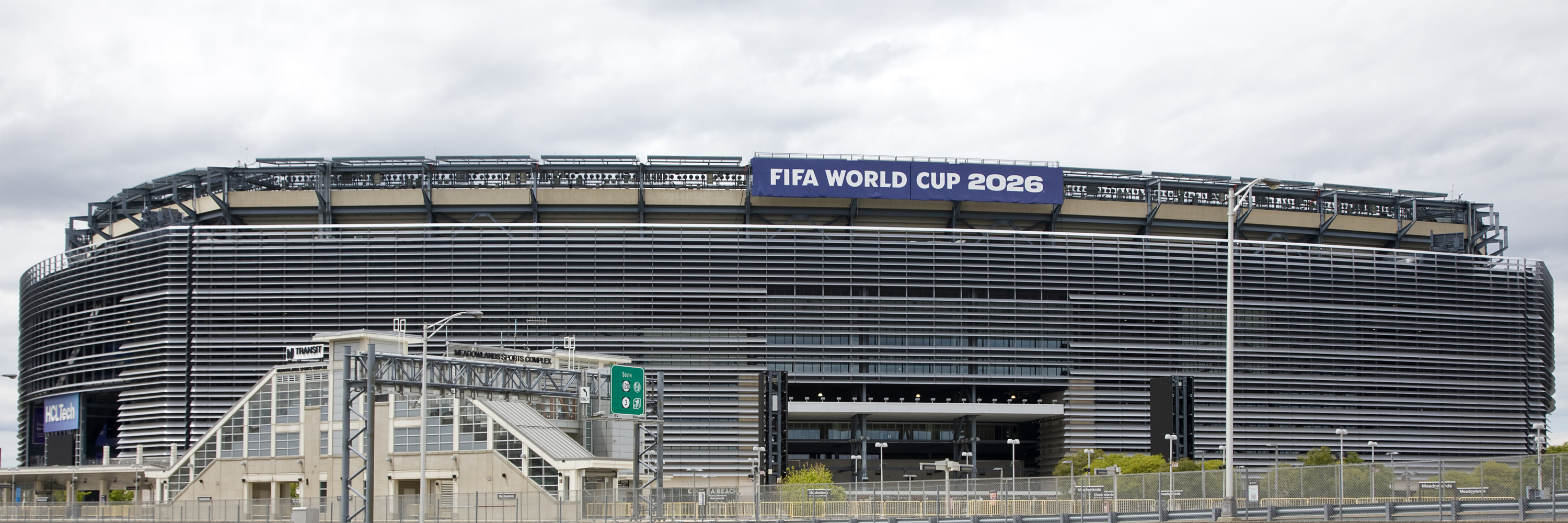
Metlife Stadium in Rutherford, N.J. is one of 16 stadiums hosting 2026 FIFA World Cup matches in the U.S., Canada, and Mexico. —Johnrob—Getty Images

Any time people from around the world gather together, the risk of certain diseases goes up. With the World Cup underway, health experts are on alert for infectious diseases.

Here are some tips from infectious-disease and public-health experts about what to worry about, what not to worry about, and how to best protect yourself.

Hantavirus and Ebola have been in the headlines. How worried should I be if I’m attending a match?

The risk of getting infected with either virus remains low for the general U.S. public for several reasons. First, both viruses are transmitted by direct contact with an infected person (or rodent, in the case of hantavirus). In the U.S., cases of hantavirus are generally reported in the Pacific Northwest, but some Americans were recently exposed during a cruise that originated in Argentina, where the virus is more common. Those exposed passengers were evacuated to a special biocontainment facility in Nebraska where they were monitored for any signs of disease, and many passengers have been discharged after remaining symptom-free for a period of time.

Ebola is transmitted from certain animal species like bats and primates, and while the current outbreak in the Democratic Republic of Congo (DRC) and Uganda is concerning, health officials there are exit-screening people leaving those countries in hopes of keeping the virus contained. The U.S. also recently imposed additional restrictions for anyone arriving in the country from the DRC, Uganda, or South Sudan.

The DRC’s World Cup team is training in Houston and changed its training schedule, according to Politico, in part due to U.S. entry restrictions for travelers from the country. The team had planned on convening in the capital city of Kinshasa before flying to the U.S., but the players, who were already out of the country for a match, flew directly to Europe instead. The U.S. Centers for Disease Control and Prevention (CDC) is working with team officials to ensure safe training procedures are in place for the players, officials told Politico.

For fans from the DRC traveling to the U.S., those who already received visas will have to spend the 21 days before arriving in the U.S. outside of the DRC, Uganda, and South Sudan, according to current U.S. entry restrictions. Those without visas may not be issued one since the U.S. embassy in the DRC has temporarily suspended issuing visas.

What is the biggest infectious disease risk at World Cup matches?

Health experts say the more realistic worry is about respiratory diseases like the cold, flu, RSV, and COVID. These spread readily through the air—via coughs and sneezes—especially in crowded conditions. Many stadiums are outdoors, which helps cut down on transmission, but being in tight quarters next to someone who is sick could make you sick as well.

“Right now, it’s cold and flu season in the southern hemisphere,” says Dr. Daniel Egan, an infectious-disease physician at Orlando Health. “World Cup matches are a unique scenario of mixing people coming from that area with people up north. Respiratory illnesses are honestly the biggest spreading-possibility illness now.”

How can I protect myself from getting sick?

It's advice you've heard since childhood, but doctors say the best defense against germs is washing your hands. Traditional soap and water work on a number of levels, from the physical removal and destruction of microbes on your hands to cleaning away any dirt and grime.

Finding a sink is the best option, but if one isn’t convenient, then hand sanitizer is a good substitute, says Egan. But, he says, “If you compare them head to head, then soap and water beats out hand sanitizer every single time.”

Beyond washing your hands, it’s also helpful to be aware of what your hands are touching. “In any big crowd, it’s a challenge to think of all the different areas that people touch,” says Egan. “Guard rails, handrails, countertops—a lot of people are touching these areas, and that’s how diseases spread.” Viruses like norovirus and stomach bugs that cause gastrointestinal distress are usually spread via contaminated surfaces.

The best way to protect yourself from these germs is to also wash your hands—both before and after you use the restroom. That way, any microbes you may pick up from touching surfaces won’t be spread while you undress or use the bathroom. “People have no idea of the surfaces they touch before they go to the bathroom,” says Egan.

Are health officials tracking the World Cup for diseases?

Health officials are turning to a relatively new way of monitoring microbes that proved useful during COVID: through wastewater.

Scientists have developed ultra-sensitive ways to pick up traces of viruses like influenza, COVID, RSV, and more. They use a technology that amplifies tiny signals of pathogenic genes to determine whether certain diseases are rising in a sampled area.

Verily Health, an offshoot of Google X, began monitoring wastewater for infectious diseases during COVID in 2020, and now works with the CDC and others to provide up-to-date information on disease trends picked up in wastewater. For the World Cup, Georgetown University and MedStar Health created the Health Security Operations Center, the first non-government public-health emergency center to monitor for infectious diseases. Verily is contributing to the information the operations center is tracking to stay on top of infectious disease trends, by looking for about 30 infectious diseases in wastewater, including in cities where World Cup teams are training. (They are not currently looking for Ebola, but they can if it becomes necessary.) The wastewater monitoring “is public-health response on steroids,” says Dr. Vindell Washington, chief physician executive of Verily. When samples from local wastewater plants come in, they take about three days to fully analyze, he says, compared to the several weeks it might take for people to develop symptoms, get tested, and wait for the results.

He says Verily will analyze the data and post them on a website to help people make more informed decisions about infectious-disease risk. Someone with COPD or asthma, for example, could check the dashboard for respiratory illnesses in the area of the game.

Doctors can also take advantage of the information to spot trends in a patient's area. Knowing that RSV cases are rising nearby, for example, may raise their suspicion for that virus, which could help guide testing and treatment.

It’s part of the effort to empower people with better, real-time information that can have a direct impact in improving their health. “This World Cup is a step forward—we have people coming from around the world, and the disease environment could change relatively quickly,” says Washington. “We need a signal today, and not six weeks from today.”

How Companies Track Climate Progress Is Changing

2026年6月13日 02:00
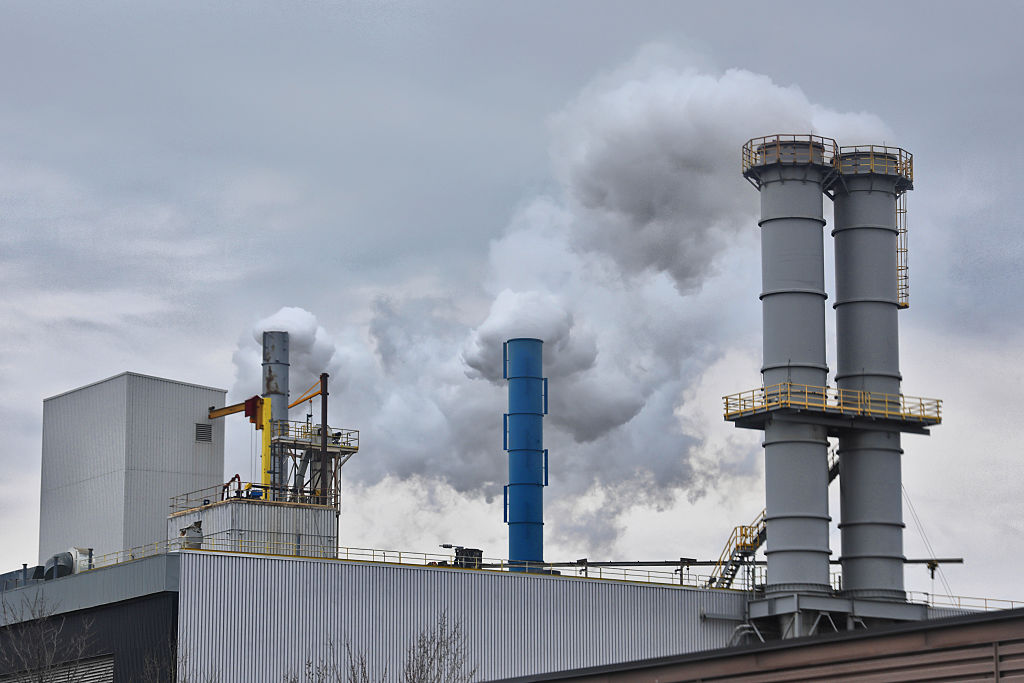
Emissions rise from the large smoke stacks of a power plant during a cold and rainy day in Ontario, Canada on April 12. —Creative Touch Imaging Ltd./NurPhoto—Getty Images

There’s a big fight over the future of how companies set climate targets and show progress toward them. How these rules unfold will shape the approach companies take toward the climate transition and, by extension, influence the way they allocate billions in capital.

But first, the organizations in charge of defining the rules of the road have to get the language right. 

It took only a few minutes of conversation last week with David Kennedy, the head of the Science Based Targets Initiative (SBTi), for him to take issue with my word choice. The leading standard-setting organization was days away from announcing its new corporate standard, and I asked about how it would create “flexibility” for companies. Kennedy rejected the word. “It's not flexibility in that kind of pejorative sense,” he says. “It is providing options.”

It was a telling exchange. Over the last few years, the world of emissions standard setting has become increasingly contentious, so much so that even a few words can trigger a fight about whether companies are getting off the hook or being held to account. 

And yet behind the semantic debate are important decisions that will shape the future of corporate climate action. Founded in 2015, SBTi has come up with key ideas that have migrated into government regulation of corporate climate work, and its guidance has become a North Star for companies looking to decarbonize. That trusted guidance is even more important today as businesses move from setting lofty long-term goals to implementing short-term solutions in their operations and supply chains. By extension, SBTi guidance is an important indicator of where the puck is moving, shaping investment decisions across the thousands of companies that follow its guidance.   

Maintaining that influential position requires threading a needle. SBTi needs to maintain sufficient buy-in from companies, which are often wary of stringent standards, while keeping on board policymakers and climate advocates that demand more ambition. (Indeed, a group of NGOs criticized the new SBTi framework, released June 11, as insufficient.) Kennedy described the new standard as sitting in a “sweet spot.” It’s “on the one hand aligned with commercial objectives,” he says, and on the other it allows companies “to make contributions to international climate objectives.” 

SBTi’s new corporate guidance is an attempt at navigating the tension. Kennedy argues that it does not lower ambition, even as it gives companies more tailored ways to show progress. It outlines sector-specific pathways for cutting supply chain emissions. It emphasizes in-depth transition planning over simple goal setting. And it offers guidance for companies that want to use market-based instruments to reduce emissions outside of their direct operations. 

The standard covers wide ground in significant detail. It assesses companies not based on whether they say they want to hit net zero but whether they’re actually incorporating climate thinking into their operations. While following SBTi guidance is voluntary, the move is a good indicator that this is the new measure of climate success for any business. “It reframes net-zero transition as a continuous improvement journey rather than a point in time,” says Kennedy. 

For the uninitiated, reading the new corporate standard can feel like jumping into the obscure. And yet the specifics laid out over nearly 100 pages will have both immediate and long-term effects in how companies understand climate action. 

One example is how SBTi suggests companies should calculate their use of clean energy. Power market experts have debated whether companies should match their power consumption with clean energy generation on an hourly or annual basis. The latter approach became commonplace under SBTi’s first standard. And matching on an annual basis has helped seed the market for companies purchasing renewable energy. But some experts and companies now complain that it doesn’t reflect actual usage. SBTi leaves annual matching intact as a baseline while opening the door to hourly matching.  

SBTi has also created “best efforts” provisions that cut companies slack if they miss their targets due to circumstances beyond their control. “It may be for reasons beyond your control as a company that there is a gap between performance and targets,” Kennedy said. “And then we say be transparent, don’t pretend that there isn’t a gap.”

Finally, SBTi’s treatment of “market-based measures” offers an attempt to move beyond the stalled debate over carbon offsets. The new guidelines don’t dismiss these tools, but instead create a clear-cut hierarchy. Companies should first do what they can to cut emissions from their own operations. Then, they should focus on emissions reduction in systems they rely on (think of an airline helping fund the creation of a sustainable aviation fuel ecosystem). Separately, high-integrity offsetting remains a last-resort solution but doesn’t erase the obligation to decarbonize. This is complex, but it should signal a continued market for many low-carbon solutions.  

What’s the signal out of all of this? The future of corporate climate efforts will continue, but as SBTi makes clear: Merely setting targets isn’t enough. To be credible requires actually incorporating climate into strategy and operations. 

To get this story in your inbox, sign up to TIME's Future Proof newsletter here.

Ceasefire Deal Within Reach, U.S. and Tehran Say

2026年6月13日 00:57
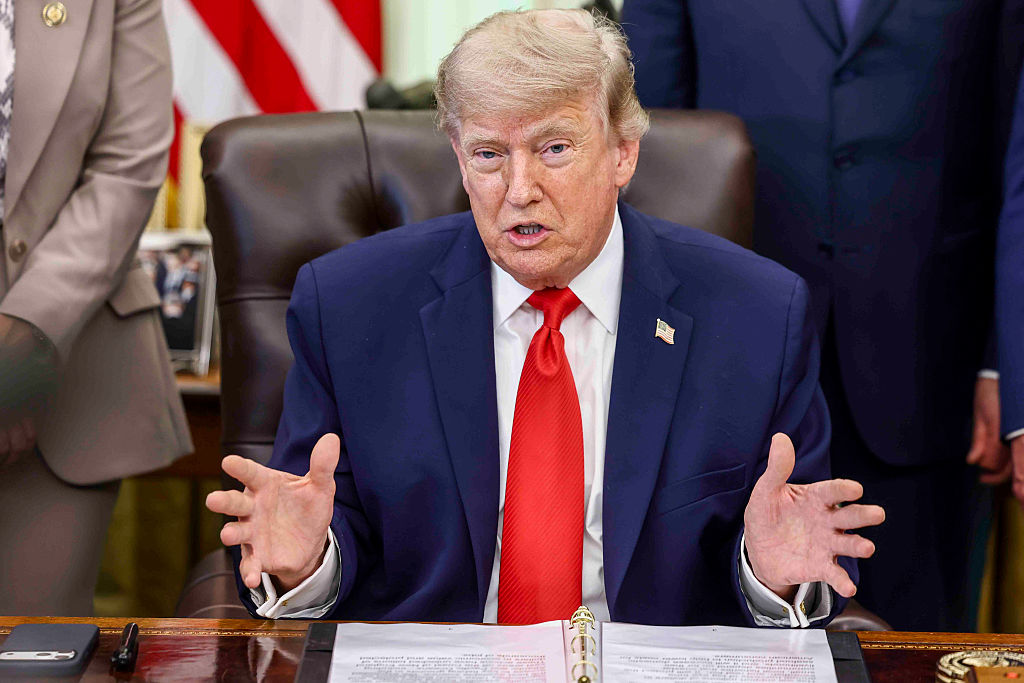
President Donald Trump speaking to reporters in the Oval Office, shortly after announcing his pull back of strikes against Iran in Washington, D.C., on June 11, 2026. —Jim Lo Scalzo—Getty Images


The United States and Iran may be close to a deal to at least pause the war, as officials from both countries and Pakistan signaled that negotiations were advancing well and nearing a final agreement.

But conflicting statements on how to characterize the details of the emerging deal suggested sticking points remained.

A senior Trump Administration official speaking on condition of anonymity on Friday described negotiations that had made “substantial progress” from broad understandings to a written framework that both sides now largely support, while acknowledging that difficult technical questions still remain. 

Iranian Foreign Minister Abbas Araghchi said Friday that a “memorandum of understanding has never been closer.” “Pending its finalization, the media should refrain from entering speculation about its content,” he said, adding that details would be made public “in due course.”

The positive signs came after President Donald Trump on Friday rejected as fake a version of the agreement circulated by Iranian state media that suggested Washington had made significant concessions to Tehran. “The terms that Iran leaked out to the fake news have nothing to do with the terms that were agreed to, in writing,” Trump said. “What they said, including their weak and pathetic statement on having a deal, bears no relation to the truth. Very dishonorable people to deal with.”

Trump also accused Iran of continuing to target ships in the Strait of Hormuz and warned that “they better get their act together, and fast.”

A memorandum of understanding published by Iranian state media suggested Tehran had managed to negotiate regaining access to billions of dollars in frozen assets without ruling out exerting control over the Strait of Hormuz in the future. 

Administration officials describe the agreement differently, portraying it as a five-point, performance-based framework under which Iran would receive economic benefits only after carrying out specific obligations. Economic incentives would be phased in as Tehran turns over nuclear material, dismantles nuclear facilities, and demonstrates a commitment to regional stability, the senior administration official said.

Tehran has long maintained that any broader cease-fire arrangement would need to include assurances regarding Israeli military operations against Hezbollah in Lebanon. Such provisions appeared in the version of the agreement reported by Iranian state media but not in the framework described by U.S. officials.

Shehbaz Sharif, the Prime Minister of Pakistan, whose government has played an intermediary role in the talks, also said that negotiators had reached an agreed-upon text and were working to finalize it. The contradictory accounts from Washington and Tehran come after several days of escalating violence.

The senior Trump administration official said the emerging deal includes Iran “committing indefinitely to never procure or develop nuclear weapons,” a commitment that previous rounds of diplomacy had envisioned lasting only 10 or 20 years. But the official emphasized that verification mechanisms remained essential and would be negotiated in detail. The official added that the U.S. has no objection to Iran maintaining civilian nuclear power generation, but opposes preserving infrastructure that could allow Tehran to move from civilian energy production to weapons development.

The senior official said the broader regional agreement encompasses Lebanon, Israel, and Gulf states but would not deprive Israel of the right to defend itself. If Iran failed to uphold its obligations, the official said, Israel would be expected to respond.

The Trump Administration is also expressing confidence that Israel would ultimately support the agreement, despite longstanding skepticism from Prime Minister Benjamin Netanyahu and concerns among Israeli officials that Washington might settle for terms they viewed as insufficiently stringent.

Trump spoke with Netanyahu on Thursday, according to the senior official, who said Israeli concerns had been fueled in part by inaccurate reports about the contents of the agreement.

“We feel confident that the deal that we’re actually going to strike, assuming we get there, is going to be a deal that everybody in the region can be comfortable with,” the senior official said.

The Administration also downplayed signs of discord inside Iran, saying it believed most of the country’s leadership supported the agreement even though hard-line factions remained opposed.

Judge Rejects Late Bid to Keep Trump's Name on Kennedy Center as Deadline Looms

2026年6月12日 23:56
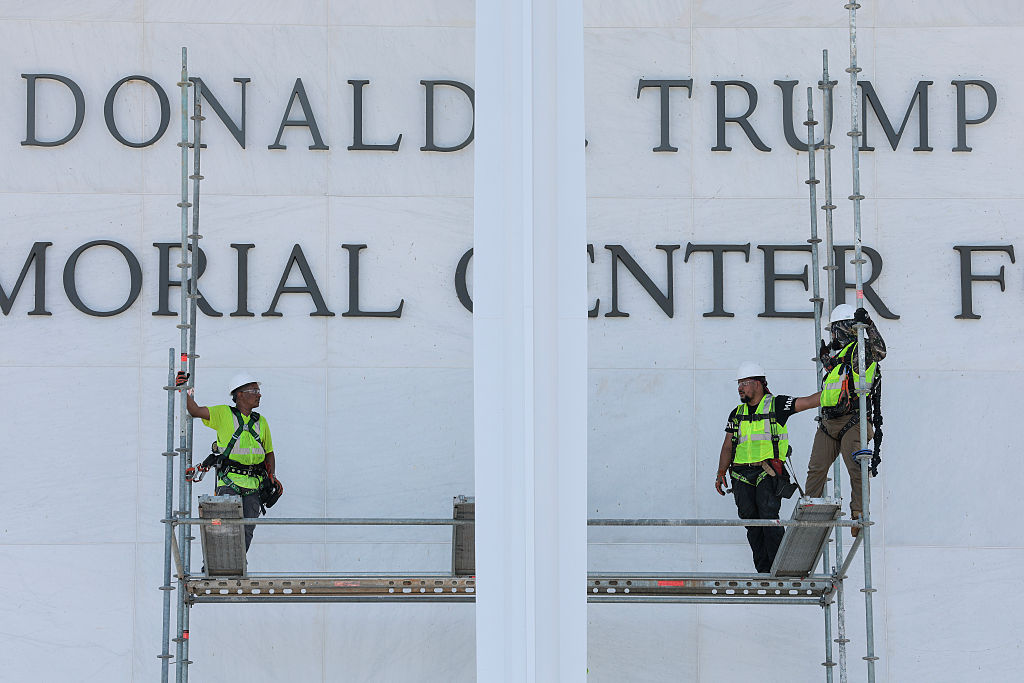
On Friday, June 12, the day judge had ordered the Kennedy Center to restore its original signage, construction workers were building scaffolding near the sign. The building's facade still read The Donald J. Trump and John F. Kennedy Memorial Center for the Performing Arts. —Anna Moneymaker—Getty Images

President Donald Trump’s name remained affixed to the Kennedy Center on Friday, the deadline a federal judge had set for the letters to be taken down. But a federal judge denied a last-minute effort by the Center's Board of Trustees to keep the signage in place for now, as workers were putting up scaffolding under the sign, suggesting removal could be imminent.

On Thursday evening, the Board of Trustees of the Kennedy Center appealed a ruling that ordered the removal of Trump’s name from the center’s building and the center’s online materials and accounts by Friday. U.S. District Judge Christopher Cooper previously ruled that only Congress, not the Board, has the authority to change the center’s name. In recent days, Trump’s name had been removed from the center’s official website, voicemail and YouTube channel. Nonetheless, a person with knowledge of the legal fight expressed skepticism that Trump's sign would come down Friday.

In the filing, the Kennedy Center said the court should grant a stay of the judge’s order, because it has “strong arguments to raise on appeal,” and that removing Trump’s name would be “both wasteful for the Center and confusing for the public.”

“The far more sensible course is to allow the D.C. Circuit to adjudicate this appeal before requiring these sorts of compliance measures,” the center argued.

The latest legal back and forth stood to lengthen a drama that began six months ago, when the Kennedy Center’s Board of Trustees, which is packed with Trump’s allies, voted “unanimously” to rename the cultural center to the Trump Kennedy Center. Instead of replacing the building’s signage, workers added the words “The Donald J. Trump and” above the existing lettering, changing the building’s name to “The Donald J. Trump and The John F. Kennedy Memorial Center for the Performing Arts.”

The move drew immediate backlash and a lawsuit from Rep. Joyce Beatty of Ohio, one of the board’s ex-officio members who had been stripped of voting power on the board. 

Norman Eisen, one of the attorneys representing Rep. Beatty, said the center’s last-minute appeal “evinces desperation.”

“That is what they should be feeling because they don’t have a legal leg to stand on. We are vigorously contesting this latest ploy, as we have throughout the case, on behalf of Congresswoman Beatty and the American people,” Eisen added. 

Washingtonians have been keeping a close eye on the Kennedy Center as the court-ordered deadline nears. A live camera mounted outside of the Watergate hotel balcony has been monitoring the exterior wall of the Kennedy Center for days. The livestream is set up by Hands Off the Art, an activist group that has been leading weekly protests outside the center this spring. 

Andrew Martin, a DC resident also known as “Drybrarian” on Threads, has been taking a daily picture outside of the Kennedy Center since the beginning of June. The account quickly garnered thousands of likes each day and more than 30,000 followers.

“We are so hungry for even the tiniest smidge of hope,” Martin told The Washington Post, “of something that indicates that the bad days might be over.”

Received yesterday — 2026年6月12日TIME

What You Need to Know About the 2026 World Cup Final Halftime Show

2026年6月12日 20:05
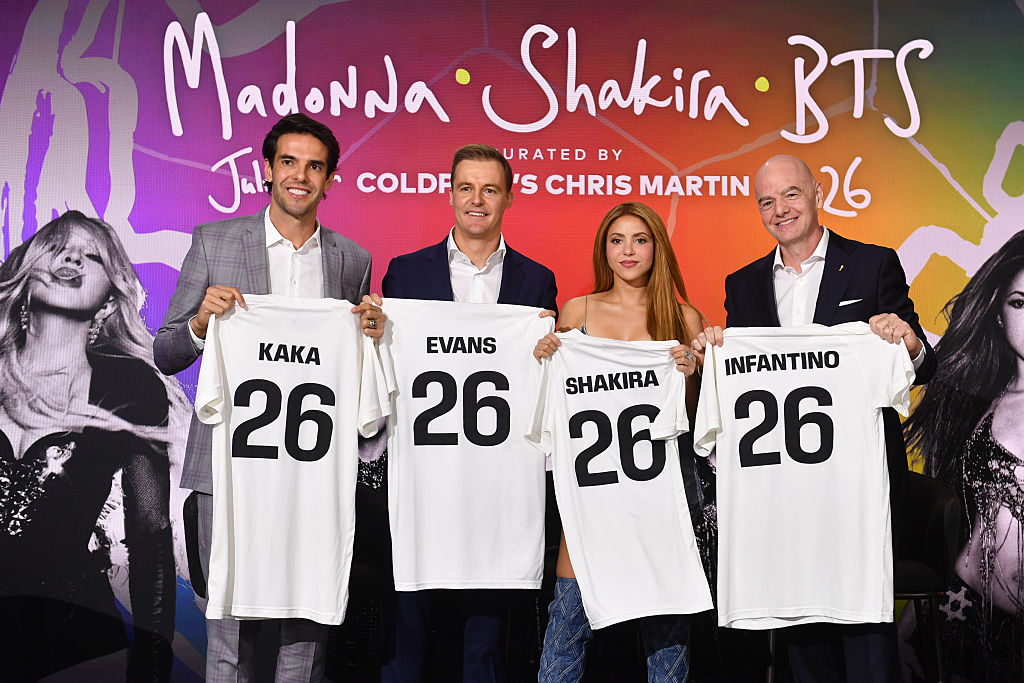
Kaká, Hugh Evans, Founder & CEO of Global Citizen, Shakira, and FIFA president Gianni Infantino appear at the announcement of the FIFA World Cup final halftime show in New York City on on May 14, 2026. —Noam Galai––Getty Images for Global Citizen

For the first time ever, the FIFA World Cup final will feature a star-studded halftime show.

In what is being compared to a Super Bowl spectacular, the performances are set to be broadcast live to millions of soccer fans.

The 2022 final in Qatar was the most-watched in FIFA World Cup history, attracting 1.5 billion viewers around the world. This year’s final in New Jersey is expected to break those records.

Curated by Coldplay’s Chris Martin, the halftime show will support the FIFA Global Citizen Education Fund.

FIFA president Gianni Infantino has promised “a historic moment for the World Cup and a show befitting the biggest sporting event in the world.”

With the World Cup underway in its three host countries—Canada, Mexico, and the U.S.—here’s what you need to know about the final’s hotly-anticipated halftime show.

Fireworks go off at the FIFA World Cup Qatar 2022 final match between Argentina and France at Lusail Stadium on Dec. 18, 2022. —Richard Heathcote––Getty Images

When is the World Cup final halftime show—and how can I watch it?

The show will take place during the FIFA World Cup final which is set to start at 3 p.m. ET on Sunday, July 19.

It’s happening at the MetLife Stadium in New Jersey, which is temporarily being called the New York New Jersey Stadium due to the World Cup’s rules on endorsements.

In the United States, viewers will be able to watch the show live on Fox Sports, with the match airing on the FOX network.

Spanish-language viewers can watch through NBCUniversal’s Peacock streaming service with a Premium or Premium Plus subscription. The match will also air on Telemundo.

New York City Mayor Zohran Mamdani has announced a free World Cup final watch-party for 50,000 New Yorkers.

“You don’t need to drop thousands of dollars to watch the World Cup final. And you don't need to be a professional to play in the World Cup. You just need to head to Central Park,” Mamdani said.

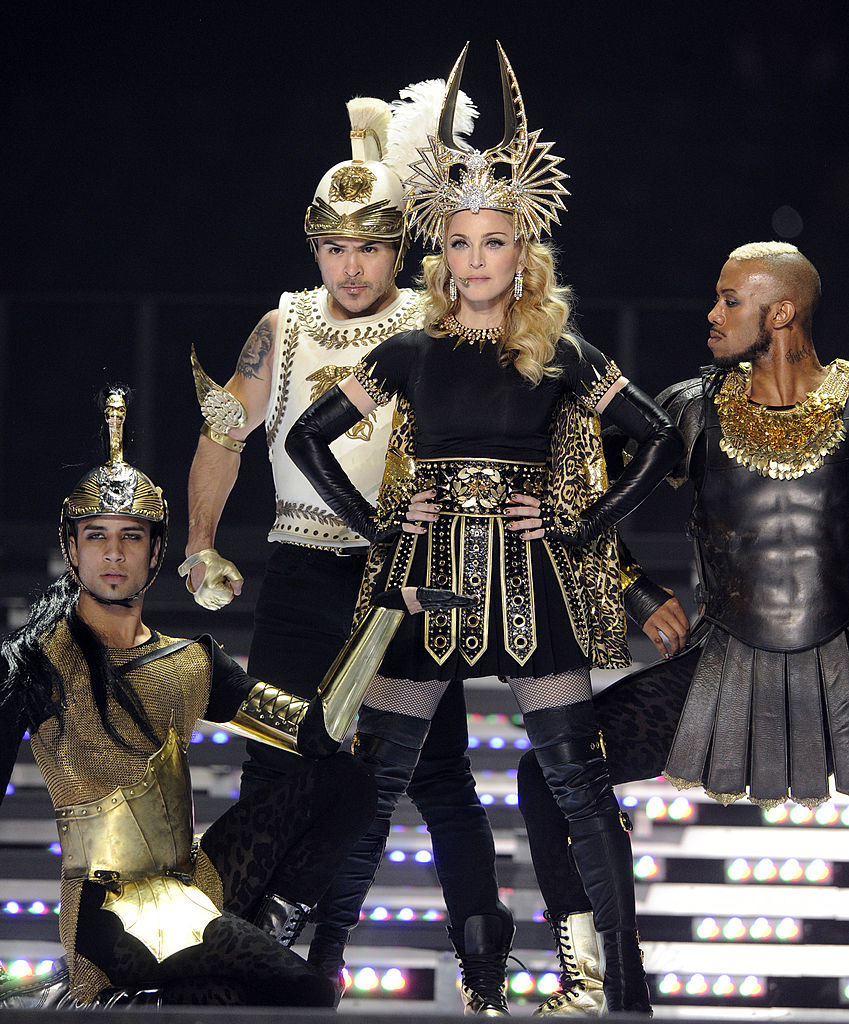
Madonna performs during the Super Bowl at Lucas Oil Stadium in Indianapolis, Indiana, on Feb. 5, 2012. —Kevin Mazur––Getty Images

Who is performing at the FIFA World Cup halftime show?

The show will be co-headlined by Shakira, Madonna, and K-pop supergroup BTS.

Shakira, who also led the line-up for the tournament’s opening ceremony in Mexico City on June 11, serves on the advisory board of the FIFA Global Citizen Education Fund.

Shakira and Nigerian singer-songwriter Burna Boy partnered up for this year’s official World Cup anthem, “Dai Dai.” 

Royalties from the song will support the education fund, with Sony Music pledging to match the first $250,000 raised with a donation.

Shakira will be joined by the Ghetto Kids, a Ugandan dance troupe that rose to prominence following appearances on America’s Got Talent in 2024.

Shakira is no stranger to either the World Cup or halftime performances.  In 2010, she cemented her place in soccer culture with Waka Waka, the chart-topping anthem of that tournament. 

A decade later, she headlined the Super Bowl halftime show alongside Jennifer Lopez.

Madonna also has experience leading a halftime event, as she famously headlined the 2012 Super Bowl show.

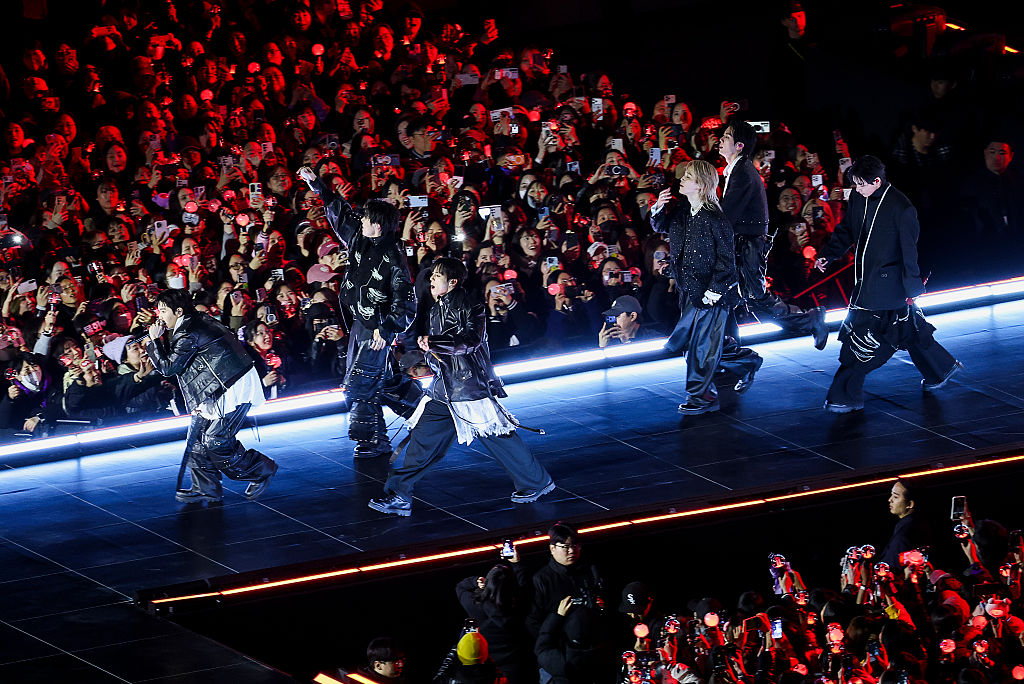
BTS, the seven-person K-pop group who recently returned to the scene following a three-year hiatus to complete mandatory military service obligations, will be taking the night off from their global tour to perform at the soccer event of the year.

K-pop boy band BTS perform onstage during comeback concert at Gwanghwamun Square in Seoul, South Korea, on March 21, 2026. —Kim Hong-Ji––Getty Images

Why has Global Citizen partnered with FIFA—and how is Chris Martin involved?

The FIFA Global Citizen Education Fund aims to support grassroots programs in more than 200 countries, expanding access to education and soccer.

The initiative is “aiming to raise $100 million to expand access to quality education and football [soccer] opportunities for children worldwide.” 

Global Citizen has previously partnered with governments, businesses, and entertainers on large-scale fundraising efforts, such as the Stand Up for Ukraine event launched in 2022.

Martin became involved after he reached out to the initiative during the previous World Cup. 

“Four years ago, at the time of the Qatar World Cup, Chris Martin called me and said, ‘wouldn’t it be amazing if we could do a halftime show for the World Cup, because it is this moment that brings all of humanity together,’” explained Global Citizen CEO Hugh Evans.

When asked whether Martin himself would perform at the halftime show, Evans did not confirm either way, but said that the audience is in “for some big surprises.”

—Eva Marie Uzcategui—Getty Images

International hesitations over the halftime show

British television networks BBC and ITV, which are broadcasting the World Cup for U.K. fans, are reportedly considering not airing the halftime show in real-time. 

Instead, the broadcasters are expected to stick with their traditional format of using the slot to air commentary from pundits analyzing the first half of the match.

The performances would instead be viewable via the networks’ respective digital platforms.

The interval for soccer matches is typically timed to 15 minutes. It’s understood FIFA has yet to confirm exactly how long the halftime show will be.

TIME has contacted the BBC and ITV for comment.

How to Watch Sunday's UFC Fight at the White House

2026年6月12日 20:00

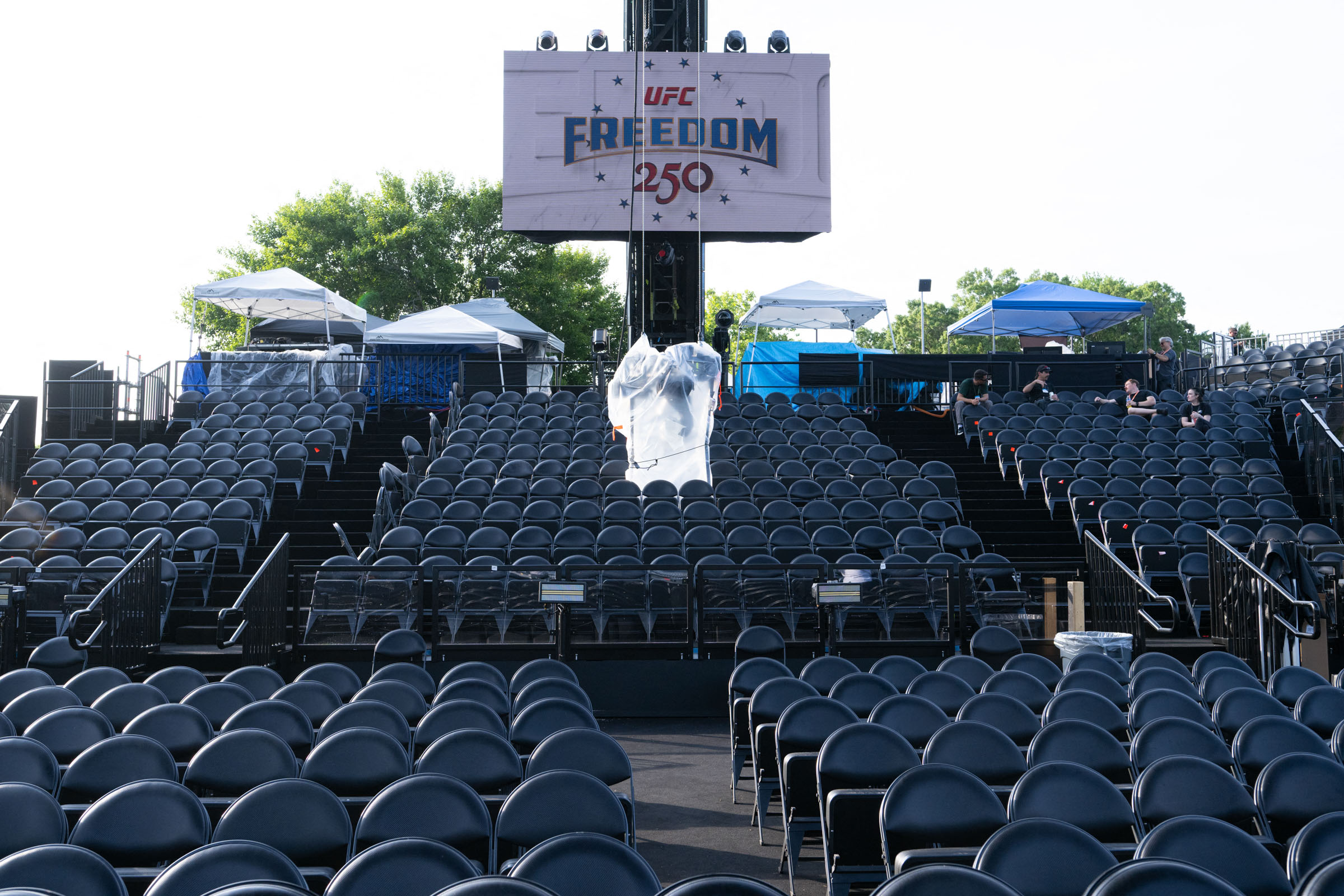
On June 14, the South Lawn of the White House will host not an easter egg roll or a turkey pardon, but rather a series of fights in a caged 92-foot tall Octagon, constructed and hosted by Ultimate Fighting Championship (UFC).

Organizers of the UFC Freedom 250 event say the fights are meant to celebrate America's 250th anniversary, but they also coincide with President Donald Trump’s 80th Birthday. 

Read More: How Dana White Took the UFC From the Fringes to the White House

The fight card constructed by UFC’s President and CEO Dana White, a long-time Trump ally, is headlined by a lightweight title bout between Ilia Topuria and Justin Gaethje and an interim heavyweight title bout between Alex Pereira and Ciryl Gane.

The fights will unfold on a massive stage constructed on the White House’s South Lawn, with approximately 4,000 spectators in attendance. Another 80,000 are expected to watch from the nearby Ellipse. UFC fans at home will also be able to stream the event live or online.

UFC Freedom 250 has been the subject of multiple controversies, much of it relating to the decision to allow the privately-held UFC to host an event on public land. A federal lawsuit filed this month by the Public Integrity Project on behalf of two Virginia residents called the event “deeply corrupt” and alleged that several federal rules and regulations were violated by the Department of Interior and the National Park Service in order to organize the event.

Despite the suit, the fight appears set to move forward. Ahead of Sunday’s fight, the UFC has scheduled a news conference for Friday night in front of the Lincoln Memorial, and an official weigh-in of the players on Saturday at the Ellipse.

Here’s how you can watch the historic UFC fight.

Where is it streaming? When does it start?

UFC Freedom 250 is exclusively streaming on Paramount+, where all UFC fights usually stream, and will begin at 8 p.m. EST/5 p.m. PST. It will also be broadcast live by CBS.

Can I attend the event?

About 4,000 attendees were invited to watch the event in person at the White House. Mixed martial arts fans who signed up in advance will have access to the watch event at the 52-acre Ellipse park just south of the White House. Those tickets are free, and White confirmed that about 85,000 tickets were made available. The 4,000 attendees at the fight on the South Lawn will be mostly military, according to White.

How to watch the other weekend events

The UFC press conference will take place in front of the Lincoln Memorial on Friday, June 12, beginning at 8:30 p.m. ET, and is expected to be streamed on the UFC’s YouTube channel or website.  The weigh-in, set for Saturday at 7:30 p.m. ET, will also stream on the UFC’s YouTube channel.

What to Know About the Giant ’86 47′ That Appeared on National Mall Grass

2026年6月12日 15:01
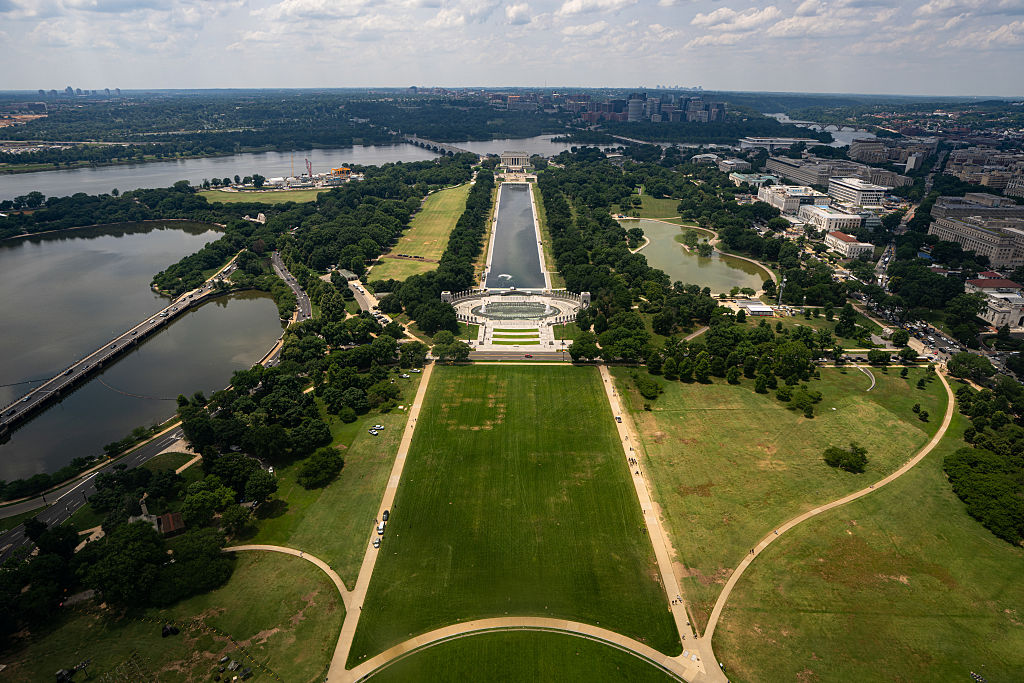
The numbers "86 47" on the National Mall between the Washington Monument and the World War II Memorial in Washington, DC, US, on June 11, 2026. —Al Drago—Bloomberg/Getty Images

Authorities are investigating apparent discolorations on the grass of the National Mall that may spell out “86 47,” a set of numbers which Donald Trump’s Administration has claimed to be a threat or allusion to the assassination of the President.

Aerial images taken Thursday, just days before Trump’s birthday on June 14 and the Ultimate Fighting Championship (UFC) event at the White House, show the apparent staining in the grass near the World War II Memorial. The photos show a visible 8 and traces of 6, 4, and 7.

It wasn’t immediately clear when the markings first appeared. The Washington Post reported the numerals were already visible on Tuesday. Reuters reported that one of its photographers saw the markings shortly before the U.S. Park Police and ​members of the National Guard arrived on scene. They were also visible from a live cam atop the Washington Monument. 

Merriam-Webster says “86” is restaurant industry-derived slang which means “to throw out,” “to get rid of,” or “to refuse service to,” while noting that it has also recently been used to mean “to kill.” Meanwhile “47” may be used as a reference to Trump, the 47th U.S. President.

The numerals have been used together in the past to signal opposition to Trump. One notable use was when former FBI Director James Comey, an outspoken critic of the President, posted on Instagram last year an image of seashells arranged to show “86 47.” Comey was indicted in April for allegedly making a threat against the President; he has maintained innocence and vowed to fight the case, citing free speech.

The Interior Department called the latest incident at the National Mall “deranged vandalism,” adding that “any threat against the President is taken very seriously” and that U.S. Park Police will investigate “and hold ​those responsible accountable.”

In statements to the media, a spokesperson for the U.S. Park Police said ‌they haven’t determined cause ⁠of the "discoloration,” adding that a probe is underway and grass samples have been collected for testing.

White House spokesperson Davis Ingle said in a separate statement to the media Thursday that “anyone who engages in or endorses political violence or assassination culture must be condemned in the harshest terms possible” and that “they should also immediately seek psychiatric help to treat their severe and debilitating case of Trump Derangement Syndrome that has warped their brains and made them sick in the head.” 

The National Mall has been the site of previous demonstrations against Trump. Last year, a statue of the President holding hands with the late convicted sex offender Jeffrey Epstein appeared. During the most recent “No Kings” protests in March, demonstrators marched from Arlington, Va., to the National Mall to denounce the President.

Earlier this month, a federal judge stopped the National Park Service from taking action against the progressive group Accountability NOW USA. The group displayed an “86 47” flag during a permitted demonstration near the George Meade Statue in D.C., where they called for Trump’s removal from office. The display prompted an investigation by the Secret Service.

But according to District Judge Randolph Moss, “it is difficult to fathom how the NPS (or the Secret Service) could have concluded that a reasonable observer would view the flag as a true threat.”

Congress to Hold Special Gathering in Philadelphia to Mark 250th Anniversary

2026年6月12日 05:00
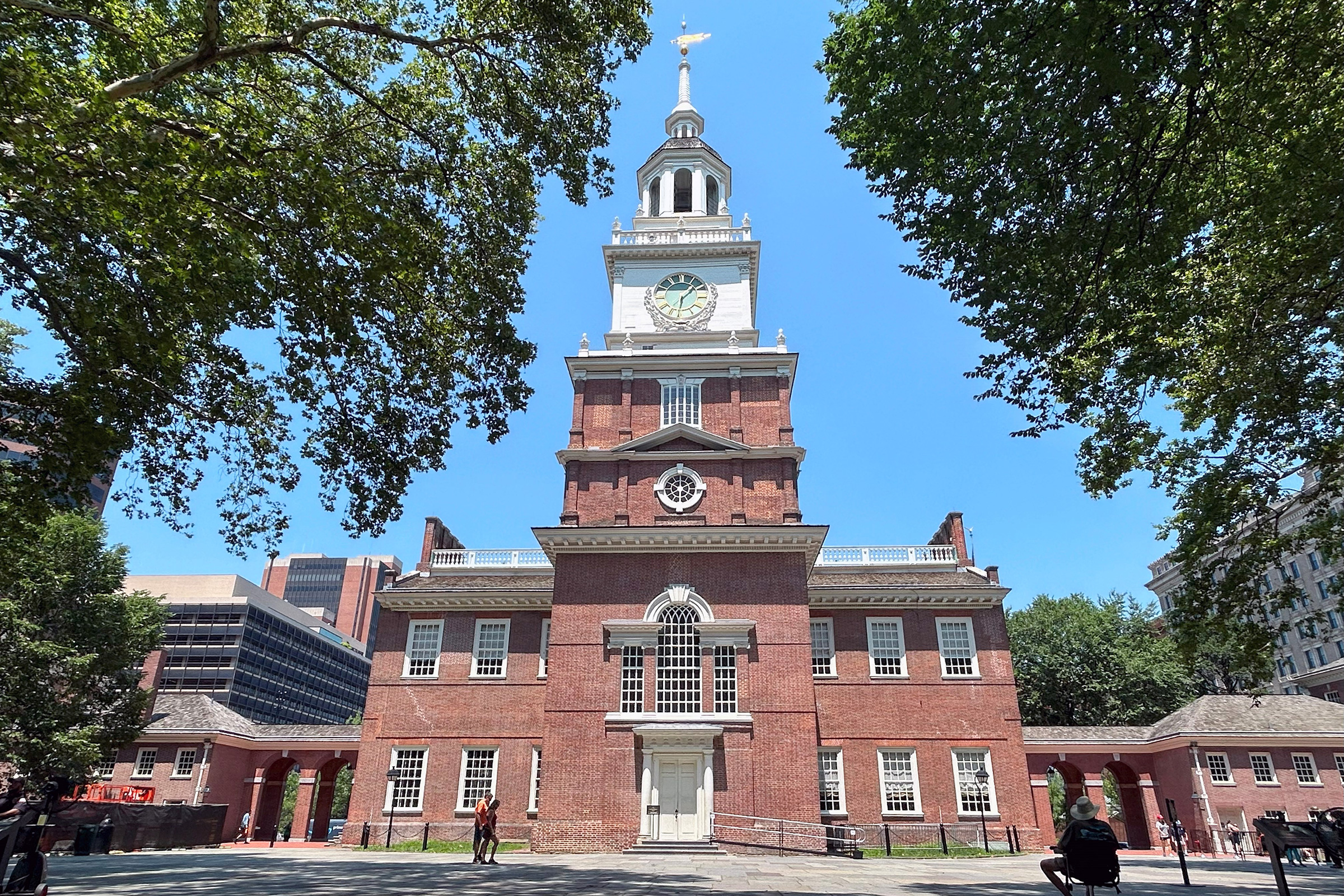
View of Independence Hall in Philadelphia on July 3, 2025. —Juan Mabromata—AFP/Getty Images

Congress is heading back to its roots in Philadelphia for a historic offsite gathering on July 2 to celebrate the 250th anniversary of the signing of the Declaration of Independence, according to the U.S. representative organizing the event and a local official with knowledge of its planning.

U.S. Rep. Brendan Boyle, a Democrat whose district includes Philadelphia, is spearheading the gathering. “Exactly two years ago I launched this effort to bring Members of Congress, both Democrats and Republicans, back to the place where it all began 250 years ago: Independence Hall,” Boyle said in a statement to TIME. “I am very proud and excited this special event is happening. It will be a unifying moment for the Congress and our country, at a time when we need it most.”

The President & CEO of the Philadelphia Visitor Center, Kathryn Ott Lovell, told TIME she was aware that members of Congress were planning to convene at Independence Hall on July 2. 

Boyle first proposed holding a special joint session at Independence Hall in June 2024. But his initial resolution hadn’t moved forward with just three short weeks to go. Instead, the visit is slated to go ahead as a ceremonial event, according to Boyle’s office, which doesn’t require an official act of Congress. It’s being organized as part of America250, the bipartisan national commemoration of the 250th anniversary, the office said.

Ceremonial or not, the event will still be a historic gathering of lawmakers outside of Washington. Such offsite meetings are extremely rare. In Sept. 2002, Congress held a commemorative session in New York City to mark the anniversary of the 9/11 terrorist attacks. Congress also convened a ceremonial session at Independence Hall in 1987 to commemorate the bicentennial of the U.S. Constitution. That event marked the first time since 1800—the year the federal government moved from Philadelphia to Washington—that Congress met somewhere other than on the banks of the Potomac. 

Plans for the 1987 session were to include every member of the 100th Congress, but security, space, and cost made that impossible. Each state delegation appointed one lawmaker to attend the gathering. Thousands of people gathered on the mall outside Independence Hall to watch the proceedings on big screens.

Independence Hall cannot accommodate all 535 members of Congress, so a smaller delegation is expected to visit Philadelphia next month. Neither House Speaker Mike Johnson nor Minority Leader Hakeem Jeffries' offices immediately responded to requests for comment.

The planned gathering comes amid celebrations across the country to mark the nation’s 250th birthday. President Donald Trump has organized a UFC fight June 14th at the White House, part of a slate of celebratory "Freedom 250" events taking place from June 25 to July 10.

In Philadelphia, a national march of mayors is also planned for July 2, with mayors from around the U.S. marching from City Hall to Independence Hall. Pope Leo is also receiving (virtually) the medal of honor at the National Constitution Center that day. On July 4 Philadelphia will host a Round of 16 World Cup game and a large free outdoor concert on the parkway.

There's significance to holding the Congressional event on July 2. While the U.S. celebrates Independence Day on July 4, officially, the Continental Congress declared its freedom from Great Britain on July 2, 1776, when it voted to approve a resolution submitted by delegate Richard Henry Lee of Virginia. The Congress drafted a document explaining the vote to the public and it was sent to the printer on July 4. The first public reading of the document occurred outside Independence Hall on July 8, 1776.

I Walked More Than Six Hours to the World Cup Stadium

2026年6月12日 04:50

The 90-degree sun was making a mockery of my sunblock, as evidenced by the bright red hue of my hand (and face and neck and legs). Truck exhaust made the mid-afternoon air even more suffocating, doing my hydration woes no favors. I was about halfway into a 13-mile journey, almost exclusively by foot, from Penn Station in New York City to MetLife Stadium in New Jersey, to see if walking to the World Cup was a cost-effective—and sane—transportation alternative for the area’s soccer fans on match day. After my editor bet that I’d spend the $98 cost of a game-day train ticket on food and drink, I packed plenty of water and other provisions to save money on the route. 

But at this point, my drinks were hot, my legs were getting heavy, and I had no choice but to slink into a North Jersey Dunkin’ to purchase two very large and oh-so-cold bottles of water and Gatorade. 

Chugging them left me refreshed, and still $80 ahead of the game! 

The near-$100 train fare from Penn Station to the suburban stadium hosting eight World Cup games, including the July 19 final, has neatly encapsulated the fundamental concern with the tournament, which will be hosted by the U.S., Canada, and Mexico, and officially kicks off on June 11 in Mexico City: that it’s a ridiculously expensive affair. While the sticker shock of what is typically a $13 trip enraged the masses—the price was initially announced at $150 in April, before it got knocked down to 98 bucks in the face of public backlash—some observers, particularly those from Europe, scoffed at all the outrage. “I know walking is an unfamiliar concept for most Americans, but it is a thing in the rest of the world,” wrote one user on X, igniting a viral debate.

Ferry ride with my son and me; some views from miles 1 through 9 —Sean Gregory (8); Charly Triballeau—AFP/Getty Images

Were it not for a six-plus-hour trip, by ferry and foot, from midtown Manhattan to what is now known as New York New Jersey Stadium during the World Cup (FIFA does not allow stadium sponsors during the event), it would be a very fair point. Plus, some commentary has suggested that it’s technically impossible to walk from New York City to the World Cup stadium, given all the highways that surround the facility. But if walking was really unworkable, why was Apple Maps offering me a route? It wouldn't be the first time tech misled humans, but perhaps it knew what it was talking about. And while FIFA has clearly stated that walking to New York New Jersey Stadium is not allowed on game days, citing safety concerns, could you still get pretty close? Should walking to the World Cup, and potentially saving $98 and gaining the exercise benefits, really be prohibited? Is the trek as perilous as some have led us to believe? 

With these questions in mind, I set out little before noon from the New Jersey Transit waiting room at Penn Station in early June. (My oldest son, home from college, accompanied me.) The area was nearly empty, but still sweltering. If any air-conditioning was on, it wasn’t doing much. Picturing a few thousand more enthusiastic soccer nuts in this space, crowded together in the heat, was enough to quicken my stride to the Hudson. 

There, at 39th Street, a $10.75 ferry takes you across the river to Weehawken, N.J. The views above the Hudson—of the water, the New York City skyline, the George Washington Bridge—surely beat those in the train tunnel below it. 

Upon arrival in New Jersey, directions took us north along the river. New York New Jersey Stadium is actually just six miles, in a straight shot northwest, from Penn Station. But the swampy landscape around the stadium, the Meadowlands, acts as a pedestrian barrier. So we essentially had to circumnavigate the marsh, not to mention the roadways and railways and refineries and electric power plants, to reach our destination. Still, while that infrastructure, never easy on the eyes, is familiar to anyone who has flown into Newark airport, or driven on the New Jersey Turnpike, or watched the opening credits of The Sopranos, it’s not the North Jersey we met at the start of this soccer pilgrimage. Rather, for about two and half miles, we were walking through river towns, which are green and scenic.

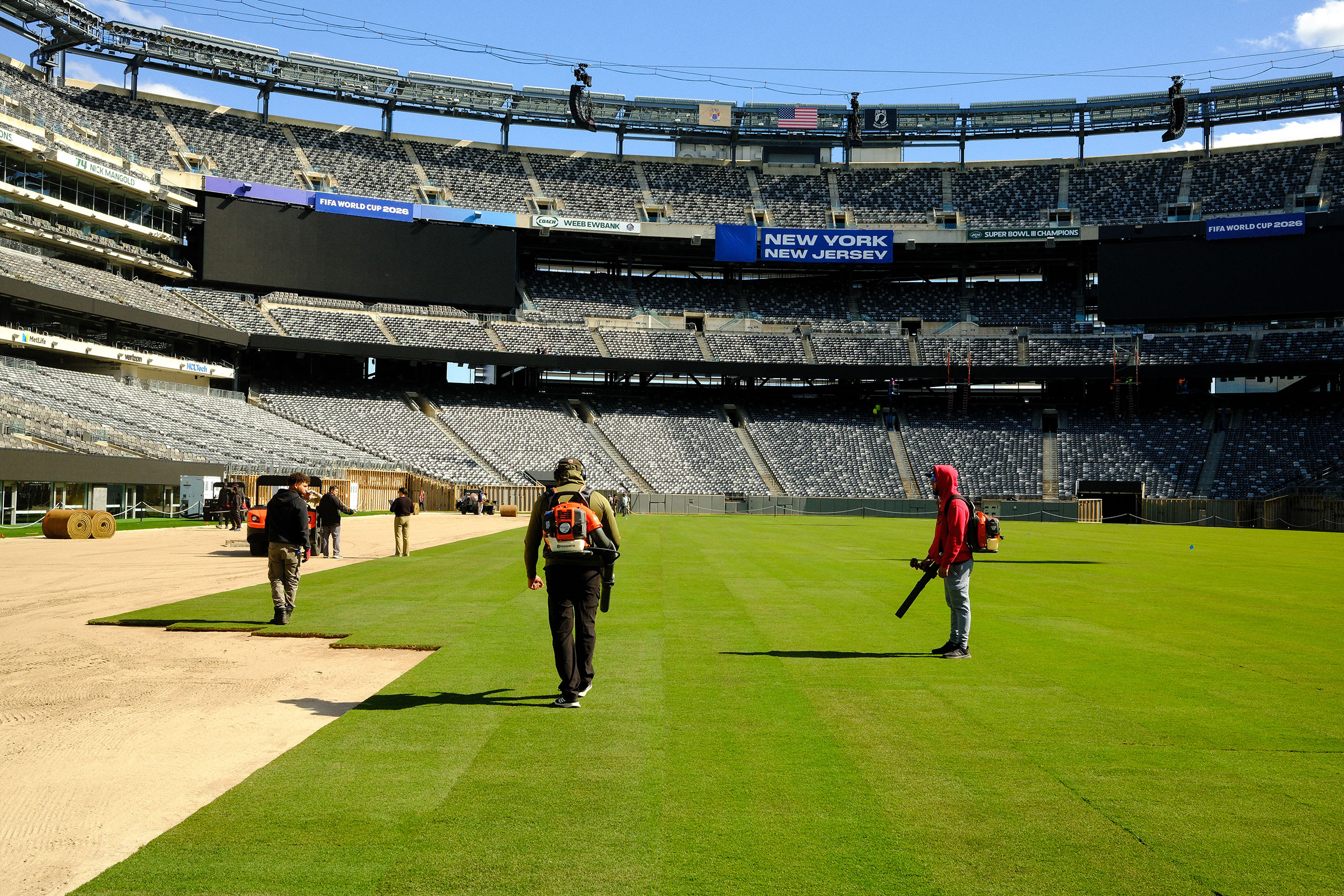
Workers install the pitch at New York New Jersey Stadium ahead of the 2026 FIFA World Cup, in East Rutherford, NJ on May 7, 2026. —Charly Triballeau—AFP/Getty Images

As we turned inland, we saw more industry: body shops, gas stations, a place called the Jingle II Cocktail Lounge hawking steaks and burgers (it’s been closed for decades). But even in these less foot-friendly areas, the route is mostly sidewalked. In a few spots where there’s not a sidewalk, there’s a white line indicating where the road begins: we stayed as far to the right of it as we could and made sure there were no signs prohibiting pedestrian activity. While this was definitely the part of the voyage that required the most vigilance, it was relatively brief. On Apple Maps, a few water crossings—over Overpeck Creek and the Hackensack River—looked dicey. But both had walking paths.

Nearing four miles to go, we finally headed due south toward the stadium. At that point, however, the peanut butter sandwiches packed in my bag would no longer do; luckily, a restaurant in Little Ferry, N.J., advertised empanadas. With the end somewhat in sight, a treat was in order. Two beef empanadas and another pair of cold drinks: my total bill for the trip now clocked in at $28.75. 

Fueled for the stretch run, I reached the base of New York New Jersey Stadium at around 6:30 p.m. FIFA won’t let walkers get that close on game day, so if you do walk, you’ll have to get as close as possible, then perhaps Uber to the designated drop-off point at the Meadowlands race track, about a 25-minute walk to the stadium entrances.

My phone informed me I’d set a record for burning calories in a single day and exceeded 28,000 steps. I felt sore but accomplished. Sure, if I was attending a World Cup match that night, I’d be beat. But I’d have earned those beers.  

The White House UFC Event Is Costing $60 Million

2026年6月12日 03:32

The Ultimate Fighting Championship (UFC) event scheduled to take place at the White House on President Donald Trump’s birthday this weekend is costing more than $60 million, according to a recent court filing.

Dubbed UFC Freedom 250, the fights are part of a lineup of events scheduled for this summer and promoted by the Trump Administration to celebrate the 250th anniversary of the adoption of the Declaration of Independence on July 4, 1776. The UFC event, though, is facing a legal challenge: the Public Integrity Project has filed a lawsuit against it, arguing that it would be an improper use of public property. Trump Administration officials have said the lawsuit is baseless. The federal government filed a court document on Tuesday in the case, in which it outlined some of the preparations for the fights, calling the event “a collaboration between the White House, executive agencies,” and the UFC.

“In preparation, well over $60 million and tens of thousands of hours of labor have been expended,” the document reads. “More than 4,000 spectators are expected to attend on the South Lawn, including more than 1,000 members of our armed services, and more than 120,000 visitors are expected to watch from the nearby Ellipse after winning free tickets in a lottery.”

Read More: Inside the Massive Arena Constructed for the UFC’s White House Cage Match

More than seven federal government agencies “have allocated significant resources and manpower” for the event, including the Department of the Interior, the Department of Homeland Security, and the Federal Aviation Administration, according to the court filing.

"UFC is funding and paying for this entire event," a White House official said in a statement to TIME. "There are no taxpayer dollars being used outside of what would be applied towards employees normal duties and responsibilities."

The UFC has previously told media outlets that it is covering the full production price tag. Dana White, president and chief executive officer of the UFC, previously told TIME that the company expects to lose about $30 million on the event.

The event has sparked widespread controversy. Only 16% of Americans support the fights being held on the White House grounds, according to a Reuters/Ipsos poll released on Thursday. In comparison, 46% of Americans said they thought that holding the fights was inappropriate.

Other America250 events promoted by the Trump Administration have also generated backlash. In May, several performers pulled out of a concert series planned to commemorate the country’s 250th anniversary, accusing the event of being politically charged. The President publicly lambasted those artists on Truth Social, and later announced “A Rally to end all Rallies” that will be held in the nation’s capital this month.

'I'm Ready.' U.S. Soccer's Male Player of the Year Refuses to Miss Another World Cup

2026年6月12日 03:09
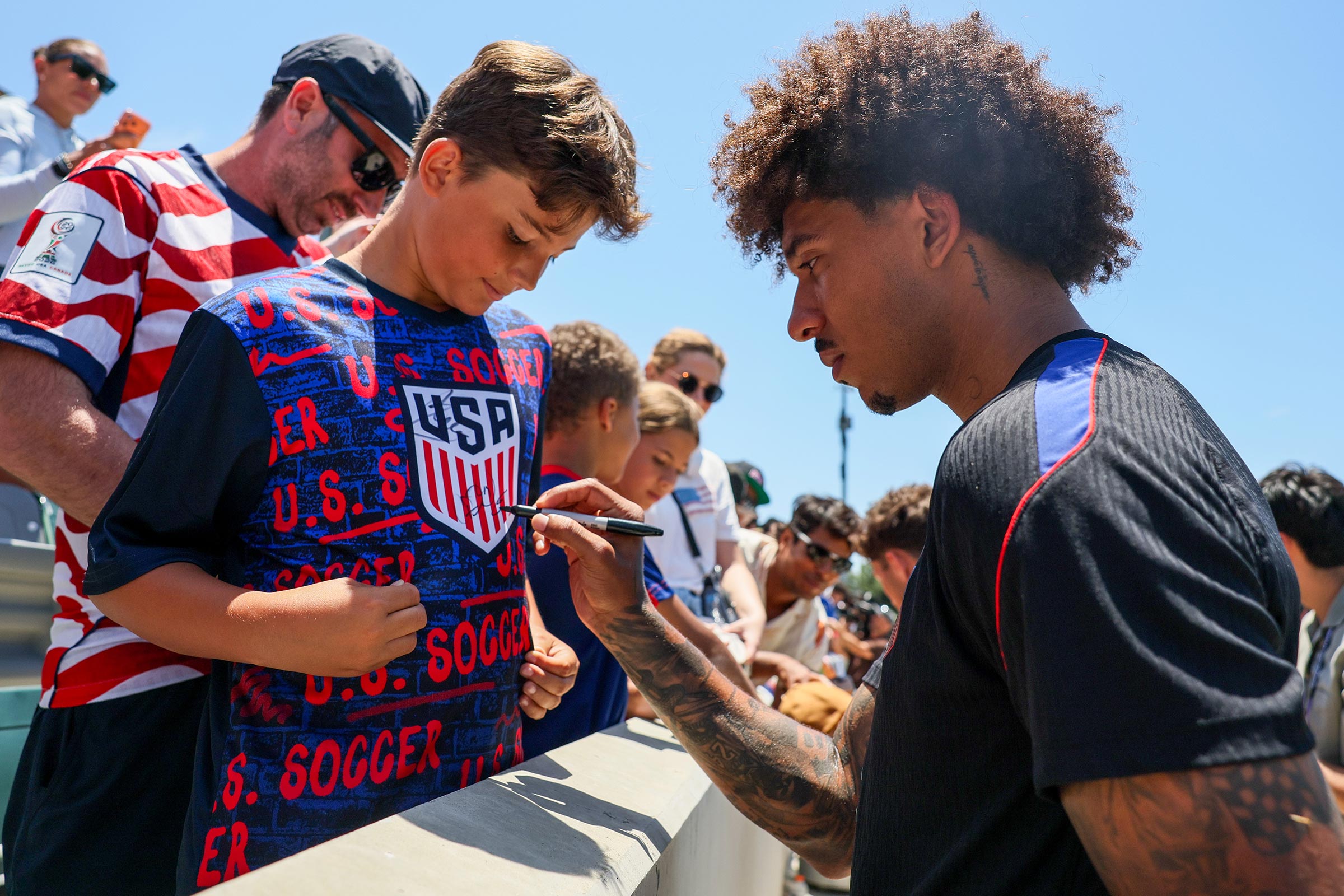
USMNT player Chris Richards autographs the shirt of a young fan during an open practice ahead of the World Cup in Great Park Sports Complex on June 8, 2026 in Irvine, CA. —Ronaldo Bolaños—Los Angeles Times/Getty Images

A group of eight American World Cup defenders locked hands in a circle on Wednesday morning at the U.S. men’s national soccer team training camp in Irvine, Calif. The players were participating in a warm-up drill; the circle inched forward as the Americans headed or kicked the ball to each other. The objective: don’t let the ball touch the ground before reaching a designated spot.  

Luckily for the United States, Chris Richards, the affable anchor for the U.S. defense who has missed all game action for the past three and a half weeks due to an ankle injury he suffered in a Premier League match in May, was part of the group. Displaying his signature Afro and smile, rather than any pain, Richards cheered his teammates on as they finished the routine, then led the soft sprint back to the starting point, where they all joined hands again and repeated the drill. 

“I’m ready,” says Richards, 26, the reigning U.S. Soccer Male Player of the Year. 

Richards, who’s from Birmingham, Ala., has won a host of championships during his professional career, including the UEFA Conference League—two tiers below the Champions League—this season with Crystal Palace, plus an FA Cup, England’s annual countrywide knockout tournament, and a Community Shield, the game pitting the Premier League champ and the FA Cup winner against each other, with the Eagles in 2025. As a center back, Richards plays a sort of middle-linebacker role on defense, in charge of seeing the entire field and shouting directions at his fellow back-line players. “He manages the game well, he reads the game well,” says former U.S. World Cup defender Marcelo Balboa, the lead Major League Soccer (MLS) Spanish-language analyst for Apple TV. “He's a guy that can lay a tackle for you, he's a guy that can win a header between a group. He's also not afraid to go forward.”

Chris Richards of the United States Community Day on June 9, 2026 in Irvine, California. —John Dorton—USSF/Getty Images

Balboa predicts that Richards’ mere presence in Team USA’s Friday-night World Cup opener against Paraguay will instill belief. “You start thinking, ‘Oh crap, we’ve got all 11 players back,’” says Balboa. “That gives everybody a boost, because now you walk on the field and you're feeling very confident that at every position, you know you're ready to go.” 

Richards can also bring a little bit of levity to a pressure-packed situation. On the front line of the U.S. attack, the face of the team, forward Christian Pulisic, is admittedly a more intense introvert. He’s said that he will try to enjoy this World Cup experience more than the last one but knows his tendency to revert to form. While Richards will hold himself and his teammates accountable, he has a lighter touch. “When you look at him, he's overall just a positive guy, and that's what you want on your team,” says Balboa. 

Before the biggest game of his life, for example, Richards enjoyed playful interaction with an X account that has gone viral in the World Cup lead-up: a soccer fan purportedly from Germany discovering the finer points of American Southern culture, like Waffle House, Buc-ees and large college-football stadiums. Richards made a plug for Milo’s Hamburger’s, a regional chain based in Alabama. “If there’s any @milosburgershop near you please stop. Trust me,” Richards wrote to the fan. 

Richards has said he felt like an outsider playing soccer in the football hotbed of Alabama, especially as a young Black player. (His mother is white, and his father is Black.) “Kids that looked like me weren’t playing soccer,” he told reporters before his training session in Irvine. “[There were] a few hurdles I had to jump over to get here, but I’d do it every day of the week.” In the HBO documentary on the American men’s team, U.S. Against the World, released in May, Richards says, “I kinda felt too Black for my soccer friends and felt too white for my basketball friends … I already kinda feel like the odd man out on both sides of the spectrum.” 

He stuck with soccer, joined the FC Dallas Academy, and signed a homegrown contract with the MLS team just after he turned 18. Within just nine months, Richards was off to Bayern Munich, the legendary German club, and made his senior-team debut in June 2020. He moved to Crystal Palace a couple of summers later. 

Chris Richards of Crystal Palace and Marcus Rashford of Manchester United during a Premier League match on Feb. 4, 2023. —Sebastian Frej—MB Media/Getty Images

A hamstring injury cost Richards an appearance at the 2022 World Cup in Qatar, and after he had to be carried off the field without his left boot in May following Crystal Palace’s 2-2 draw against Brentford, he feared he might miss another. “My ankle was huge,” he says. “I was devastated.” He tore two ligaments but attacked his recovery. 

Richards is “doing everything possible to make sure he's in the best shape possible coming into this week,” says Mark McKenzie, a fellow Team USA defender. “Whether it's on the field working with performance coaches, trying to get that ankle exposed to as many different actions as possible, and then off the field, we're talking about recovery, we're talking about every modality you could possibly think of, and modalities you probably don't even know about.” 

U.S. coach Mauricio Pochettino expressed frustration that Richards couldn’t suit up for the team’s last World Cup tune-up, a 2-1 loss to Germany last Saturday. “I got a little annoyed and I am not happy because Chris Richards is an important player, and we all know that,” he said before the game. At this point, Richards insists that he can play through any pain to move in any direction, which should please his coach. “I look good on the pitch now,” says Richards, with a confident grin. If that form holds on Friday, the U.S could be on its way, locking hands for a long stretch this summer. 

Why You's Joe Goldberg Would Be 'Horrified' By the Manosphere

2026年6月12日 02:38
Penn Badgley as Joe Goldberg in Season 5 of 'You' —Clifton Prescod—Netflix

The Netflix series You said a firm goodbye to Joe Goldberg (Penn Badgley) last year. But author Caroline Kepnes, whose 2014 book inspired the hit show, is still spending time in the serial killer’s mind. 

In her latest book You First, Kepnes returns to Joe, this time chronicling his younger days. Set in post-9/11 New York, the book explores Joe’s burgeoning toxic masculinity as he comes of age with the internet. 

“I wanted to go back and see what it was like to be a lonely man at that time,” Kepnes says. “It’s always been interesting to me from the get go: why is his loneliness dangerous for so many women.”

We meet the seventeen-year-old high school dropout as he’s figuring out what he wants to do with his life while working at the bookstore Moody’s, where he later stalks his prey. This time around the object of Joe’s affection is Vail, an older writer on Sex and the City who uses her experience to groom and manipulate Joe, behaviors he then perpetuates in his subsequent abusive relationships. This is Joe Goldberg we’re talking about, though, so of course he gets the upper hand in the end.

Kepnes was also interested in exploring how romantic comedies (like Sex and the City) shaped Joe’s actions as he tries to make sense of his first relationship alongside the advent of Craiglist’s Missed Connections and AOL instant messenger.

“The way my mind works is, well what if John Cusack was a bad guy?” she says. “He’s unconsciously learning this lesson that when a girl says no, you just keep going after her and you don’t give up.”

You has always mirrored the culture. The first book was published the same year as Serial debuted, kicking off our burgeoning obsession with true crime and our tendency to romanticize the male perpetrators while often homogenizing their overwhelmingly female victims into cautionary tales. The adaptation landed in 2018 right in the thick of #MeToo (though it was conceptualized prior to the movement, Kepnes says) and while boy next door Badgley’s casting as Joe did nothing to assuage us of said romanticization of a killer, the show and the actor tried to shed light on the prevalence of male violence against women.

“There’s been this sixth sense with all things involved in You—we don’t do it intentionally but oh, there it is,” Kepnes says. “As a writer, I go online, I procrastinate, I talk to people. It’s the journalist in me—I’ve always kept up with what people are talking about.”

Caroline Kepnes —Scott Joseph Anthony

It’s that sense of community that Kepnes both mourns and celebrates with You First

“There was this feeling of interconnectedness. We were all [going through it] together,” Kepnes says of New York City after 9/11. “And here’s this person who doesn’t know how to connect with people, when we really did have more in-person interactions.”

Kepnes concedes that the retrograde ideas at the heart of the manosphere, which encompasses looksmaxxers like Clavicular, toxic masculinity influencers like Andrew Tate, and incels, the most prominent example of whom was the 2014 Santa Barbara mass shooter Elliot Roger, are nothing new. Rather, along with politicians espousing pro-natalist stances our fascination with tradwives, they’re throwbacks. It’s just that the internet has amplified what feel like responses to the feminist gains of the past decade or two, such as body positivity and autonomy and a widespread acceptance and adoption of lifestyles that don’t include marriage and motherhood. “When a woman is lonely, it’s like, girl, go to the gym or get a hobby,” Kepnes jests. When a man is lonely, he might take it out on a woman, like Joe does.

It’s for that reason that, on the surface, it may appear that Joe would acclimate to the manosphere but Kepnes begs to differ.

“He would be horrified. He would enjoy looking down on these men. It’s disturbing that those guys are out there and that they have followings, but they announce themselves. They’re not pretending to be something that they’re not and we know who they are. Joe is scarier. He’s capable of other things because he’s convinced that he’s above that,” she says. “Because of Joe’s anonymity and his moral code, part of the magic that he works on himself is that he [believes he] would never hurt a girl. He wouldn’t talk that way to a woman, about a woman. He wouldn’t rape someone. That’s always been interesting territory for me because it’s a license to do so many terrible things.”

In a way, the You series has been about the male loneliness epidemic before it had a name. “These books are always about loneliness at their heart,” Kepnes says. “How does Joe deal with loneliness and why does he justify this approach to it? What’s scary about that personality type is that they always find a way. Now it’s so much easier for them to find a way.”

Inside the Massive Arena Constructed for the UFC’s White House Cage Match

作者Nik Popli
2026年6月12日 02:10

Three days before the first punches are set to be thrown at a White House-UFC event, the South Lawn is unrecognizable. A space that has over the decades hosted world leaders, prisoners of war, and children hunting Easter eggs, is now dominated by a massive, spider-like arch. It towers over the White House, which now seems almost modest by comparison.

For those in Washington, it has been impossible to miss the hulking 92-foot canopy known as “the claw” being raised behind the White House in preparation for a literal cage match. Up close, its scale becomes more disorienting, with lighting rigs and catwalks layered into a single suspended frame that organizers say can hold 4,000 people. A giant LED screen stands at the southern edge of the temporary arena, pointed toward spectators gathering on the Ellipse. Beyond the structure, the Washington Monument looms in the distance.

The scale of the production is startling, even by the standards of a presidency that has often embraced spectacle. The Octagon stands only a short distance from the Executive Mansion and not far from the Oval Office, where presidents make decisions about war, peace and national crises.

The elaborate production came with an equally eye-catching price tag. The UFC spent roughly $60 million to transform the South Lawn into a temporary arena and has said it expects to lose money on the undertaking, TIME previously reported. Executives have described the event instead as a once-in-a-generation marketing opportunity.

More than 4,000 spectators are expected to attend the fights on the South Lawn, with at least 1,200 seats reserved for active-duty military personnel. Organizers also created standing-room areas to maximize capacity, while a fan festival and viewing party on the Ellipse could accommodate tens of thousands more.

Read more: How Dana White Took the UFC From the Fringes to the White House

Around the cage, corporate logos line the rails. Polymarket, Stake, VeChain, Bud Light, FRE Nicotine Pouches, and dozen other sponsors are prominently displayed. Even the steps leading onto the stage have been turned into a branding opportunity for Crypto.com.

—Nik Popli
Seating for the upcoming UFC fight that US President Donald Trump will host as part of the 250th anniversary of the United States is seen on the South Lawn of the White House during a media preview in Washington, DC, June 11, 2026. —Saul Loeb—AFP/Getty Images
A "UFC Freedom 250" logo and the structure, known as "The Claw," for the upcoming UFC fight that US President Donald Trump will host as part of the 250th anniversary of the United States is seen on the South Lawn of the White House during a media preview in Washington, DC, June 11, 2026. —Saul Loeb—AFP/Getty Images
Construction continues on the Ultimate Fighting Championship (UFC) "Claw" and the octagon fighting ring on the South Lawn of the White House on June 11, 2026 in Washington, DC. —Chip Somodevilla—Getty Images

Inside a conventional UFC venue, the sponsorships would scarcely merit notice. Advertising has long been woven into the visual fabric of sports. But on White House grounds, they take on a different, more complicated character. Some ethics experts have questioned whether corporate branding from companies operating in industries subject to federal regulation creates uncomfortable optics when displayed on government property. 

A White House official says it has not been involved in any sponsorship discussions around the event. "UFC is funding and paying for this entire event. There are no taxpayer dollars being used outside of what would be applied towards employees normal duties and responsibilities," they added. 

Critics have raised concerns about sponsorship packages reportedly costing more than $1 million and the possibility that they could become another avenue through which wealthy executives seek access to the president. A separate $1 million-per-person fundraiser benefiting Trump allies is scheduled for the previous evening, according to NBC News. Organizers maintain that the events are entirely separate, and the same White House official rejected suggestions of impropriety.

“The federal government is not making any money,” the official said. “We are hosting like any other POTUS or FLOTUS hosted event.”

Yet the symbolism proved difficult to ignore.

As TIME recently reported, Trump first planted the seeds for a UFC event at the White House days after his 2024 election, envisioning a series of fights to mark his 80th birthday and inaugurate the broader celebration of the nation's 250th anniversary. The event, known as UFC Freedom 250, also represents the culmination of a relationship that stretches back more than two decades between Trump and Dana White, the president of the UFC.

Long before either man occupied his current position, Trump offered the fledgling mixed martial arts organization a home at the Trump Taj Mahal in Atlantic City when many mainstream venues viewed the sport with skepticism. White never forgot the gesture. Over the years, he evolved from a business ally into one of Trump's most loyal supporters, speaking at Republican conventions, helping Trump reach younger male audiences during the 2024 campaign and becoming a fixture in his political orbit.

A lawsuit filed by the Public Integrity Project seeks to block the fights, arguing that allowing a private company to stage what it describes as a for-profit event on White House grounds amounts to an improper use of public property. White House officials have dismissed the suit as baseless.

White has described the undertaking as a celebration of America rather than a political act. Trump supporters have embraced the event as an expression of national pride and a showcase for a distinctly American sport. But even some admirers of the UFC have acknowledged the unusual optics. Joe Rogan, the longtime commentator and podcaster, described the White House event as a "gimmick." 

While the stage appears to be set, UFC and White House officials are watching the weather forecasts closely. As of Thursday, forecasts show a chance of thunderstorms Sunday evening. The canopy over the Octagon is designed to shield fighters and portions of the audience from rain, but most seating remains exposed—as well as the tens of thousands expected to gather around the Ellipse. Lightning within eight miles of the South Lawn would trigger a mandatory evacuation and a 30-minute delay. Persistent strikes could disrupt or even halt the proceedings. 

Why Watching Sports Makes People Happy

2026年6月12日 00:46
—Photo-illustration for TIME (Source Images: matimix via Canva; Dmytro Aksonov—Getty Images)

Some years ago, Helen Keyes was pushing her way through a World Cup crowd with her soccer-loving brother and father. “What is it about this sport or this event that you like?” she remembers asking them. “Is it the sport itself? Is it being around the other people? The sense of togetherness?” They were stumped, and replied that they’d never thought about it. “I thought, I'd really like to think about it,” remembers Keyes, who is a cognitive psychologist at Anglia Ruskin University in England. 

Keyes is one of many psychologists who view the World Cup, which is held every four years, as part of the quest to answer this question: What do people get out of watching sports? And the important follow-up: Does being a sports fan come with any benefits for health? 

Research by Keyes and others has revealed that watching sports of all kinds, both in-person and on a screen, can have positive impacts on well-being. And even when your team loses—as they are practically guaranteed to do at some point—fans still get something out of the social act of following a team.

Is going to a sports game good for you?

Using data from a survey of more than 7,000 people in the U.K., Keyes and her colleagues set out in 2023 to see whether attending a live sporting event in the last year changed people’s self-reported anxiety, loneliness, and sense that life was worth living, among other measures. They also looked at links between these factors and demographic data, such as whether people were employed, their health status, and their gender. The games didn’t have to be high-priced events with professional players; local matches between amateurs counted, too. 

What they found was that attending a live match significantly boosted some measures of well-being. “Attending a live sporting event was associated with a greater sense that your life is worthwhile,” Keyes says. Life satisfaction went up, and loneliness diminished. They found that attending a live event had an even greater impact on people’s sense that life was worth living than whether they had a job or not.

A 2020 study by another group found that watching sports on TV also positively affected life satisfaction and well-being, but it did not reduce loneliness the way being there in person does, says Keyes. 

This suggests that getting people to attend sports events might be a good way for governments to help improve mental well being, Keyes speculated. (Other methods her research has explored include supporting crafters and encouraging volunteering.) “We are trying to find what's the best benefit we could get to improve public health and well-being in a way that's enjoyable for people,” she says.

Does being a sports fan improve well-being?

Anyone who has felt the incredible highs and lows of following a sports match might wonder: Is this a net benefit? "They know going in that there's a 50% chance that when they are finished consuming this product, they are going to be cranky,” says Daniel Wann, a social psychologist at Murray State University in Kentucky who has studied sports fandom for decades. The question has inspired a lot of psychological research, including on the phenomena of CORFing and BIRGing: acronyms for “cutting off reflected failure,” or distancing oneself from a team when they lose, and “basking in reflected glory” when they win.

But overall, sports fandom seems to be a win for mental health. People find ways to restructure and frame their understanding of a game where their team loses. “I don’t know how you can be a sports fan and not be resilient,” Wann says. And in general, the psychological benefits of following a team are substantial. “Individuals that are really involved in a sports team, they have higher self-esteem, they have lower levels of loneliness and alienation, and they have a higher sense of social connectivity,” he says. “Fandom has the capability to help individuals meet basic psychological needs, like the need to belong.” At the same time, sports fandom allows people to set themselves apart from the group, giving themselves a unique identity within the community. You might be the sports fan who follows both football and archery, for example, or someone who specializes in following a particular group of players. Individuation is a basic psychological need, too.

The regular cycles of sports also provide a kind of structure to fans’ lives. Someone might remember where they were during the last World Cup, or they might be planning their Super Bowl parties a full year ahead of time. These rituals are comforting, says Wann, and give people something to look forward to.

As the World Cup gets under way, fans around the world will congregate not only at stadiums, but in places where they can cheer on teams together. “I'm sure there are a lot of psychologists in that crowd,” Keyes says, “asking all of those fans what's making this special for them, about being with each other.” 

Pentagon Lifts Partial Lockdown Over ‘Air Quality’ Alert, Determining ‘No Hazard Exists’

2026年6月12日 00:00
The Pentagon, heaquarters of the U.S. Department of Defense, is seen from the air in Washington, D.C., on February 8, 2025. —J. David Ake—Getty Images

The Pentagon has lifted “precautionary safety measures” that it implemented Thursday morning, including a shelter-in-place order for parts of the complex, after determining that the reported “hazardous materials incident” that prompted the response was a false alarm.

“Earlier this morning, Pentagon occupants were notified of a potential air quality issue, prompting immediate precautionary safety measures and evaluation. Subsequent testing confirmed no hazard exists, and normal operations have resumed,” Pentagon spokesman Sean Parnell wrote on X at 1:31 p.m. ET, just under three hours after emergency response units reported that they were responding to the incident. “We express our sincere appreciation to the first responders for their swift actions to ensure the safety of all personnel.”

Earlier on Thursday, Parnell told TIME in a statement that the department was following protocols and enforcing a shelter-in-place order, among other measures, in response to the detection of the “air quality issue.”

"The Pentagon has sophisticated systems to ensure the safety of the building and its occupants. Those systems have detected an air quality issue necessitating precautionary measures until we determine its significance,” Parnell said. “The Department is executing standard protection protocols, including a shelter-in-place order for the affected area. Response teams are in place and ready to support building occupants." 

The Arlington County Fire Department (ACFD) posted on X at 10:41 a.m. that it was responding to the incident. 

“ACFD units, including our Hazardous Materials Team, are currently operating at the Pentagon,” the department wrote, noting that they were working in conjunction with the Pentagon Force Protection Agency (PFPA) Hazmat Team in response to a “hazardous materials incident.”

At 12:24 p.m., the PFPA wrote on X that the “shelter in place continues in affected areas in the Pentagon until all clear is given.”

Sources familiar with the matter told CNN Thursday morning that multiple floors and corridors at the Pentagon had been locked down, including floors two through five in the fourth through the seventh corridors. Others were being evacuated and police in the building were wearing full chemical protective gear and gas masks, sources told the outlet. 

CNN also reported that the Pentagon’s security team issued a message that said additional testing was needed following the detection of the “air quality issue.”  

“This additional testing could take one to two hours. Response teams are in place and ready to support building occupants if necessary. You may observe response personnel from multiple agencies and precautionary measures taking place in the center courtyard. Please do not interpret these activities,” said the message, according to CNN.

How Climate Change is Making Your Life More Expensive

2026年6月11日 22:58
A customer shops in the produce aisle for groceries at Supermercado Morelia on Oct. 16, 2025 in Chicago, Illinois. —Joshua Lott—Getty Images

If you feel like things have been getting more expensive, you’re not imagining it. The average American household spent $15,400 more for basic necessities in 2025 than it did in 2019, according to research from the Common Sense Institute, a non-partisan research organization. That’s across a number of spending categories. On average, grocery costs increased 25.1%, while shelter and utilities costs increased 33.9%. 

There’s a number of explanations for the surge in prices—from pandemic induced supply chain issues, to tariffs, to wars in Ukraine and Iran.

Yet a significant number of Americans are also pointing to another factor: climate change. In a study released this week by the Yale Program on Climate Change Communication and the George Mason University Center for Climate Change Communication, 67% of American voters said they think global warming is affecting the cost of living in the United States, while 64% said it is affecting their own cost of living, pointing to increasing costs of home utility bills, groceries, and home insurance, among other things. 

They’re not wrong. Extreme weather driven by climate change is pushing up prices for everyone. One April paper published by Brookings Papers on Economic Activity found that climate change is already costing U.S. households between $400 and $900 a year, on average. 

The biggest expense many are seeing is insurance as companies face an increase in the number and severity of insurance claims, leading to rising premiums and fewer plan options. The researchers estimate climate change contributed to an average $360 increase in homeowners’ insurance premiums between 1990 and 2023.

“Even if you don't live in tornado alley, you might be seeing your insurance rates go up to cover the cost for people who are in the more danger-prone areas,” says Catherine Wolfram,  professor of applied economics at the MIT Sloan School of Management and one of the study’s authors. 

Utility rates are also going up. Residential electricity costs have risen by almost 40% since 2021 and residential gas costs have increased by 40% since 2019— outpacing inflation. 

That’s in part due to the cost of responding to natural disasters. “There are these more and more frequent storms that go through and wipe out the utility poles, and the utility rates eventually have to go up to pay for that,” says Wolfram. 

Not to mention that warmer weather also means more A.C. and higher electricity bills. “People are just paying more for air conditioning,” says Wolfram. 

A rapid rollout of clean energy technologies—like solar panels and wind— is one way governments can both make energy costs more affordable and bring down the cost of living, according to the International Energy Agency. The Trump Administration, however, is moving in the opposite direction—investing millions in keeping struggling coal plants alive despite little economic benefit.

Climate change is also driving up the price of groceries, with one estimate finding that climate change has raised the price of food in the United States by up to 6.7% over the past 50 years. Extreme weather fueled by rising global temperatures can damage crops, reduce yields, and disrupt supply chains—leading to higher prices in the grocery store. “With things like fresh produce coming from other countries, if you have an extreme weather event that is being made more intense and more frequent by climate change, it damages crops, and therefore reduces the availability of produce. That usually is then reflected in an increased price,” says Bob Ward, policy and communications director for the Centre for Climate Change Economics and Policy at the London School of Economics. 

To better plan for climate impacts, Ward notes that our global food system should be more diverse, to allow for potential shortfalls. 

“We might be able to mitigate some of those impacts by being better at making sure we have more diversified supply chains, so that if one particular geography is hit by an extreme weather event, it is possible to replace it with supply from other regions,” says Ward. However, that’s easier said than done, he notes. “We're used to having the agricultural systems and food production systems that are largely built to deal with a stable climate, and an unstable climate is a much more difficult and expensive business.”

If your wallet is looking for relief, experts warn it might not come easily. “It's only going to get worse as climate change gets worse, as the summer days get hotter, as the storms get more frequent,” says Wolfram. “It's going to be worse in the future, but it's already here.”

❌