普通视图

Received today — 2026年6月13日TIME

Ceasefire Deal Within Reach, U.S. and Tehran Say
2026年6月13日 00:57
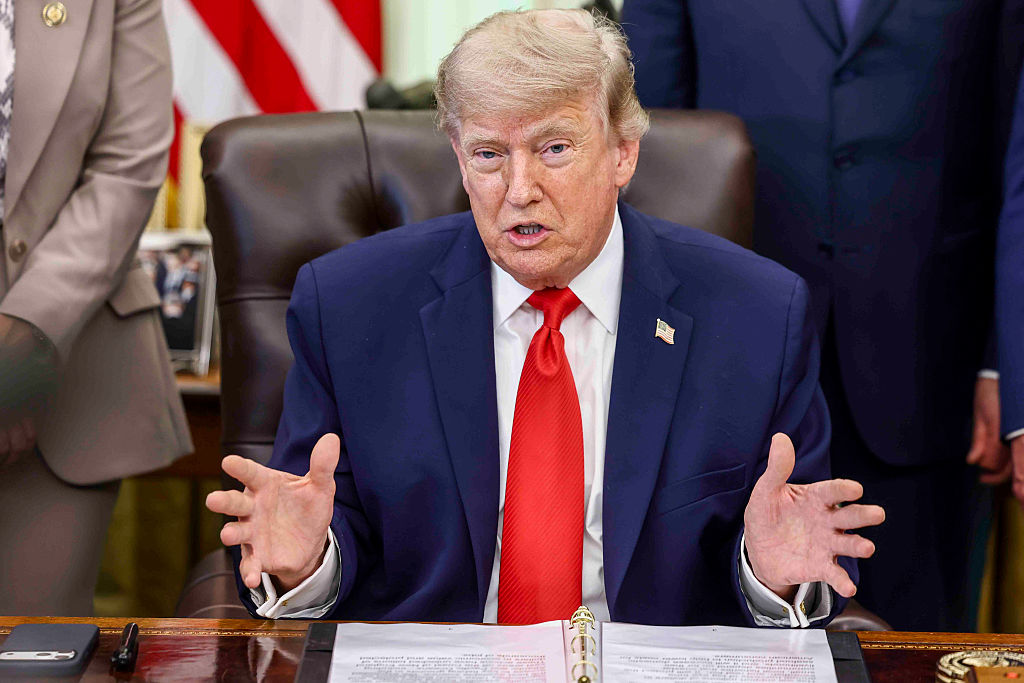
President Donald Trump speaking to reporters in the Oval Office, shortly after announcing his pull back of strikes against Iran in Washington, D.C., on June 11, 2026. —Jim Lo Scalzo—Getty Images


The United States and Iran may be close to a deal to at least pause the war, as officials from both countries and Pakistan signaled that negotiations were advancing well and nearing a final agreement.

But conflicting statements on how to characterize the details of the emerging deal suggested sticking points remained.

A senior Trump Administration official speaking on condition of anonymity on Friday described negotiations that had made “substantial progress” from broad understandings to a written framework that both sides now largely support, while acknowledging that difficult technical questions still remain. 

Iranian Foreign Minister Abbas Araghchi said Friday that a “memorandum of understanding has never been closer.” “Pending its finalization, the media should refrain from entering speculation about its content,” he said, adding that details would be made public “in due course.”

The positive signs came after President Donald Trump on Friday rejected as fake a version of the agreement circulated by Iranian state media that suggested Washington had made significant concessions to Tehran. “The terms that Iran leaked out to the fake news have nothing to do with the terms that were agreed to, in writing,” Trump said. “What they said, including their weak and pathetic statement on having a deal, bears no relation to the truth. Very dishonorable people to deal with.”

Trump also accused Iran of continuing to target ships in the Strait of Hormuz and warned that “they better get their act together, and fast.”

A memorandum of understanding published by Iranian state media suggested Tehran had managed to negotiate regaining access to billions of dollars in frozen assets without ruling out exerting control over the Strait of Hormuz in the future. 

Administration officials describe the agreement differently, portraying it as a five-point, performance-based framework under which Iran would receive economic benefits only after carrying out specific obligations. Economic incentives would be phased in as Tehran turns over nuclear material, dismantles nuclear facilities, and demonstrates a commitment to regional stability, the senior administration official said.

Tehran has long maintained that any broader cease-fire arrangement would need to include assurances regarding Israeli military operations against Hezbollah in Lebanon. Such provisions appeared in the version of the agreement reported by Iranian state media but not in the framework described by U.S. officials.

Shehbaz Sharif, the Prime Minister of Pakistan, whose government has played an intermediary role in the talks, also said that negotiators had reached an agreed-upon text and were working to finalize it. The contradictory accounts from Washington and Tehran come after several days of escalating violence.

The senior Trump administration official said the emerging deal includes Iran “committing indefinitely to never procure or develop nuclear weapons,” a commitment that previous rounds of diplomacy had envisioned lasting only 10 or 20 years. But the official emphasized that verification mechanisms remained essential and would be negotiated in detail. The official added that the U.S. has no objection to Iran maintaining civilian nuclear power generation, but opposes preserving infrastructure that could allow Tehran to move from civilian energy production to weapons development.

The senior official said the broader regional agreement encompasses Lebanon, Israel, and Gulf states but would not deprive Israel of the right to defend itself. If Iran failed to uphold its obligations, the official said, Israel would be expected to respond.

The Trump Administration is also expressing confidence that Israel would ultimately support the agreement, despite longstanding skepticism from Prime Minister Benjamin Netanyahu and concerns among Israeli officials that Washington might settle for terms they viewed as insufficiently stringent.

Trump spoke with Netanyahu on Thursday, according to the senior official, who said Israeli concerns had been fueled in part by inaccurate reports about the contents of the agreement.

“We feel confident that the deal that we’re actually going to strike, assuming we get there, is going to be a deal that everybody in the region can be comfortable with,” the senior official said.

The Administration also downplayed signs of discord inside Iran, saying it believed most of the country’s leadership supported the agreement even though hard-line factions remained opposed.
Received before yesterdayTIME

Trump Says He Has 'Canceled' Strikes Against Iran After Threatening 'Very Hard' Attack

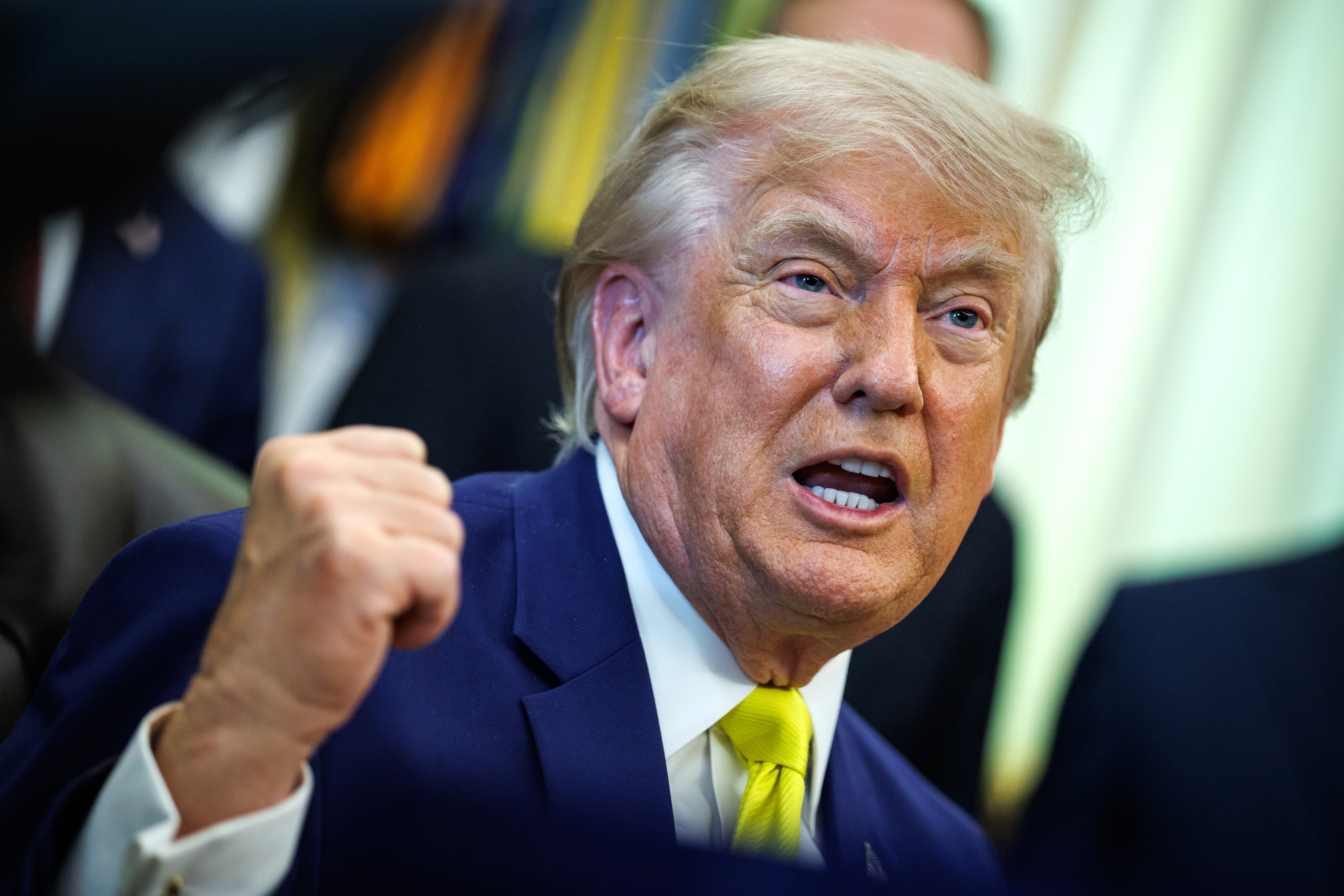
President Donald Trump in the Oval Office of the White House in Washington, D.C., on June 4, 2026. —Samuel Corum—Getty Images

President Donald Trump said he has canceled strikes planned against Iran on Thursday, citing progress in the peace deal negotiations.

"Based on the fact that discussions with the Islamic Republic of Iran have been brought to the highest level of Iranian leadership and approved, I have, as President of the United States of America, canceled the scheduled strikes and bombings against Iran this evening," he said.

Trump added that "discussions and final points" have been approved by all parties involved, including the U.S., Israel, Saudi Arabia, UAE, Qatar, Turkey, Pakistan, Bahrain, Kuwait, Jordan, and Egypt.

The U.S. naval blockade of the Strait of Hormuz will remain in effect until after the deal is finalized, he said, with further details of the signing set to be "announced shortly."

Iranian officials have yet to comment on Trump's assertion that a long-awaited deal is imminent. Iran has also yet to publicly make any major concessions related to its nuclear capabilities, nor has it retreated on its ambition to manage naval navigation in the Strait of Hormuz.

Trump's course reversal came hours after he vowed to hit "Iran very hard tonight" and threatened to take control of the country’s oil infrastructure.

“At some point in the not too distant future, we will be taking Kharg Island and other oil infrastructure points, and assume total control of their oil and gas markets,” warned Trump, likening the plan to what the U.S. has done in Venezuela.

This isn't the first time Trump has singled out Kharg Island in the Persian Gulf, which serves as Iran’s main oil terminal. The U.S. bombed targets on the island in March to serve as a warning to Tehran, without striking the oil infrastructure.

Tehran responded to Trump's earlier threats with strongly-worded cautions, advising against further strikes.

Iran's top joint military command warned “either oil ‌and ⁠gas exports are for everyone or they will be available ​for ​no ⁠one,” in a statement carried by state media.

The command said any further strikes from the U.S. would receive a stronger response than before, leading to insecurity in the ​region.

Iran’s parliament speaker Mohammad Ghalibaf also said that any targeting of infrastructure would offset an “endless quagmire."

The prospect of a finalized agreement comes after two days of tit-for-tat strikes between Washington and Tehran in the Middle East region.

U.S. Central Command (CENTCOM) forces launched what it called “self-defense strikes” against Iran on Tuesday, after holding Tehran responsible for the downing of a U.S. Army helicopter over the Strait of Hormuz.

Iran retaliated with strikes targeting U.S. bases across Jordan and several Gulf nations, renewing concerns of instability in the region and testing the already fragile cease-fire.

Hostilities continued to escalate into the early hours of Thursday morning, as Trump argued Tehran had “taken too long to negotiate a deal” and would “have to pay the price.”

Is the Strait of Hormuz closed?

Tehran’s Persian Gulf Strait Authority (PGSA) declared the "complete" closure of the Strait on Thursday, blaming "tensions caused by the aggressive U.S. forces."

CENTCOM issued a rebuttal, insisting that the "Strait of Hormuz remains open for transit." Trump has maintained that the U.S. blockade of Iranian ports in the Strait will continue until a peace deal is finalized.

The PGSA is a body Iran set up to manage requests ​for passage through the Strait, in an effort to maintain its sway over the vital waterway, through which around a fifth of global oil production flows.

Iran's continued choke hold on the transit of oil and gas has upended the global economy, causing major instability to energy prices and supply needs.

Last month, the U.S. Treasury sanctioned the authority, stipulating that anyone cooperating ​with the body may be providing support to, and ‌receiving ⁠services from, Iran's Islamic Revolutionary Guard Corps, "which ultimately benefits from this attempted extortion, and may therefore be exposed to sanctions risk."

Treasury Secretary Scott Bessent issued a follow-up warning Thursday, stating that any "tolls paid to the Persian Gulf Strait Authority will be offset by funds extracted from their accounts. Every attack Iran launches will only deepen the economic and financial consequences it faces."

Top Two U.K. Defense Ministers Resign Over Military Spending Dispute With Starmer

2026年6月11日 21:16
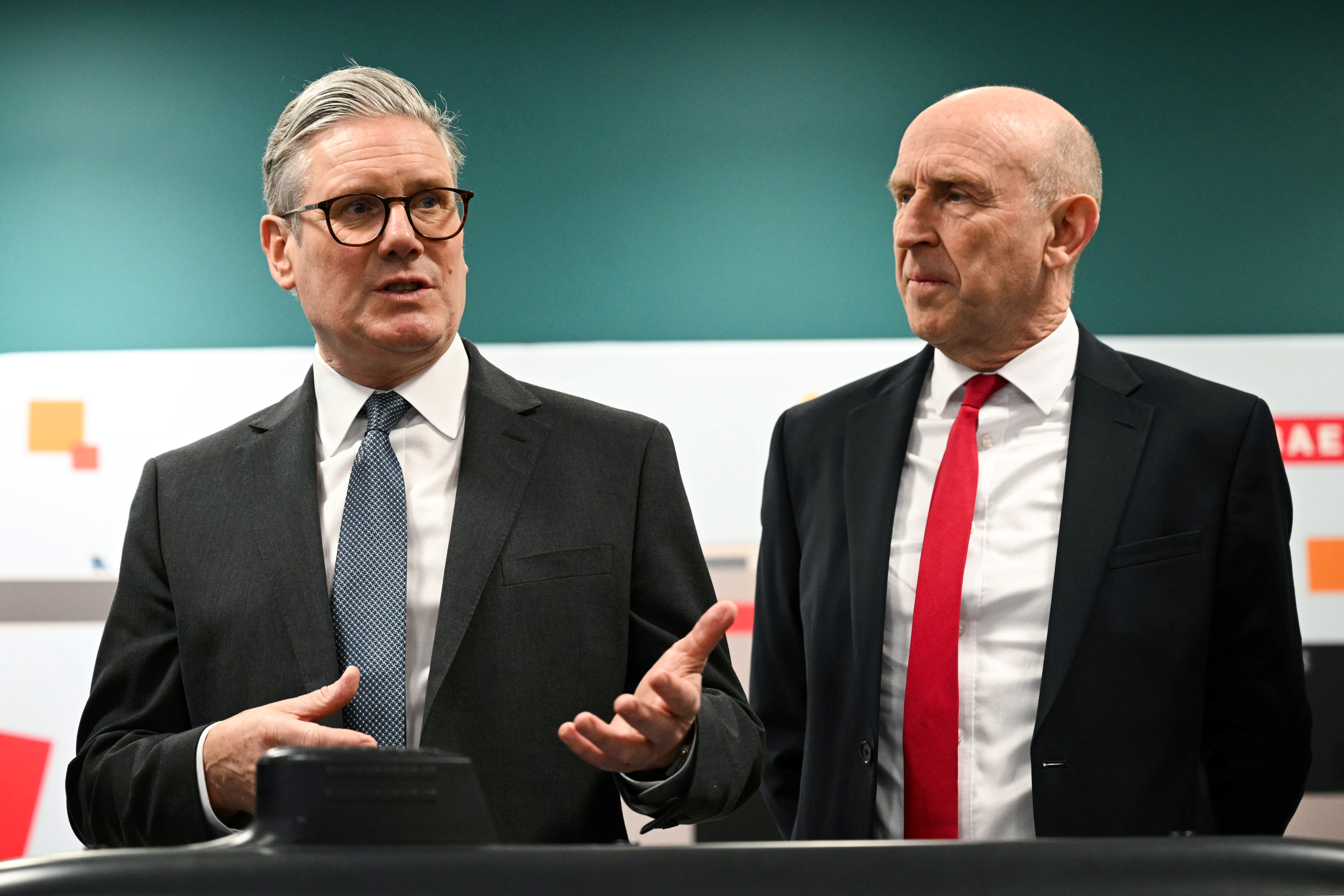
British Prime Minister Keir Starmer and Defense Secretary John Healey visit Barrow-in-Furness, England, on March 20, 2025. —Oli Scarff—Getty Images

British Defense Minister John Healey and Armed Forces Minister Al Carns resigned on Thursday, accusing Prime Minister Keir Starmer of failing to invest enough money into the country’s Defense Investment Plan (DIP).

Starmer has been “unable,” and the U.K. Treasury has been “unwilling to commit the resources that the nation needs to defend the country at this time of rising threats,” Healey claimed in his resignation letter.

Hours later, Carns followed suit, insisting "we owe those who serve the U.K. the kit to do the job and the loyalty to stand by them when it's done. We are failing on both."

Both ministers pointed to the fact that despite the lack of adequate funding, the “demands on defense” have continued to grow.

Healey cited the conflict in the Middle East, “with the U.K. now leading the multinational Strait of Hormuz military mission,” and the “increased Russian activity towards the U.K. and NATO nations and increased attacks in Ukraine” as examples. 

He said the DIP that he “was first given in-full on Monday afternoon this week, falls well short of what is required for defense and the country at this dangerous time.” 

As a result, Healey continued, he is being “forced to make decisions that would reduce the readiness of our forces and increase the risk to personnel on operations, and could make the country less safe.”

Healey referenced Starmer’s warning from last week, that by 2030 there could be an attack on NATO from Russia. 

He also pointed to Starmer’s speech from the Munich Security Conference in February, during which the Prime Minister said: “Together we must rise to this moment. We must spend more, deliver more, and coordinate more.” 

Healey did mark the achievements that he believes the government has made, despite his dissatisfaction with commitments to military spending, but regretfully said he has been “left with no other option than to submit” his resignation. 

In a letter shared publicly, Starmer said Healey was right that "we have to go further," but staunchly defended his funding plans.

"The Defense Investment Plan does just that—delivering an unprecedented increase in defense spending in a sustainable way. It will provide the resources our military needs to keep us safe and the clarity the British defence industry needs to plan," he said.

"I am determined to rebuild our country after years ofbeing buffeted by crises," Starmer concluded. "I am sorry that you will not be part of that work going forward."

Carns' resignation letter came later, and he voiced similar concerns to Healey about the country's defense outlook.

"We face a more unstable and dangerous world than at any point in recent decades, and having spent most of my adult life in uniform, I understand what public service in such a moment demands," he said. "It is for this very reason I cannot continue."

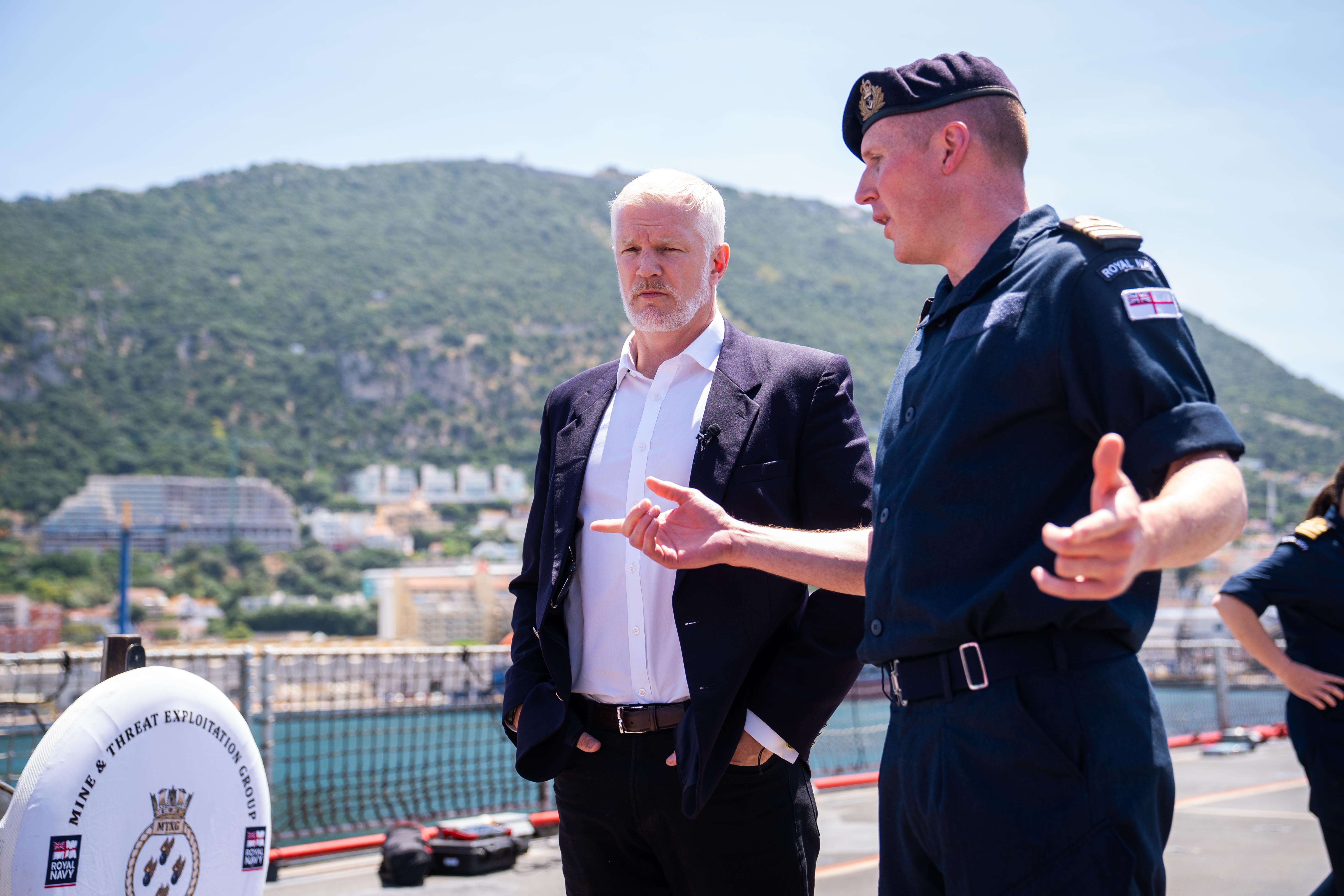
British Armed Forces Minister Al Carns is shown mine-detecting equipment during a visit to RFA Lyme Bay in Gibraltar on May 22, 2026. —James Manning—Getty Images

Dan Jarvis, who has previously served as the Minister of State at the Home Office and Cabinet Office, has been appointed as Healey’s replacement. He's called the opportunity “a huge honor and a privilege.”

The departure of the top two defense officials is the latest blow for Starmer, who has spent the past few weeks fighting against mass calls to resign following the Labour Party’s poor performance in May’s local elections.

Carns is the seventh minister to resign from Starmer’s government in the past month.

The latest leavers follow the likes of Wes Streeting, the former Health Secretary, who said he had “lost confidence” in Starmer and may launch a leadership contest against the embattled Prime Minister. 

"John was an excellent Defense Secretary," Streeting said following news of Healey's resignation. "Every word of warning [from his letter] needs to be heeded."

Read More: Who Could Replace Starmer as Prime Minister? Here Are the Top Contenders

The resignations have stirred debate among opposition lawmakers.

Conservative Shadow Defense Minister James Cartlidge said the departures "must be a wake up call" for Starmer. "For months we’ve been saying Labour should move billions from welfare to defence—I hope they now think again," he argued.

Ed Davey, leader of the Liberal Democrats, told Labour to "stop repeating the mistakes of the Conservatives and get serious about funding our armed forces properly... we cannot afford years more political chaos while our national security is put at risk."

❌