 登录
登录

What Michael Jackson’s Cultural Dominance Says About Us
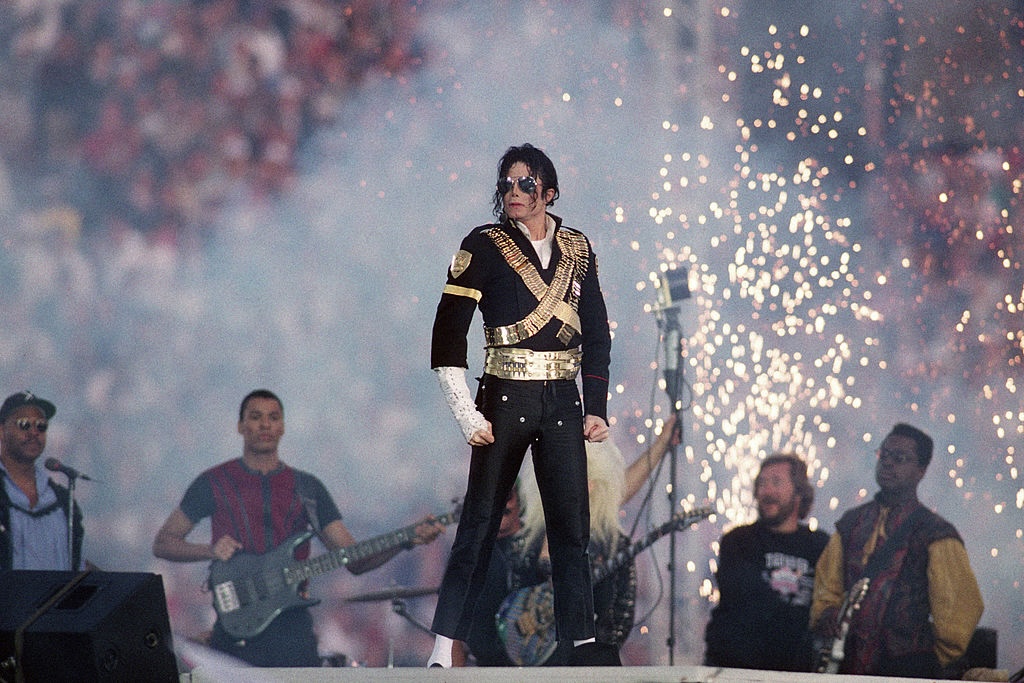
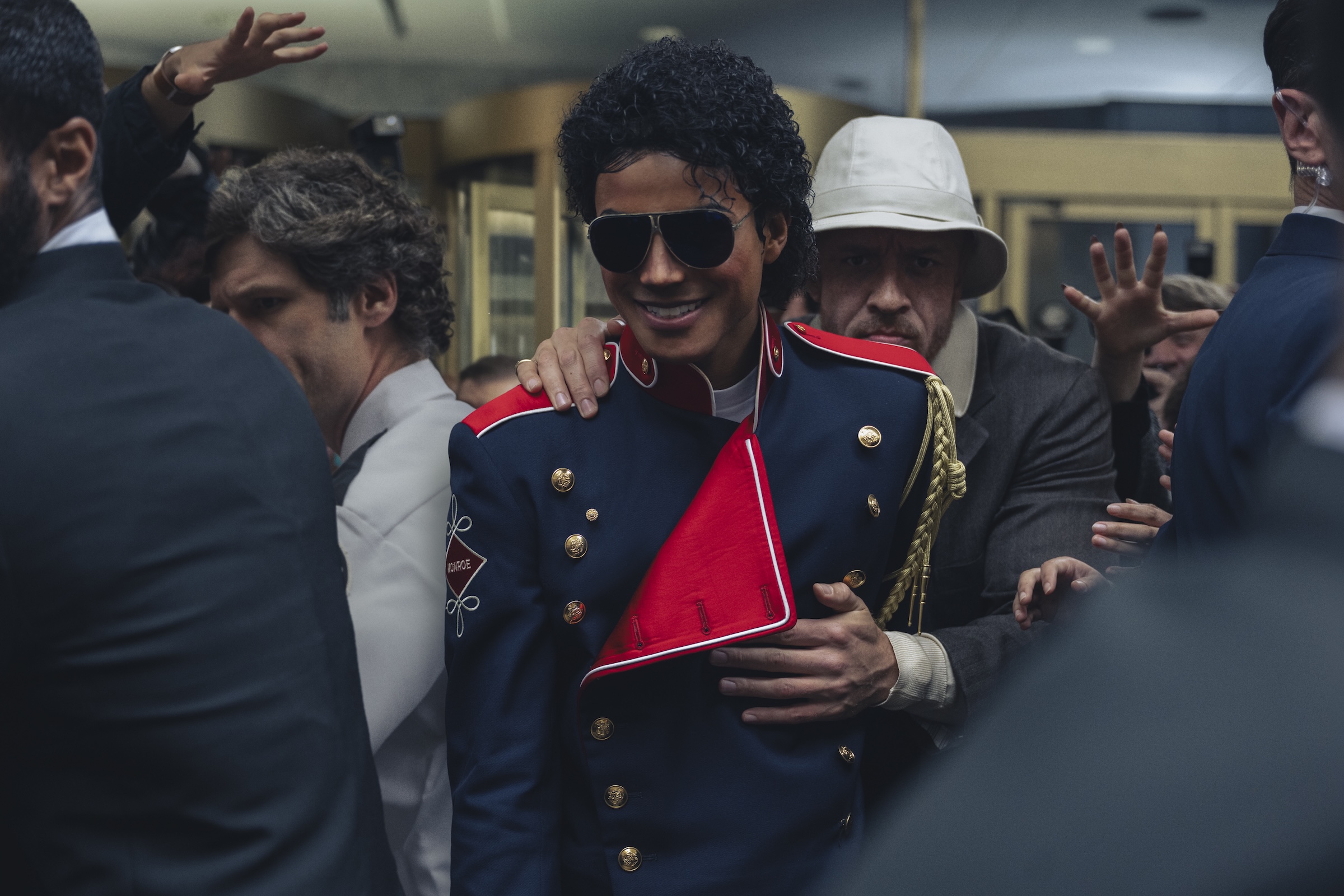
Last November, when Lionsgate dropped the trailer, just over a minute long, for the long-awaited biopic Michael, it got more than 116 million views the first 24 hours—more traffic than Taylor Swift: The Eras Tour (96.1 million), more than Bohemian Rhapsody (57.6 million), and more than the Bob Dylan biopic A Complete Unknown (47.2 million). People from Chicago to Tokyo to Johannesburg started plotting what to wear to the 0lm’s opening and the parties to celebrate it—maybe a bejeweled glove or a red leather jacket. On TikTok, fans offered “ground rules” for the occasion. But the trailer also triggered debate: Could a single film distill the story of one of the world’s most complex and consequential artists? Which Michael Jackson would Michael resurrect—the glorious mythical icon, the wounded man, or both? Would the film, starring Jackson’s nephew, sanitize the controversies that have plagued the King of Pop for more than a quarter century? The conversations reflected something deep and global: the degree to which Michael Jackson remains an extraordinarily relevant cultural phenomenon more than 15 years after his death. There are, of course, what feels like a gazillion films, documentaries, and interviews about the King of Pop, but not yet a definitive biopic that reflects his place in our cultural memory. The truth is, for someone whose career began more than 50 years ago, Michael Jackson has never felt more present.
Consider this: Michael reached his peak a generation before social media’s AI-driven amplification could literally manufacture fame out of the mediocre. In today’s crowded media ecosystem, it’s hard to imagine an artist whose raw talent alone could break through at that scale. To understand why, you have to zoom out. It’s hard to describe Michael Jackson’s cultural legacy in full, because it’s endless and unmatched. But let’s start here: He provided, indisputably, the original blueprint for the modern celebrity artist. Elvis helped give birth to American pop music. The Beatles elevated rock. But Michael industrialized the package, fusing music, dance, style, and branding. His template guides Beyoncé and Taylor Swift, and will likely inform every aspiring cross-genre juggernaut for generations. On the commercial front, Michael pioneered the modern artist-as-enterprise model. He sold more than 400 million records, easily making him one of history’s most successful solo artists. More than four decades after its release in 1982, Thriller remains the best-selling album of all time and by some estimates has reached 100 million copies globally. He was a savvy investor (and also a world-class spendthrift), buying ATV Music Publishing, later merged into Sony/ATV, which controlled some of music’s most valuable catalogs, including works by the Beatles, Elvis, and Little Richard.
From the Great Mausoleum in Glendale, California, Michael continues to outearn hundreds of thousands of living artists. His estate is estimated to have generated as much as $3.5 billion since 2009. On Spotify, he has surpassed 60 million monthly listeners. On many nights each week, crowds line up to see MJ: The Musical in New York, London, and Hamburg, with touring productions traveling through the U.S. and Australia—an Asian tour is planned for late 2026, the U.K. in 2027. Meanwhile, in Las Vegas, Cirque du Soleil’s Michael Jackson ONE has run since 2013 and is extended through 2030, a very big deal in a city where residencies often drift in a few seasons. All of this helps to explain why Michael’s biopic lands with such force. The truth is, Michael isn’t just tapping into nostalgia. It’s meeting an audience that never really let him go.
An American origin story
An assessment of Michael Jackson’s life starts with a familiar American story—one rooted in the Great Migration, when many Black families carried their hopes northward in search of dignity and steadier work. Michael’s father, Joseph, was born in Arkansas, met his wife, Katherine, in East Chicago in 1949, and in 1950 the couple set out for Gary, Indiana, where Joe found a job and set aside his own music ambitions to catapult his sons into the limelight. At first, the Jackson 5 performed in community shows in northern Indiana, and then on amateur show circuits from Chicago to Harlem. Joe drilled into his sons a disciplined, nearly militaristic pursuit of perfectionism, because the stakes were high: Black kids had to be twice as good to succeed.
So the Jackson 5 embodied that aspiration: polished, electrifying, tight, and still soulful. They also personified Motown’s “Sound of Young Amer-ica” strategy, which used pop-soul as a subversive racial integration tool. Black families across America felt a collective pride. My mom still talks about the night she trailed her older sister into a Jackson 5 concert in New Orleans, swept up in the miracle of seeing young men who gloriously looked like them commanding a stage in a country that insisted it wasn’t theirs. By the early 1970s, as a young teen, Michael had become the group’s undeniable star. It was his rare combination of innocence and command of pitch, dynamics, and tone that convinced Motown’s founder, Berry Gordy, to launch him into solo recordings with “Got to Be There.” But it was Off the Wall, produced by Quincy Jones in 1979, that unlocked Michael’s genius. The album delivered some of his most powerful, captivating songs, and on the tour and videos that followed, Jackson was the ultimate showman. Steeped in Motown’s soulful elegance, sharpened by Jones’ precision, and driven by instinct, Jackson fused funk, R&B, rock, gospel, and dance into something unmistakably American and Black—and yet a funhouse-mirror version of Michael Jackson, a distorted silhouette so vivid it began to overshadow the man himself.
The accusations against Michael Jackson
“International furor stirred by allegations on Jackson,” read an August 1993 Los Angeles Times headline. A therapist hired by the parents of 13-year-old Jordan Chandler had told police the boy had been molested by Michael Jackson. Police raided Jackson’s Southern California homes, including the Neverland ranch north of Los Angeles, while he was on the Asian leg of his Dangerous World Tour. As the investigation deepened, the news coverage became more grotesque, sending Michael into a medical tailspin. In November, he abruptly canceled the rest of the Dangerous Tour, citing exhaustion and addiction to painkillers, and went to Europe to recover.
In January, he came back to the U.S. and settled with the Chandlers for a reported $23 million without admitting wrongdoing. In May 1994, he suddenly married Lisa Marie Presley in the Dominican Republic. That September, the newlyweds appeared on stage together at the MTV Video Music Awards and, in the cringiest of moments, kissed. It registered less as romance than tableau. America, after all, loves the illusion of redemption—until we don’t. Lisa Marie’s own mother, Priscilla Presley, observed in her memoir: “He married her at a time when he desperately needed good publicity that depicted him as a desirable heterosexual man. It was one thing to legally fight the child molestation charges against him. There was no way to come out of that looking good. But photos of him with Elvis’s daughter wearing that huge diamond engagement ring he’d had made for her? That image was pure gold.” By the end of 1996, the King of Pop and the Princess of Rock and Roll were divorced.
Michael’s transformation continued with the birth of his children, Prince Michael in 1997, Paris in 1998, and Bigi (formerly Blanket) in 2002. Being a father helped humanize the singer in the eyes of the public, which reacted positively to media coverage of him as a doting, protective dad, not just an eccentric pop star—even if some of Jackson’s parenting methods were considered unconventional (such as making the children wear face masks when they were young). Yet as his family grew, there were more allegations about inappropriate contact with children. In one case in 2000, criminal charges were filed, leading to a trial in which Jackson was acquitted.
Michael Jackson’s shocking death
The news of Michael Jackson’s death broke on an ordinary afternoon, June 25, 2009. It arrived like a blow—sudden and hard to believe, like an online hoax. TMZ posted the story around 2:45 p.m., less than 20 minutes after Jackson was pronounced dead and before major traditional news outlets confirmed it. The internet convulsed—numerous edits to Jackson’s Wikipedia page overwhelmed the site—as millions of us reached for something to explain our loss. America, and the world, had built Jackson into a mythical, immortal creature. Now, the dream collapsed. We soon learned the complicated truth.
Michael had been in deep rehearsals for a monumental return to the stage—This Is It a 50-show series in London, designed to prove that he could rise above not only the scandals but also the standard we’d come to expect from him. In rehearsal video footage, Jackson’s talent remained astonishingly intact, even as his body visibly told another story: restless and fragile, with signs of a man stretched thin by insomnia and his own perfectionism. Into that vulnerable space stepped Conrad Murray, a physician who forgot his oath. Jackson hired Murray as his personal physician.
Murray would later testify that for several weeks during the grueling rehearsals, he provided Jackson with propofol—a powerful anesthetic often used in medical procedures—to help him sleep. In the early-morning hours of June 25, Jackson was in a rented Los Angeles mansion. Murray gave him a series of sedatives and, ultimately, propofol. Then, in the late morning, Murray left Jackson alone. When Murray returned to the house, he found Jackson unresponsive. Paramedics and detectives arrived and found an oxygen tank, prescription bottles, disposable needles, orange juice, and latex gloves. Jackson was taken to a hospital and pronounced dead. Autopsy and police reports noted that Jackson, then 50 years old and 5 feet 9 inches tall, weighed just 136 pounds. He wore a wig. His lips had been tattooed pink. Three weeks later, about 31 million people watched Jackson’s memorial service on U.S. television—slightly fewer than the number who had watched Barack Obama’s inauguration six months earlier. It’s estimated that a billion people tuned into the service globally, online and on television. We mourned not only the performer but also to reconcile the enormity of his life and the starkness of its ending.
Read more: TIME Special Edition — Michael Jackson: His Music. His Life. His Legacy
Murray was convicted of involuntary manslaughter. Jackson’s family searched for legal accountability. And as the details of his case emerged, the presence of over-prescriptions pointed the story toward what was, at least in the realm of music celebrity, familiar territory. Regardless of wealth, fame, or influence, each individual, in the end, is mortal. Michael’s passing was a reminder of the pressure we place on our brightest talents, and that even the most extraordinary lives are fragile. In that recognition, we find the shape of the tragedy: a man elevated beyond measure, and a society that failed to keep him safe. His death was negligence, but it was also a failure to see the human beneath the icon.
Michael Jackson’s persistent dominance reveals something about us. We’re drawn to complexity until it gets too uncomfortable and asks us to sit with it. We reward simplicity, clear heroes and villains, clean story endings. Jackson’s story is anything but tidy. In parts of the world, contradiction is survivable; an artist can be luminous and flawed in the same breath. In America, we tend to expect a verdict. We live in an algorithmic age that delivers culture and outrage in silos calibrated for super specific tribes. Jackson, even in death, refuses to stay in a single box because he built something very hard to digitally manufacture: a shared pulse—the kind you hear on street corners, at wedding receptions, at bar—where any of us can, for a moment, look up from our feeds and Beat It.
That, really, is why Michael matters now. We may not all agree on which Michael we love or which version of him we’re willing to confront. But that tension—between communion and discomfort—isn’t a problem for his legacy. It’s the reason we can’t stop celebrating his brilliance.
© Courtesy of Getty Images