普通视图

Received before yesterday

Why Trump Is Threatening to Impose a ‘Big Tariff’ on the U.K.
2026年4月24日 21:39
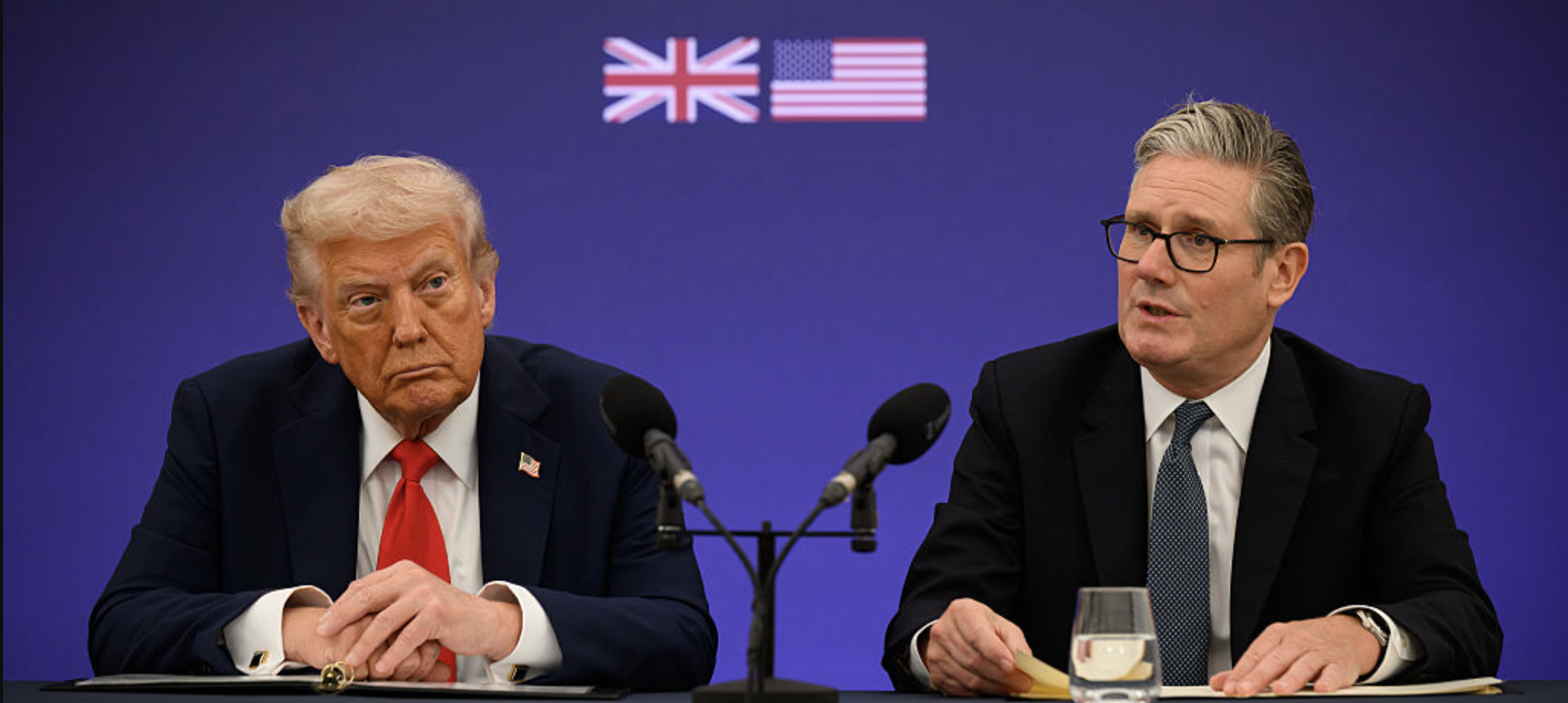
President Donald Trump and British Prime Minister Keir Starmer during the announcement of a technology deal at Chequers, England, on Sept. 18, 2025. —Leon Neal—Getty Images

President Donald Trump has threatened to impose a “big tariff” on the United Kingdom if it doesn't drop its digital services tax on U.S. tech companies.

“They think they're going to make an easy buck. That's where they've taken advantage of our country,” said Trump late Thursday. "We've been looking at it, and we can meet that very easily by just putting a big tariff on the U.K.” 

The digital services tax was introduced in 2020 and imposes a 2% levy on the revenues of several major U.S. firms.

Citing his “obligation to protect” American companies, the President doubled down on the threat, warning the British government to be “careful” as “if they don’t drop the tax... we'll reciprocate by putting something on that's equal or greater than what they're doing."

Downing Street issued a defiant response Friday morning, confirming its outlook on the levy remains the same.

"Our position on that is unchanged. It is a hugely important tax to make sure that those businesses continue to pay their share. So it is a fair and proportionate approach to taxing business activities in the U.K.,” a Downing Street spokesperson told TIME.

The White House reiterated its stance Friday afternoon, with spokesperson Kush Desai telling TIME that "defending America’s innovative and leading technology industry from foreign countries’ digital service taxes and other exploitative policies has been a top priority for President Trump" and the "Administration continues to address these issues with our trading partners."

Trump’s threat to apply economic pressure to yield desired results is the latest display of how the so-called “special” relationship between the U.K and U.S. has significantly splintered since the start of the Iran war.

Just last week, Trump warned that the U.K.-U.S. trade deal reached in 2025—which was heralded at the time for its “reciprocity and fairness”—could be changed.

“Well, it’s been better, but it’s sad,” he said of the deteriorating relationship. “And we gave them [the U.K.] a good trade deal, better than I had to, which can always be changed.”

Trump has lashed out repeatedly at British Prime Minister Keir Starmer for refusing to get actively involved in the Iran war. He criticized Starmer's initial refusal to grant U.S. access to British military bases at the start of the war, claiming it cost American forces crucial time.

He also continues to criticize the U.K.’s handling of the Chagos Islands deal and referred to NATO allies as "useless" after they refused to send warships to secure the Strait of Hormuz.

In turn, Starmer recently said he was “fed up” with people in the U.K. encountering economic instability due to the actions of Trump during the war, the fallout of which has sparked a worldwide energy crisis.

With relations between Europe and the U.S. under great strain, the Pentagon is now reportedly considering a number of options to punish U.S. allies for showing restraint to directly intervene in the war. According to Reuters, a U.S. official described a Pentagon email in which high-up officials were reviewing the U.S. position on the U.K.'s claim over the Falkland Islands. 

TIME has been unable to independently said email and has reached out to the Pentagon for comment.

In response to the reports, a Downing Street spokesperson told TIME: "The Falkland Islands have hugely voted overwhelmingly in favor of remaining a U.K. overseas territory, and we've always stood behind the islanders' right to self-determination and the fact that sovereignty rests with the U.K." 

They added: "We've expressed this position previously clearly and consistently to successive U.S. Administrations and nothing is going to change that."

Stephen Doughty, the U.K.’s Minister of State for Europe, North America and Overseas Territories, also issued a defiant response, insisting: “The Falkland Islands are British.”

These latest threats against the U.K. come just days before King Charles III and Queen Camilla are set to make a highly-anticipated state visit to the U.S., where they will be hosted by Trump for a banquet dinner at the White House.

It’s the first U.S. state visit from a British Monarch since Queen Elizabeth II was greeted by President George Bush in 2007, and the stakes are undoubtedly high as it could serve as an opportunity to calm the escalating tensions between the U.K. and U.S.

Here’s what to know about the tax that Trump is taking issue with and where the U.K.-U.S. relationship now stands.

What is the digital services tax?

Introduced by the previous U.K. government in April 2020, the digital services tax imposes a 2% levy on the revenues of “search engines, social media services and online marketplaces which derive value from U.K. users.”

The first £25 million ($33.7 million) in revenue gained from U.K. users by these companies is not taxed by the government. 

Between April 2021 and April 2025, the tax generated over £2.4 billion ($3.2 billion) in revenue for the British government.

A 2022 audit of the tax from the British National Audit Office found that in the first year of its implementation, around 90% of the total revenue came from five businesses, with 18 companies paying the tax as a whole that year.

Trump previously voiced his disapproval of a similar tax put forth by Canada amid a trade war between the two countries. In June 2025, the President said he would be “terminating all trade negotiations” with Ottawa because of the levy. 

The Canadian government then announced its decision to rescind the tax “in anticipation of a mutually beneficial comprehensive trade arrangement with the United States.”

The tax, which was officially rescinded last month, applied a levy of 3% on revenues similar to those taxed by the U.K. 

Can King Charles’ state visit to D.C. save the "special" U.K.-U.S. relationship?

With the visit of British royals now just days away, Trump is eyeing up the meeting with King Charles and Queen Camilla as an opportunity to reestablish a stronger connection between London and Washington. 

When asked if the royal visit could help repair the historically strong relationship, Trump said: “Absolutely, the answer is yes.”

Praising the royal family, who he has long admired, Trump referred to Charles as a “great man, a brave man.”

Trump visited the King and Queen last September during his unprecedented second state visit to the U.K, staying at Windsor Castle and attending a number of events alongside Charles. 

During the visit, the President also met with Starmer at his country residence, Chequers, where the pair signed a “groundbreaking” billion-dollar technology prosperity deal.
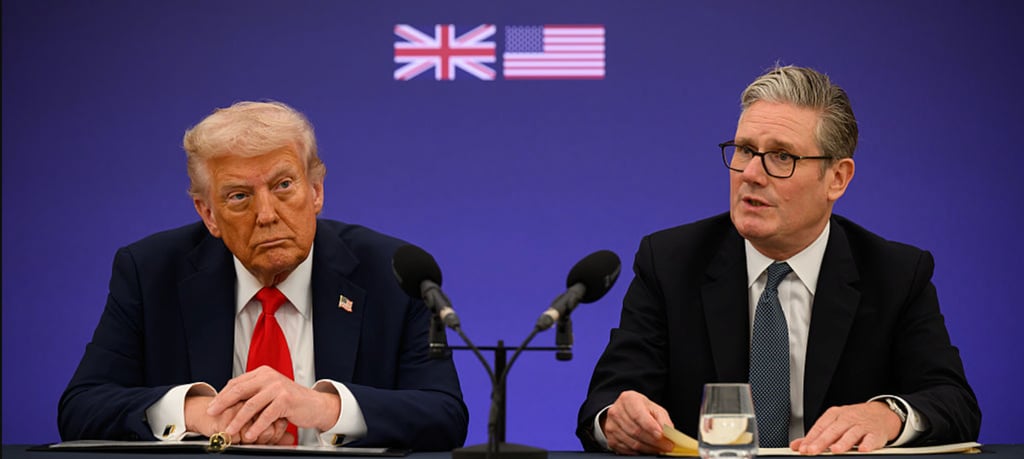
© Leon Neal—Getty Images
President Donald Trump and British Prime Minister Keir Starmer during the announcement of a technology deal at Chequers, England, on Sept. 18, 2025.

Trump Orders U.S. Navy to 'Shoot and Kill' Any Boat Laying Mines in Strait of Hormuz

2026年4月23日 21:54
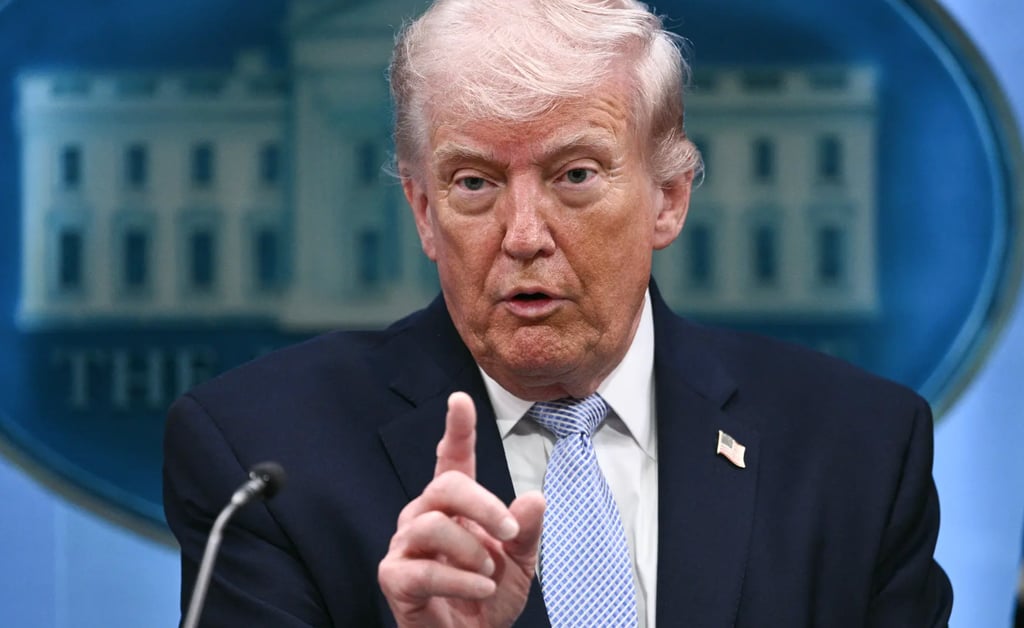
U.S. President Donald Trump speaks about the conflict in Iran in the James S. Brady Press Briefing Room of the White House on April 6, 2026, in Washington, D.C. —Brendan Smialowski—Getty Images

President Donald Trump has ordered the U.S. Navy “to shoot and kill” any Iranian boat laying mines in the Strait of Hormuz, a crucial passage through which around a fifth of global oil production flows.

“There is to be no hesitation,” he said Thursday, adding that U.S. mine sweepers are continuing to clear the waterway—a process that could reportedly take up to six months.

Dismissing Iran’s long-standing chokehold over the key trade passage, Trump insisted that the U.S. has "total control" over the waterway.

"No ship can enter or leave without the approval of the United States Navy. It is ‘sealed up tight’ until such time as Iran is able to make a deal," he said.

The directive follows Trump's extension of the fragile U.S.-Iran cease-fire earlier this week, which was tested Wednesday when Iranian soldiers targeted three vessels in the Strait before seizing two of them.

Iranian state media named the two vessels seized by the Iranian Revolutionary Guard Corps Navy as the Panama-flagged MSC Francesca and Liberia-flagged Epaminondas. A third ship, Euphoria, reportedly escaped capture.

Technomar Shipping Inc, the Greek operator of Epaminondas, confirmed to TIME that the vessel had been seized by Iranian authorities and they were working with regional partners to resolve the situation.

Iranian state TV later aired footage it said depicted the armed, masked members of the IRGC boarding the seized vessels.

The Iranian government has maintained that it controls the Strait of Hormuz, moving to impose tolls on vessels that seek safe passage—a move Trump vowed to stop with the U.S. naval blockade of Iran's ports in the Strait.

U.S. Central Command reported it has directed 31 vessels to turn around or return to port since the start of the blockade on April 13.

Overnight, U.S. forces boarded a sanctioned ship in the Indian Ocean that was transporting oil from Iran, the military said Thursday morning.

“We will continue global maritime enforcement to disrupt illicit networks and interdict vessels providing material support to Iran, wherever they operate," read the statement. “International waters cannot be used as a shield by sanctioned actors. The Department of War will continue to deny illicit actors and their vessels freedom of maneuver in the maritime domain.”

Amid the ongoing naval operations, Navy Secretary John Phelan was removed from his position this week.

The Penatgon's chief spokesperson Sean Parnell said in a statement issued Wednesday that Phelan would be departing the Trump Administration, "effective immediately." He announced Undersecretary Hung Cao as the new acting lead.

Trump said Phelan did "an outstanding job" over the past year, referring to him as "smart, tough, and respected by all."

"I very much appreciate the job that he has done, and would certainly like to have him back within the Trump Administration sometime in the future," Trump said Thursday.

U.S.-Iran peace talks stall with Tehran yet to commit to second meeting

The shifts among U.S. military leadership and the struggle within international waters is taking place against the backdrop of stalled peace talks between the U.S. and Iran. 

Vice President J.D. Vance, who is set to once again lead the U.S. delegation, was expected to travel to Islamabad, Pakistan, this week for a second round of negotiations. But he remains grounded as Tehran has yet to confirm if they will return to the table, despite mediator Pakistan urging both sides to attend.

Esmail Baghaei, spokesperson for the Iranian Foreign Ministry, told state television this week that the uncertainty was not due to indecision on Iran’s part, but was instead down to "contradictory messages" from Washington.

“The reason for this is not indecision; it is the contradictory messages, contradictory behaviors, and unacceptable actions of the American side,” he argued.

Israel and Lebanon set to extend cease-fire by three weeks, Trump says

On Thursday evening, Trump announced that, following the second round of "working-level peace talks" between Israeli and Lebanese officials at the State Department in D.C., both parties had agreed to extend the cease-fire for three weeks.

The Israeli ambassador to the U.S. Yechiel Leiter and his Lebanese counterpart, Nada Hamadeh Moawad, were joined by Trump, Vice President J.D. Vance, and Secretary of State Marco Rubio at the high-stakes meeting which "went very well," according to the President.

The U.S. ambassadors to Israel and Lebanon, Mike Huckabee and Michel Issa, were also in attendance.

"The United States is going to work with Lebanon in order to help it protect itself from Hezbollah," Trump said as he celebrated the cease-fire extension.

"I look forward in the near future to hosting the Prime Minister of Israel, Bibi Netanyahu, and the President of Lebanon, Joseph Aoun. It was a great honor to be a participant at this very historic meeting."

The announcement came as strikes exchanged between Israeli forces and the Hezbollah militant group have threatened to not only derail the fragile Israel-Lebanon truce, but also the equally delicate U.S.-Iran cease-fire.

“If strikes continue on Lebanon, then Iran might get involved [against Israel], and then the cease-fire is over. That's one of the last cards [Hezbollah] have to play," an expert told TIME earlier this month.

The conflict between Israel and Lebanon dates back decades. The two countries have technically remained in a state of war since 1948, when Lebanon joined neighboring Arab states in opposing the creation of Israel.


Read More: Israel's War Against Lebanon, Explained


© Brendan Smialowski—Getty Images

U.S. President Donald Trump speaks about the conflict in Iran in the James S. Brady Press Briefing Room of the White House on April 6, 2026, in Washington, D.C.

'Terrible Idea': Republicans Criticize Trump's Floated Bailout for Spirit Airlines

2026年4月23日 22:17
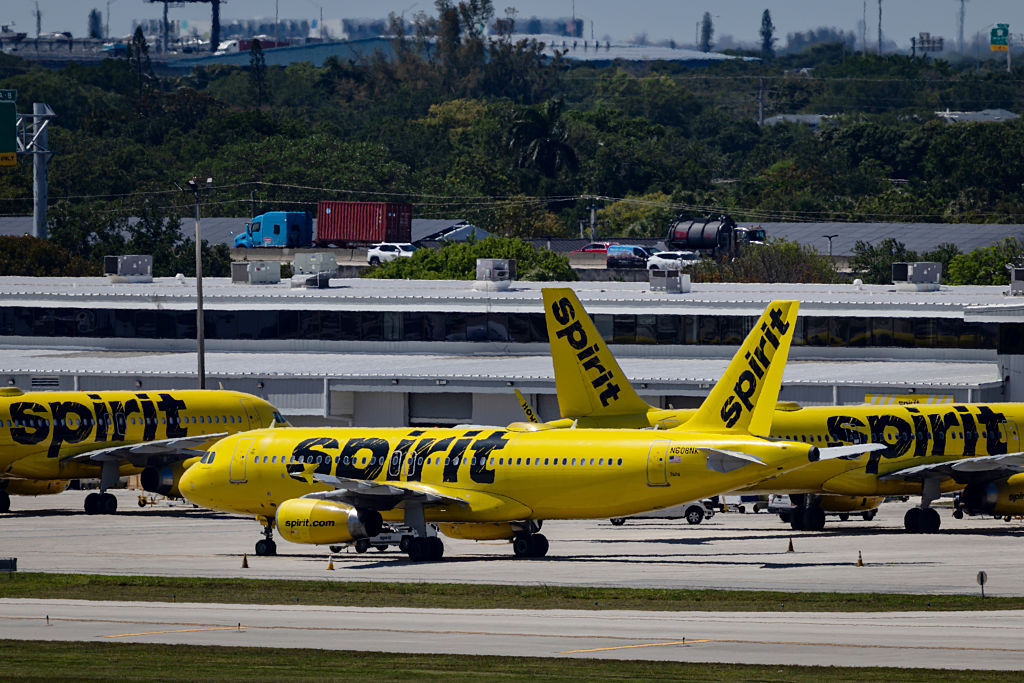
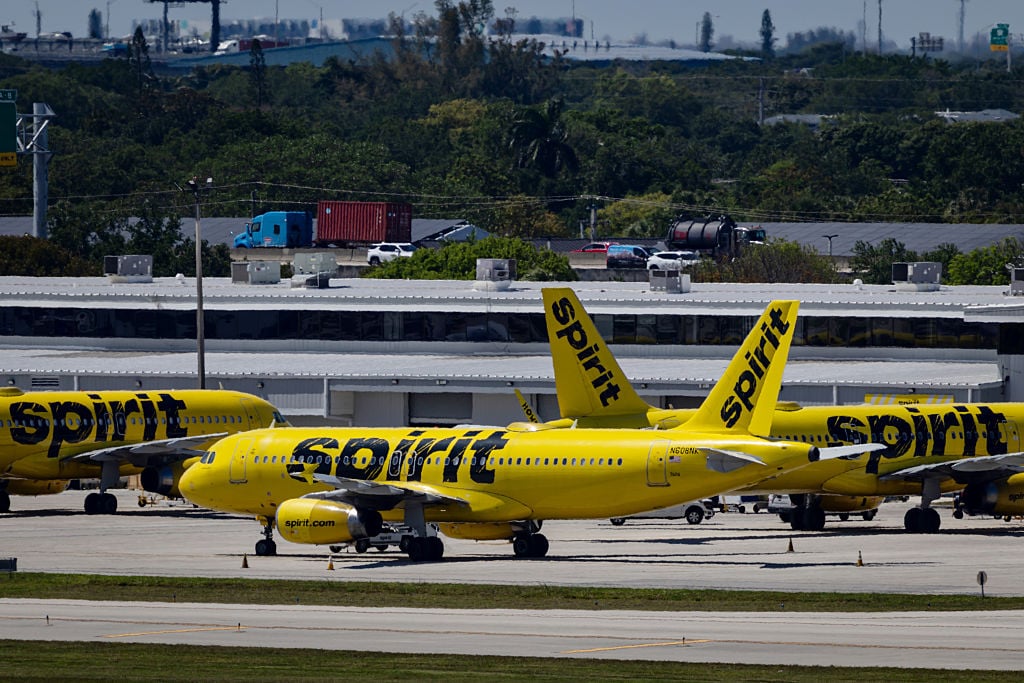
Spirit Airline aircraft at Fort Lauderdale-Hollywood International Airport in Florida, on April 22, 2026. —Eva Marie Uzcategui—Getty Images

President Donald Trump’s interest in a multimillion dollar bailout of Spirit Airlines has prompted concern among several Republican lawmakers.

Earlier this week, Trump said he would “love somebody to buy Spirit” and floated the idea that “maybe the federal government should help that one out.”

Reuters has since reported that the Trump Administration is nearing a deal that could include up to $500 million in government-backed funding, citing three people familiar with the matter.

TIME has reached out to the White House for comment.

Spirit filed for Chapter 11 bankruptcy for the second time last August and won approval for an emergency $475 million lifeline in October. 

The company has experienced additional strain in recent weeks as it, along with other airlines, has had to navigate the steep rise in jet fuel prices amid the energy crisis spurred on by Tehran’s chokehold over the Strait of Hormuz since the start of the Iran war on Feb. 28.

The average price of jet fuel in the U.S. has jumped from $2.50 per gallon before the conflict to around $4.23 per gallon, according to Argus Media

As such, many airlines have been forced to raise ticket prices and cut low-profit routes.

The White House has blamed the Biden Administration for Spirit’s financial troubles. 

“The [Spirit] airline is bankrupt because the previous Administration blocked the merger, which was probably not a wise move,” said press secretary Karoline Leavitt on Wednesday, referring to JetBlue’s terminated attempt at a $3.8 billion acquisition of Spirit in 2024. 

The Justice Department said at the time that the block protected the United States’ markets—and its market participants—from “anticompetitive harm.”

But Trump’s floating of a federal government bailout being a potential solution for the private-sector company has raised grave concern among lawmakers, sparking debate about government involvement in business.

Read More: U.S. National Debt Soars Past $39 Trillion Amid Concerns Over Cost of Iran War

Placing the blame firmly on Trump’s war with Iran, Democratic Sen. Elizabeth Warren of Massachusetts argued: “Donald Trump’s war with Iran caused the sky-high fuel prices that finally did Spirit Airlines in.”

Querying the impact on the public, she added: “What do the American people get out of this taxpayer bailout? Will the failed airline executives be held accountable?”

Her gripes have been echoed by prominent voices on the right.

Republican Marjorie Taylor Greene, a former Georgia Congresswoman and one-time ally of Trump before their public falling out, argued a move such as this is “not what America voted for.”

“The Trump Admin is going to bail out Spirit Airlines with $500 million of your tax dollars but refuse to do anything to lower the cost of health insurance. Or cost of living. Or gas and diesel,” claimed Greene, who also blamed the Iran war for rising costs.

Several sitting Republican lawmakers expressed similar concerns.

Sen. Tom Cotton of Arkansas

Sen. Cotton, who sits on the Senate Joint Economic Committee, cast doubt on the federal government’s ability to run Spirit Airlines, should the bailout come to fruition.

“If Spirit’s creditors or other potential investors don’t think they can run it profitably coming out of its second bankruptcy in under two years, I doubt the U.S. government can either,” said Cotton. “Not the best use of taxpayer dollars.”

Sen. Ted Cruz of Texas

Sen. Cruz condemned the potential bailout as an “absolutely terrible idea,” pointing to “the TARP corporate bailouts” as a “huge mistake.”

TARP, or the Troubled Asset Relief Program, was established by the U.S. Treasury in 2008 following the financial crisis. The program provided bailouts to U.S. banks, the auto industry, and families across the country to avoid foreclosure, as well as the government purchasing of troubled companies’ assets and stocks. 

In 2023, the Treasury said that a total of $443.5bn was spent through TARP, and when accounting returns and interest, cost a total of $31.1bn.

Adding to his criticism, Cruz argued: “The government doesn’t know a damn thing about running a failed budget airline.”

Sen. Mike Lee of Utah

Sen. Lee supported Cruz’s argument, stating that “competition among airlines suffers when government bails them out.”

Lee recently joined forces with Sen. Warren of the Democratic Party to raise issue about reports that United Airlines CEO Scott Kirby had met with Trump earlier in the year to discuss a potential merger with American Airlines.

"A merger between United Airlines and American Airlines would create the largest airline in the world, in an industry already plagued by a lack of competition," said Lee and Warren in a public letter.

Among their list of concerns was the potential impact on consumers. 

“First, a United-American merger could lead to increased prices for consumers, at a time when airlines are already squeezing flyers through higher fares and fees,” they argued

Trump in an interview with CNBC this week appeared to distance himself from the merger talks when asked about the matter.

“I don't mind mergers," he said."But with American it's doing fine, and United is doing very well. I know the United people, they're doing very well. I don't like having them merge.”

Sen. Ted Budd of North Carolina

Sen. Budd also made an argument against taxpayer money being used for this purpose.

“Taxpayers pay billions to subsidize Amtrak, even as they boast growing demand and riders,” he said. “Just as Biden’s DOJ shouldn’t have prevented Spirit Airlines from merging with viable partners, Americans shouldn’t be on the hook for another failing business as its competition thrives.”

Transport Secretary Sean Duffy

Concern has been raised within the Trump Administration itself, with Transport Secretary Sean Duffy urging against, what he referred to as, “dumb investments.”

“⁠There's been a lot of money thrown at Spirit, and they haven't found their way into profitability, Duffy told Reuters. “And so would we just forestall the inevitable and then own ⁠that?”

He queried: "If no one else wants to ​buy them, why would we buy them?"

© Eva Marie Uzcategui—Getty Images

Spirit Airline aircraft at Fort Lauderdale-Hollywood International Airport in Florida, on April 22, 2026.
❌