阅读视图

A New Generation of Climate Leaders Is Our Last Hope

It is not a great time for anyone concerned with the climate. On Feb. 12, the Trump Administration’s Environmental Protection Agency swept away its endangerment finding, wishing away the scientific understanding that burning fossil fuels is harmful to human health and eliminating the mechanism to limit the emissions that are transforming earth systems. 

Winter storms walloped North America as the Arctic, which has warmed four times faster than the global average, is no longer able to contain the frigid air of its polar vortex. Yet the Western United States also had the hottest winter on record, leaving little snowpack behind that might buffer the chance of megafires in the summer. The lack of snow seems almost trivial compared to the black rain that fell on Iran when Israel bombed oil facilities that billowed out toxic pollutants. In the first two weeks of the U.S.-Israel-Iran war, an estimated five million tons of greenhouse gas emissions were unleashed, equivalent to a mid-sized nation’s annual contribution to warming the planet.

The climate crisis is no longer a distant warning but our terrifying reality. A new generation of activists may be our last, best hope.

I have reported on the environment and climate for 20 years—from Delhi to Nairobi to West Texas—and the litany of disasters can be exhausting. Born in 1970, my life has paralleled the emergence of the climate crisis. That year—looking back—was a high point of hope for the planet. Senator Gaylord Nelson, a Democrat from Wisconsin, teamed up with Republican Senator Pete McCloskey from California, and the activist Denis Hayes to launch the first Earth Day on April 22, 1970. They envisioned youth-led action for the environment, drawing inspiration from student anti-war protests. Soon after, President Richard Nixon’s Republican administration established the Environmental Protection Agency and enacted robust environmental legislation such as the Clean Air and Clean Water Acts. 

The year I became a legal adult, in 1988, NASA climatologist James Hansen warned Congress of the grave consequences of a changing climate.“It is already happening now,” he warned. 

His message was almost heeded. President Ronald Reagan and Mikhail Gorbachev, the leader of the Soviet Union, had just pledged to work toward a global treaty on global warming. But free marketeers and fossil fuel companies had too much to lose and applied just the right amount of pressure to keep the U.S. from acting. 

The moment passed. Time passed. 

Babies were born and grew into adults. I was a recent graduate from journalism school in 2006, the year Al Gore, in his film An Inconvenient Truth, launched himself up in a scissor lift in order to reach the soaring spot on a graph showing how high and quickly levels of carbon dioxide in the atmosphere had risen. The film proved as popular in conservative suburban enclaves as it did in hipster Brooklyn. Still, emissions went up.

In the 20 years since then, public interest in the state of the climate has waxed and waned. Climate fatigue is real, and rising authoritarianism commands attention worldwide, sucking the oxygen out of living rooms and newsrooms even as carbon dioxide continues to choke the atmosphere. But climate change is not going away, and I believe it will prove to be the story of the 21st century. Even now, the climate crisis is a silent partner in all sorts of blockbuster headlines. As the Trump Administration invaded Venezuela and threatened Greenland in a grab for resources. As data centers fueling Artificial Intelligence demand more electricity and more water. As a water crisis fomented unrest in Iran, where protesters demanded, “Water, electricity, life––our basic right.” 

Rob Nixon, a professor at Princeton, coined the term “slow violence” for climate change and other disasters that unfold unrushed over time and place, often far from cameras and newsfeeds. But the pace is quickening. It used to be someone else’s problem, in some other place. Another country. Another state. A future shock, to be dealt with eventually.

Now it’s happening to almost all of us as climate change acts as a “threat multiplier,” not only posing security risks to nation states and financial risks to businesses large and small, but also making our floods and famines, our hurricanes and tornadoes, more frequent and more fatal. Entire towns now vanish overnight from wildfires. Communities that have already lived through multiple floods quiver with collective PTSD during each hard rain. Wars over fossil fuels burn more fossil fuels and lead to more wars.

The weather is not climate, but it often reflects it, and the weather is getting weirder. Just as surely as the fact that I began writing this from the floor of a warming center, charging up since I, like 230,000 others in Massachusetts, lost power to a record-breaking blizzard, complete with thundersnow

What’s coming to your town?

When tomorrow becomes today

The thing about future shock is that we are always living our way into the future. Tomorrow becomes today, becomes yesterday. Carbon levels ascend unabated. The dire predictions of sea level rise and melting ice caps—some of them made by fossil fuel companies in the 1960s—are playing out, some sooner than scientists had thought. And despite NASA scientist Hansen’s use of the word “now” in Congress 38 years ago, the public has been able to keep alive the alluring myth that climate change is distant not only in place, but also in time. 

Government reports littered with future dates didn’t help. In 2018, the Intergovernmental Panel on Climate Change, the UN body for assessing climate science, warned that we had until 2030 to nearly halve global carbon emissions if there was any hope of staying within the 1.5 degree Celsius range of warming that would keep the planet behaving the way humans have become accustomed to for the last 10,000 years. We briefly reached 1.5 degrees of warming last year. We had until 2050 to reach net zero, when humans would no longer be tipping the carbon cycle out of its natural balance. We are not even close. The year 2100 is frequently mentioned, but little after that, as though time will stop at the end of the century. It won’t.

There is an entire generation of children running around today who will be alive in 2100. My Gen X yielded to  Millennials who yielded to Gen Z. And here come Alpha, Beta, Zoomers. With the birth of each generation, more greenhouse gas emissions trap more heat and oceans rise, weather gets more extreme, and tipping points arrive. Welcome to your warming world, child.

Passing the torch of climate action

Those who sounded the alarm early have gotten long in the tooth. Al Gore surely has a draft obituary on file at every major publication, and the climatologist James Hansen, who was so alarmed by the science that he became an activist, wrote a book dedicated to his grandchildren 16 years ago.

I find hope in activists who have gone before me, but even more so in our youth. For the last few years, I have researched the lives of teenage climate activists from around the globe for a graphic novel on climate change. Talking with these activists and learning about the organizations they have founded to create the world they want to inhabit as adults gives me more than hope. While Donald Trump breaks things, they are building. Their activism gives me a renewed sense of energy and purpose. I think of the phrase, “strength for the journey,” by Reverend Martin Luther King Jr. He was only 26-years-old when he was tapped to lead the famed bus boycott in Montgomery, Alabama. 

This new generation of climate activists is picking up the torch, now lit by LED. They recognize they have a life-and-death stake in the climate system they will be inhabiting for longer than anyone in my generation. Some of them are the children and grandchildren of those who have gone before. People like Sophie Kivlehan, James Hansen’s granddaughter, who served as a youth plaintiff in the landmark Juliana vs U.S. government. Although dismissed last year, the case argued that the government was violating the youngest generation’s constitutional rights to life, liberty, and property, as well as failing to protect critical public trust resources. 

In Pennsylvania, Ashley Funk served as a youth plaintiff in more than one climate lawsuit, and now her daughter is a claimant, suing Pennsylvania for permitting what would become America’s largest gas-fired power plant, locking in emissions for her lifetime. When lawyers from Our Children’s Trust, a nonprofit public interest law firm, filed the suit, the child was 10 months old; Yet another claimant was just eight weeks old. There are thousands of climate lawsuits happening around the world, many of them filed on behalf of the rights of youth to a viable future. 

Another second-generation activist is Xiye Bastida, the daughter of a couple who met in 1992 at the UN Earth Summit in Rio de Janeiro, Brazil, when they were young people advocating for environmental action. Bastida was one of the key organizers of the 2019 Climate Strike that brought hundreds of thousands of people out into the streets of New York City. It was another moment when the public was prioritizing action, partly inspired by the strike of Swedish youth activist Greta Thunberg, that would find a foothold under the Biden Administration. 

Around the country and the globe, indignant young people are taking to the streets and the courts as the policies of grey-haired men repeatedly fail them. They are pulling every lever they can reach with their young hands.  

Speaking up in left-behind America 

In this time of climate hushing, when fewer and fewer leaders are talking about climate change, lawsuits and civil disobedience are key ways for citizens to demonstrate they want action. In the last decade, the percentage of Americans who are alarmed by climate change has nearly doubled, even as the U.S. under the “drill-baby-drill” Trump Administration finds new ways to quash renewable energy projects and burn more fossil fuels. 

The rest of the world, meanwhile, moves forward. The fastest-growing solar energy market is now in Africa. China’s carbon emissions have plateaued as it briskly ramps up renewable energy systems. Even India, stubborn about its right to use its coalfields to develop its nation, is constructing some of the world’s largest solar farms.  

Lawsuits and activism might be necessary in the U.S. to drive policy back toward action. Katharine Hayhoe, an atmospheric scientist of my generation, has argued persuasively that “We can’t give in to despair. We have to go out and look for the hope we need to inspire us to act, and that hope begins with a conversation today.” 

Even the radical act of simply having a conversation expressing your concern to a neighbor can be effective. Perhaps a young person will overhear it. 

Or perhaps they will be the ones to start it. Will you be listening? Will you act? Or is the rally cry for climate action doomed to recur every Earth Day for generations to come?
  •  

Arbor Day Is Actually About Infrastructure

作者Dan Lambe
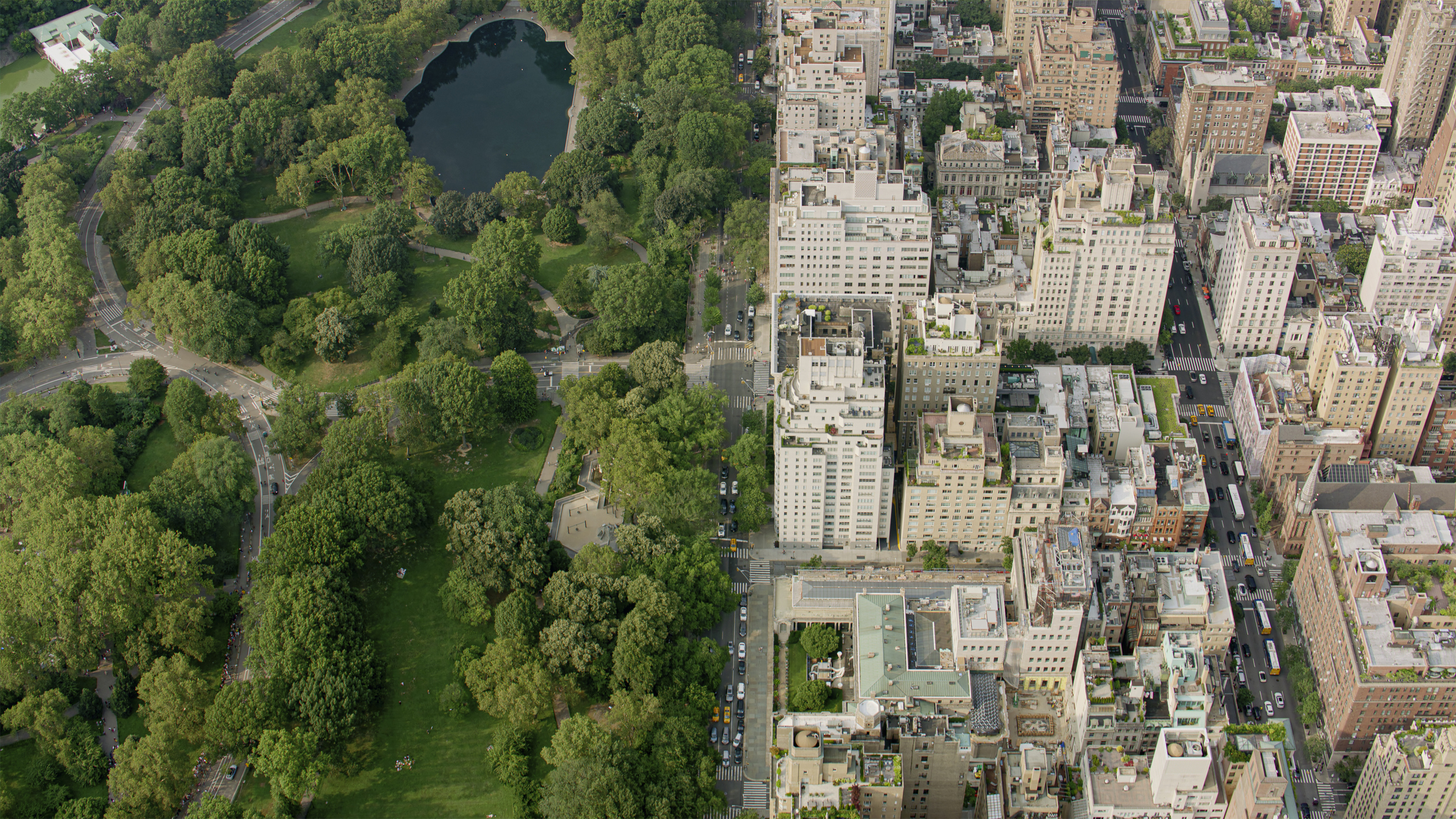
An aerial view of Central Park in New York, New York. —simonkr—Getty Images

There is an inherent understanding that roads, bridges, and water systems are vital to a functioning society. Their value is obvious, their absence is disruptive, and their failure can be catastrophic. As we work to build more resilient cities—addressing everything from severe storms and extreme heat to public health—we have an urgent opportunity to reinforce our aging gray infrastructure with something more green, literally.

True infrastructure resilience is rooted in trees. And we need to continue transitioning from a model that uses trees as tools for beautification to one that emphasizes their importance for biological resilience and infrastructural strength. 

Beyond their symbolic and feel-good appeal, trees serve as critical infrastructure in our neighborhoods. They cool our cities, reduce stormwater runoff, improve air quality, lower energy costs, and even extend the lifespan of other infrastructure. When a system provides this much essential value, it can no longer be categorized as a “nice-to-have” accessory; it should be managed as a “must-have” utility.

Trees are one of the few investments that deliver returns across environmental, economic, social, and public health outcomes.

According to the World Meteorological Organization, the last 10 years have been the hottest on the planet. The rising heat has proven to be a public health crisis. The Yale School of Public Health reports deaths linked to heat exposure surged more than 50% over the past two decades. As the rate of extreme heat increases, so must our response. Trees significantly reduce surface and air temperatures by providing shade, with shaded surfaces being 20 to 45°F cooler than unshaded ones. In cities, trees can lower air temperatures by up to 10°F by shading homes and streets and releasing water vapor through their leaves, which further enhances their cooling effect.

The same is true when storms hit. As global temperatures rise, the nature of precipitation is changing. We are now seeing more frequent and intense bursts of rainfall that often outpace the soil's ability to absorb it, creating a dangerous and unpredictable flooding landscape for our communities. Recent estimates suggest the total annual economic costs of U.S. flooding range from $179.8 billion to $496 billion, including direct and indirect commercial impacts. 

What’s more, trees are a proactive insurance policy. Traditional pipes and sewers have a fixed capacity, while trees are adaptable. Their roots act as a living sponge, helping to absorb rainfall, reducing runoff that overwhelms drainage systems and floods streets and homes. Strategic planting and maintenance can mean the difference between resilience and costly recovery. In this way, trees work alongside traditional infrastructure, strengthening their protection and impact.

Well-placed trees increase property values and reduce energy costs. In Cincinnati, community trees save the average household $56 annually in cooling costs, totaling $4.8 million in savings citywide. The U.S. Department of Energy estimates that planting just three trees in strategic locations can reduce household energy bills by $100 to $250 per year and cut energy use by up to 25%. Trees function as a high-performing utility. Unlike most infrastructure that depreciates, a strategic investment in green systems provides an immediate return on investment, delivering savings that can be reinvested.

In urban areas, increased tree canopy has been linked to lower crime rates in some cases. For instance, Baltimore found that a 10% increase in tree canopy correlated with a 12% decrease in crime. A well-maintained tree canopy signals that a neighborhood is active, cared for, and monitored by its residents, helping to foster a safer environment.

Adopting a “must-have” tree mindset means mirroring the strategic investment we already provide for roads and utilities. It means planning for them, funding them, and maintaining them with the same rigor. It means setting canopy goals, investing in long-term care, and ensuring that every neighborhood benefits from their protection. It means integrating trees into broader policy conversations around climate, housing, and public health.

Most importantly, it means changing how we think.

We don’t ask whether we can afford sidewalks or clean water systems—we recognize them as essential. Trees belong in that same category. They are living systems that support our built environment and make our communities safer, healthier, and more resilient.

This Arbor Day, let’s celebrate by planting trees. But let’s also commit to something bigger: recognizing trees for what they truly are—not just amenities, but essential infrastructure we can no longer afford to overlook.

© simonkr—Getty Images

An aerial view of Central Park in New York, New York.
  •  

Cuba Is Not a Prize. It Is a Warning.

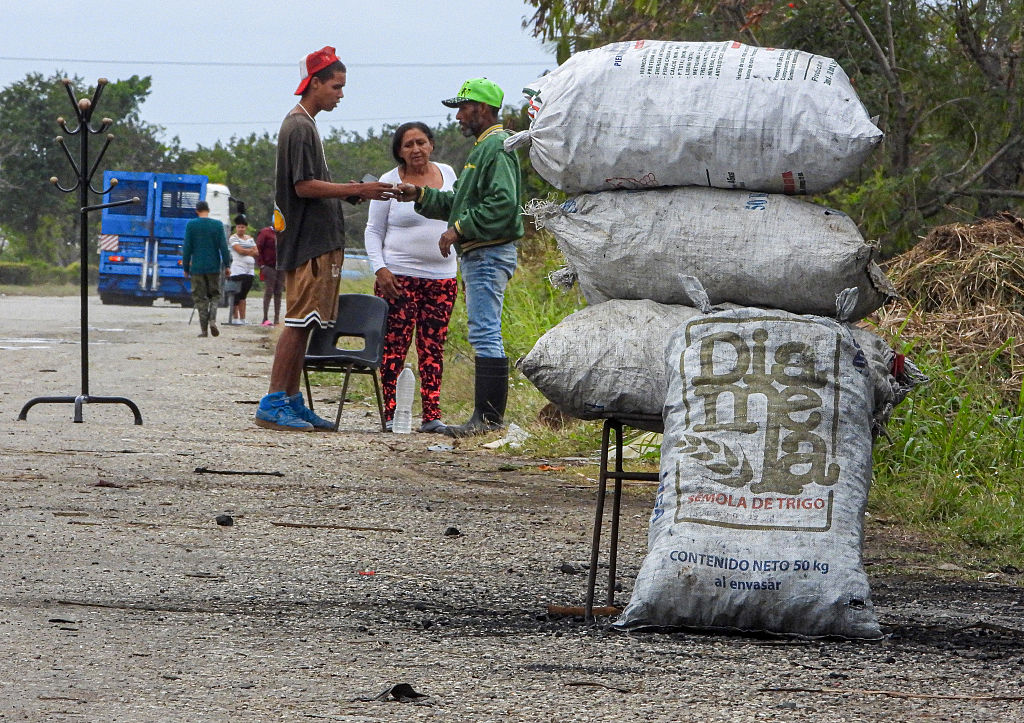
Farmers sell charcoal in Havana on February 6, 2026 as Cubans scramble to cope with electricity blackouts and shortages worsening under economic pressure from President Donald Trump. —Adalbrerto Roque–AFP via Getty Images

Even as the world is consumed by the war in the Middle East, there is a growing sense that something is about to unfold in Cuba. Yet whatever the United States may have in store for the island seems less like a strategy for Cuba itself than a response to another problem.

The world of the Cold War is gone, and so is the one that came after it. From the election of Hugo Chavez as President of Venezuela in 1998 to the early hours of Jan. 3, when his successor Nicolas Maduro was forcibly removed by the U.S., the Castro regime acted as the Chavismo project’s political mentor. Caracas bailed out Cuba by sending millions of barrels of oil to fill the gaping economic hole left by the collapse of the Soviet Union, its chief sponsor and political mentor until the early 90s. In return, Cuba sent doctors, teachers, and security agents to Venezuela.

Now, Caracas is becoming a U.S. protectorate, and Havana may soon follow the same path. Maduro’s capture and extraction alarmed the Cuban leadership. They have accepted, almost in silence and as never before, the humiliation of hearing an American president talk about Cuba with contempt, treating it as a mere formality, as though it already belonged to him. 

Cuba has no oil, no rare earths, no major natural resources. Yet the government still clings, against all odds, to what remains of the Cuban revolution’s political prestige. At this point it might have been better for Castroism to preserve nothing at all, because in the geopolitical theater of a post-neoliberal world, the fall of the regime could serve Washington as a consolation prize. If things go badly in Iran, as they seem to be, Havana may end up paying the price. Empires in decline take revenge on their lesser enemies. Cuba under Castro’s successors is a much smaller, much weaker rival.

On the island, ordinary Cubans watch all this with a mixture of expectation and uncertainty, even as they protest the endless blackouts and the misery around them. Food and gasoline prices have risen, but widespread shortages and lack of electricity long predate the fuel blockade imposed by Trump in January. It is worse now, but it has not been better for several years. Much of the international press and public opinion has only now taken notice of Cuba and found a country in ruins. Yet this alarming situation did not begin when they finally started paying attention. That is my issue with much of what passes for truth in the West, even the version I politically identify with. The story is almost always told in relation to Washington’s role in a conflict, or its direct intervention in it, and at times the Cuban people seem to matter only when big capital moves in.

In recent weeks, politicians, activists, and intellectuals have published articles and issued statements warning of Cuba’s humanitarian crisis. They argue that the U.S. oil blockade will force hospitals to close, cripple food production, and leave people hungry. They would be right, if all of this were not already happening. From my perspective, it is impossible not to question those arguments. In the name of preventing future hunger, they overlook the hunger that already exists or assume that Washington holds a monopoly on injustice and that they, in turn, claim a monopoly on indignation.

Aside from the dehumanization involved in the U.S. strangling a country in an effort to provoke social collapse, the political and economic crises in places like Cuba, Venezuela, and Iran have their own dynamics, their own patterns of state violence, and their own cycles of public discontent. Overlooking the suffering of societies that cannot easily be turned into an argument against capitalism goes a long way toward explaining why the left failed in the last century. Above all, no one should minimize someone else’s injustice in order to advance their own cause. Without a shared moral standard, justice is impossible.

Here is the sad reality of the present moment: even as some kind of change seems inevitable, democracy does not seem to be a real possibility for Cuba. The Cuban regime, having known nothing but authoritarian rule, cannot offer people what it has never practiced, and Trumpism cannot export what, in my view, it despises. It appears that Secretary of State Marco Rubio is trying to strike a deal with the Castroist leadership that would allow large corporations onto the island without restrictions. In return, it seems reasonable to assume, based on the Venezuelan playbook, that the Trump Administration would guarantee the military elite’s continued hold on power.

Apart from the far-right wing of the Cuban exile community and American corporations for whom Cuba’s so-called freedom is above all an economic opportunity, Cubans are hardly celebrating the political situation, nor do we believe Trump’s threatening rhetoric of “taking Cuba.” Miami’s exile community can certainly be loud and reactionary, but from what I have seen, the real possibility of an invasion and the strategy of suffocating the island economically have not received the broad support among the Cuban exiles one might expect. Having lived in America for five years, I have come to understand that the Cuban exile community is far more diverse than it might appear. But it is the most right-wing exiles who dominate the conversation about the future of my country in American politics and media.

The Cuban model isn’t working, and its allies—China, Russia, and the pragmatic wing of Latin American progressivism—seem to have grown tired of the government’s inertia. Cuba faces an economic embargo, but in a globalized world there are many ways to get around or soften its effects, and the post-Castro regime fronted by President Miguel Diaz-Canel has shown little interest in doing so. The authorities fear that any economic reform would entail a loss of political power, using the embargo to justify the system’s lack of productivity.

The orthodox and authoritarian left in Cuba, Nicaragua, and Venezuela has, in many ways, sabotaged and delayed the renewal of the Latin American left. Venezuela has ended up humiliatingly dependent on the Great Power to the north because, with the fraudulent July 2024 elections, it gave the United States the perfect excuse to intervene. The agreement that allowed those elections was promoted not only by the opposition but also by several Latin American leaders negotiating with Washington. Maduro had promised Lula, López Obrador, and Gustavo Petro that he would accept the electoral result, and then he betrayed and exposed his allies. Maduro’s betrayal was seen as proof that Latin Americans could not manage their own region.

The sovereignty of our countries is fragile, always at risk, and not something to be toyed with. Just as in Venezuela, Cuba now stands on the verge of selling it. In reality, it now feels almost inevitable, because those governments had already sold it long before. The United States simply took its time buying it.

Translated by Jacqueline Loss

© Adalbrerto Roque–AFP via Getty Images

Farmers sell charcoal in Havana on February 6, 2026 as Cubans scramble to cope with electricity blackouts and shortages worsening under economic pressure from President Donald Trump.
  •