普通视图

Received today — 2026年4月26日TIME

Suspect Detained After Shots Fired at White House Correspondents' Dinner

2026年4月26日 11:59
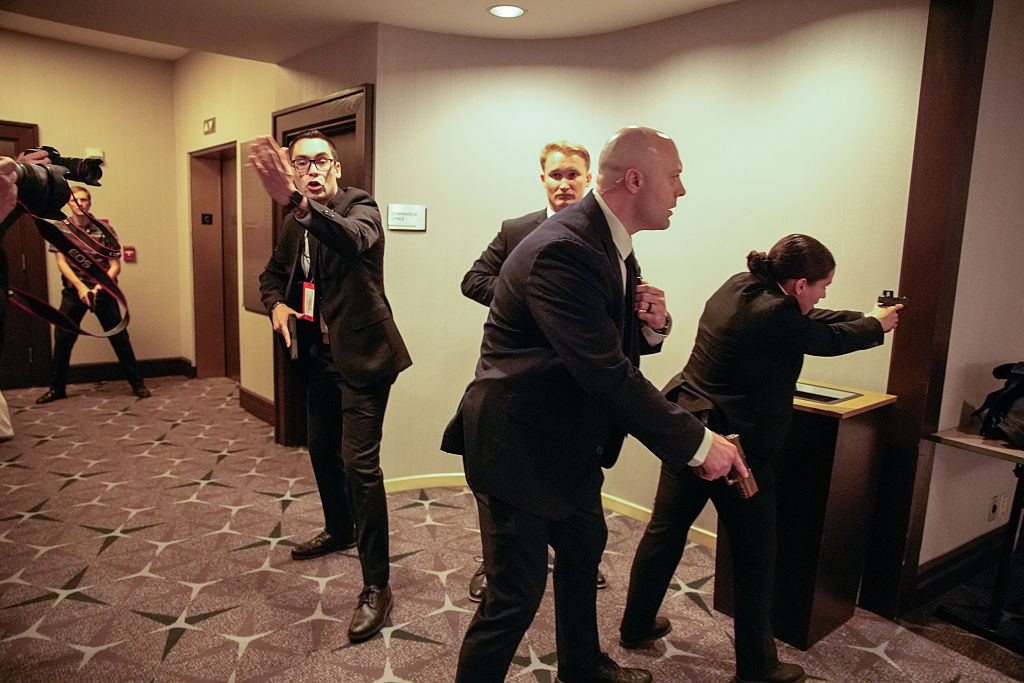
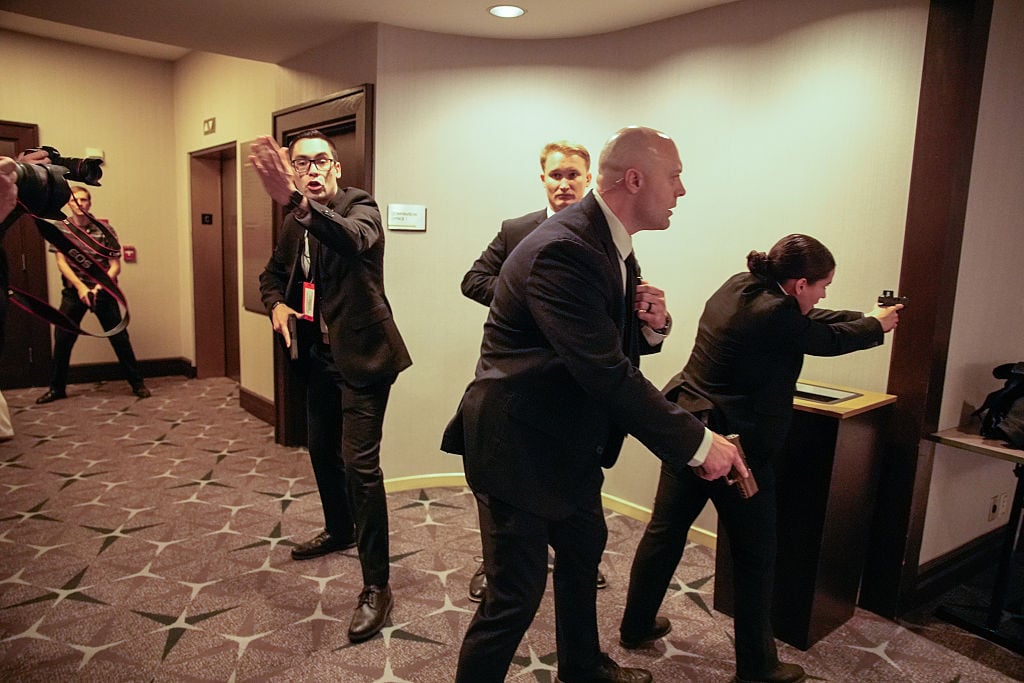
Law enforcement officers respond to reports of a shooting during the White House Correspondents' Association (WHCA) dinner in Washington, DC, US on Saturday, April 25, 2026. President Donald Trump and Vice President JD Vance were evacuated from the White House Correspondents' Association dinner event in Washington Saturday following a security incident at the venue. —Yuri Gripas—Abaca/Bloomberg via Getty Images

A gunman opened fire while trying to force entry to the White House Correspondents’ Association (WHCA) dinner on Saturday evening, forcing President Donald Trump and members of his cabinet to be rushed off the stage by Secret Service.

Video from the ballroom at the Washington Hilton in Washington, D.C., showed Secret Service agents running onto the stage before escorting the president and Vice President J.D. Vance away. Hundreds of attendees took cover under their tables as gunshots rang out and a voice could be heard shouting, "Get down!"

The gunman was identified as Cole Tomas Allen, 31, of Torrance, California, by two law enforcement officials to The Associated Press. The FBI said the suspect was detained by law enforcement.

Speaking at a hastily called press conference at the White House after the shooting, Trump said that a law enforcement officer was shot by a "lone wolf whack job" who tried to storm the room where the event was taking place, but the officer was saved by a bulletproof vest and was in "great shape."

Read more: Journalists Toast Freedom of the Press at Dinner

"In light of this evening's events, I ask that all Americans recommit with their hearts to resolving our differences peacefully," Trump said.

The president said he had ordered the release of CCTV footage of the incident, which occurred near a security screening area outside the room where the event was held. The video, which he posted on Truth Social, showed a man running through the security check area before several law enforcement officers opened fire on him.

The Washington Metropolitan Police Department said the suspect charged a Secret Service checkpoint at 8.36 p.m. carrying a "shotgun, a handgun and multiple knives," and that law enforcement "exchanged fire" with the gunman.

What happened at the White House Correspondents' Dinner?

The WHCA dinner is an annual event for White House staff and the press, typically featuring comedy and a satirical speech from the president.

Most people were inside the ballroom when the shooting took place, but CNN’s Wolf Blitzer said he was a few feet away when he witnessed a gunman fire a "very serious weapon" at least six times. He told CNN in an interview that the shooter "seemed to have gone through the metal detector, but he had a weapon and he was firing a weapon."

A TIME journalist attending the event said Secret Service agents ran through the crowd to escort Trump Administration cabinet members to safety immediately after several loud noises were heard on the ballroom floor.

Trump said on Truth Social shortly after the incident that he wanted to continue with the event, but that law enforcement had requested that he leave the premises, "consistent with protocol."

"The First Lady, plus the Vice President, and all Cabinet members, are in perfect condition," he wrote, adding that the event would be rescheduled within 30 days.

Speaking to reporters at the White House later, Trump was asked why he had been targeted for assassination numerous times—including a near miss at a rally in Butler, Pennsylvania, during the 2024 presidential campaign.

"I've studied assassinations, and I must tell you the most impactful people, the people that do the most—you take a look at the people, Abraham Lincoln, I mean, you go through the people that have gone through this, where they got them, but the people that do the most, the people that make the biggest impact, they're the ones that they go after," he said.

This is a developing story and will be updated.

© Yuri Gripas—Abaca/Bloomberg via Getty Images

Law enforcement officers respond to reports of a shooting during the White House Correspondents' Association (WHCA) dinner in Washington, DC, US on Saturday, April 25, 2026. President Donald Trump and Vice President JD Vance were evacuated from the White House Correspondents' Association dinner event in Washington Saturday following a security incident at the venue.

Trump Cancels Iran Peace Talks at Last Minute: 'We Have All the Cards'

2026年4月26日 03:45
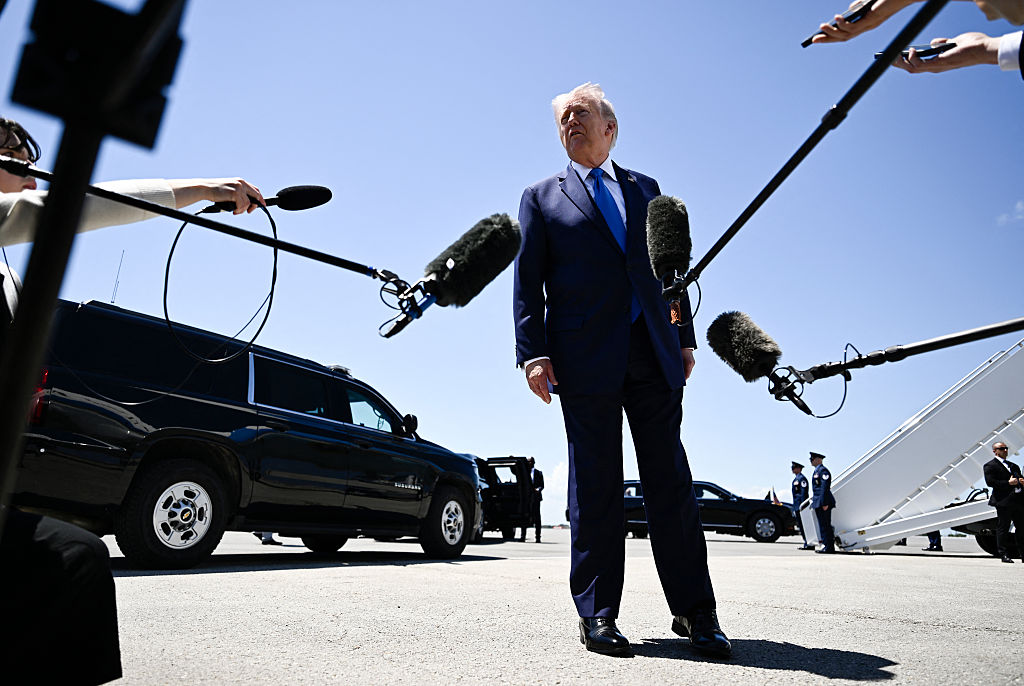
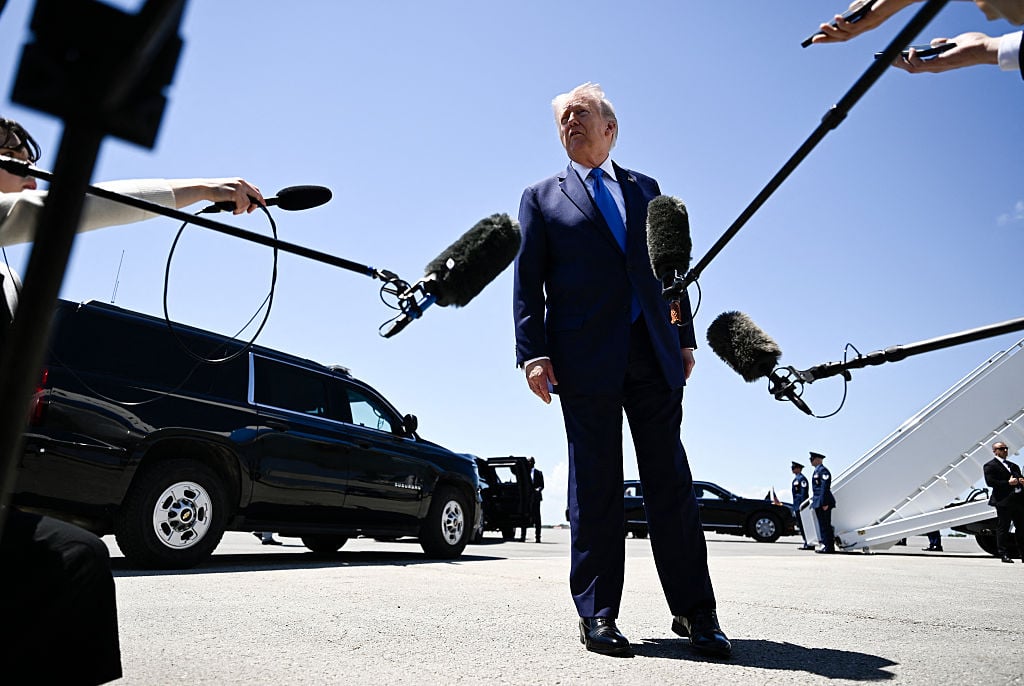
US President Donald Trump speaks to journalists before boarding Air Force One at Palm Beach International Airport in West Palm Beach, Florida, on April 25, 2026. President Trump is on his way back to Washington where he will be attending the White House Correspondents' dinner for the first time while in office —Kent NISHIMURA—AFP

President Donald Trump abruptly canceled plans for U.S. envoys to travel to Pakistan for peace talks with Iran on Saturday, throwing the latest round of negotiations aimed at ending the war in doubt. 

Special envoy Steve Witkoff and Jared Kushner, the president’s son-in-law, were due to travel to Islamabad for talks with Iranian leaders later Saturday, but Trump called them off at the last minute, blaming “infighting” among Iran’s leadership.

“Too much time wasted on traveling, too much work!” he wrote on Truth Social. “Besides which, there is tremendous infighting and confusion within their ‘leadership.’ Nobody knows who is in charge, including them.”

“Also, we have all the cards,” he wrote.

Read more: Tehran Says 'No Decision Yet' on Joining Peace Talks as Iranian President Flags Distrust of Washington

He reiterated that point when speaking to reporters in West Palm Beach on Saturday before boarding Air Force One.

“We have all the cards. We’re not going to spend 15 hours in airplanes all the time, going back and forth, to be given a document that was not good enough,” he said, adding that Iran could just “call” the U.S.

The news comes a day after White House press secretary Karoline Leavitt told Fox News that the president directed the duo to fly to Pakistan for in-person talks as the conflict nears two months, and a tentative cease-fire was extended by Trump this past week. Leavitt said there had been some progress with the Iranians in recent days and the Administration had been hoping for further movement after Witkoff and Kushner’s meetings.

But hours before they were due to depart, Iranian Foreign Minister Abbas Araghchi left Islamabad for Oman after negotiating for almost a full day with Pakistani officials, who have become unlikely peace brokers between the two sides in the war.

He said in a post on X after leaving that Iran has  “yet to see if the U.S. is truly serious about diplomacy.”

Trump’s cancellation of the trip is the second time in a week he has called off a planned trip by U.S. officials. Vice President J.D. Vance was expected to travel to Islamabad earlier this week, but the trip was canceled at the last minute.    

Meanwhile, Israel has continued its assault on southern Lebanon, intensifying on Saturday with two raids in the Nabatieh district and killing four people.

Israeli Prime Minister Benjamin Netanyahu’s office said in a statement that he had instructed the military to carry out “powerful strikes” against Hezbollah targets in Lebanon, despite a cease-fire being in place.

The Strait of Hormuz is still closed

Iran’s control of the Strait of Hormuz has become central to the negotiations aimed at ending the war. Iran has effectively closed the Strait, through which one-fifth of the world’s oil flowed before the fighting began, allowing only its allies to traverse the vital waterway, and others if they paid a toll. The U.S. has since imposed its own blockade on all traffic in an attempt to pressure Iran to open the Strait.

Shipping data on Friday shows that just five ships sailed through the Strait, a far cry from the more than 130 ships that would pass through before the war began on Feb. 28. The Strait’s closure has caused a global energy crisis and a wave of fuel rationing.

Oil prices have risen by more than 11% in the past week as diplomacy has failed to end the conflict, and Brent crude futures rose to more than $105 a barrel in early trading on Friday.

© Kent NISHIMURA—AFP

US President Donald Trump speaks to journalists before boarding Air Force One at Palm Beach International Airport in West Palm Beach, Florida, on April 25, 2026. President Trump is on his way back to Washington where he will be attending the White House Correspondents' dinner for the first time while in office

Argentina Eyes the Falklands Again. This Time, the U.S. May Not Back Britain

2026年4月26日 01:08
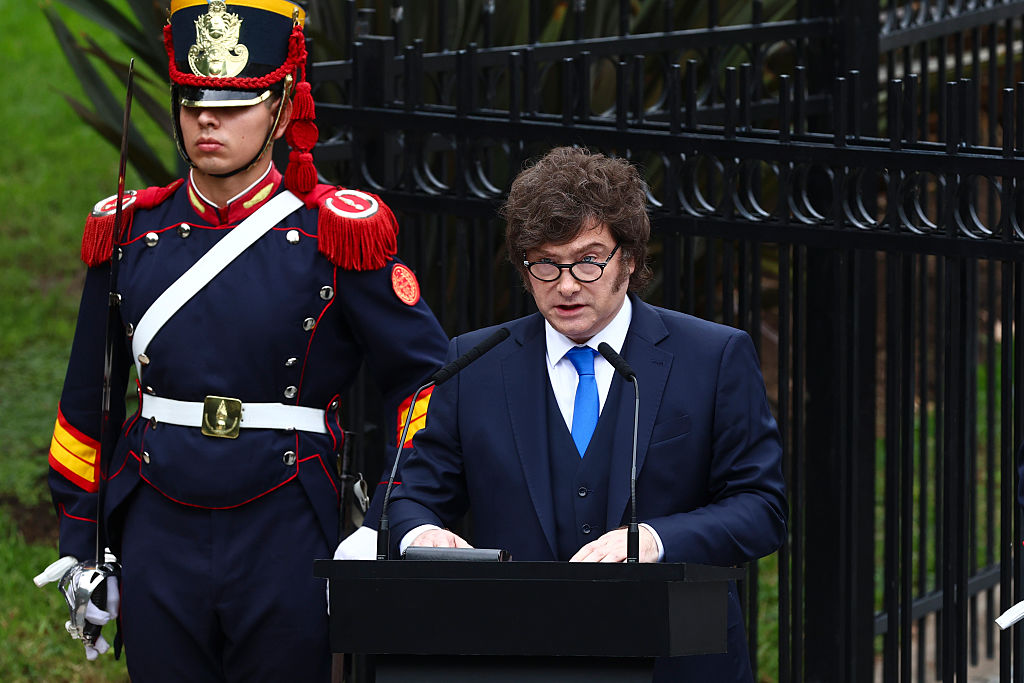
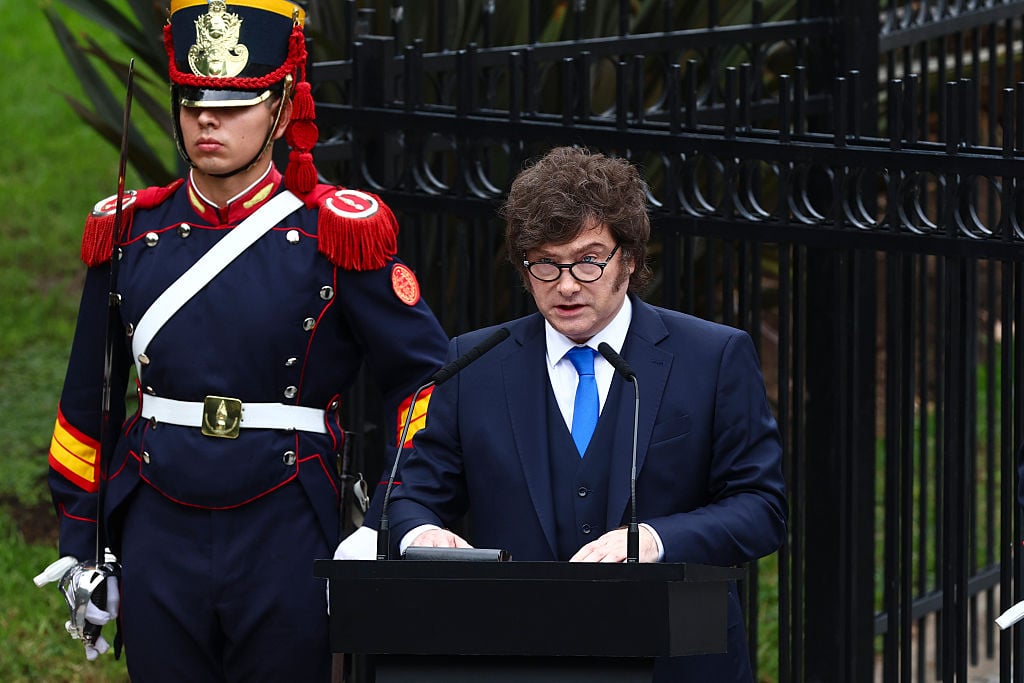
Argentina's President Javier Milei attends a ceremony to honor victims of the 1982 war between Argentina and Britain in the Malvinas Islands, marking the 44th anniversary of the conflict, in Buenos Aires, Argentina, on April 2, 2026. —Matias Baglietto—NurPhoto via Getty Images

Argentine President Javier Milei has launched a new effort to claim control of the Falkland Islands, reigniting a long-standing dispute with the United Kingdom over the archipelago, which once led to war. 

"THE MALVINAS WERE, ARE, AND ALWAYS WILL BE ARGENTINE,” Milei said on X in Spanish on Friday, using the Argentine name for the islands.  

In a separate interview with the Argentine digital channel Neura posted by Milei on Friday, he said that the country was doing “everything humanly possible” to return the Falklands to Argentina. 

Read More: Falkland Islands: A Melancholy Anniversary

“Sovereignty is non-negotiable, but it must be handled judiciously, with brains,” said Milei, a staunch ally of President Donald Trump. 

The Falkland Islands are a small group of islands some 300 miles east of Argentina, with a population of around 3,600. 

Both Britain and Argentina have historic claims to the islands, and the two countries fought a short but fierce war in 1982 after Argentina tried to seize control of them. Argentina eventually surrendered in June of that year after at least 900 people were killed.  

Milei’s renewed push for Argentine control of the islands comes after it emerged that the United States is considering a review of its support for the U.K.’s historic claim to the islands. 

Relations between the U.S. and the U.K. have been strained since European and NATO allies refused to provide aid to America and Israel’s war with Iran. According to an internal Pentagon email reported by Reuters, the U.S. is considering a review of U.S. diplomatic support for European countries’ "imperial possessions," such as the ⁠Falkland Islands, in response. 

Prime Minister Keir Starmer’s official spokesman said on Friday that the Falklands’ “sovereignty rests with the U.K.” and that “the islanders' right to self-determination is paramount.”

“We've expressed this position previously clearly and consistently to successive U.S. administrations and nothing is going to change that,” he added. 

That position has support across the aisle in Britain. Kemi Badenoch, leader of the opposition Conservative Party, said, “The Falklands are British. Full stop.”

“We fought for them when it mattered most and paid the price,” she continued on X. “And because the islanders have chosen it, clearly and repeatedly.”

The State Department currently recognizes the U.K.’s sovereignty over the islands, but Trump’s relationship with London has soured in recent months. 

Trump wants to punish NATO for its lack of support in the Iran War

The leaked Pentagon memo, prepared by Elbridge Colby, the Pentagon's top policy adviser, cites a “sense of entitlement” among NATO allies that Trump is looking to punish.

Trump has expressed his frustration with NATO allies publicly over their refusal to join the Iran War, warning them of a “very bad” future if they did not help him open the Strait of Hormuz. When Europe called for resistance and declined to send warships to the Strait, he called NATO “useless.”

Read More: Leaving NATO Would Be National Self-Sabotage

Trump’s words prompted a response from Starmer, who said he was “fed up” with people in the U.K. struggling to pay  for gas and energy bills ever since the war sparked a worldwide energy crisis, raising prices across the world.

“Whatever the pressure on me and others, whatever the noise, I'm going to act in the British national interest in all the decisions that I make, and that's why I've been absolutely clear that this is not our war, or we're not going to get dragged into it,” Starmer said during a press briefing on April 1, justifying his decision not to contribute to the attack on Iran

Argentina and the U.K. fought a war over the islands

The competing claims to the island date back hundreds of years, to a period when the British Empire stretched across the world. 

The archipelago, which lies 8,000 miles away from the British Isles, was settled by the British in the mid-18th century. Britain withdrew amid a power struggle with Spain over control of the islands. When Argentina declared independence from Spain in 1816, it claimed sovereignty over the islands and established a small settlement there in the 1820s.

Eventually, the British expelled Argentina from the islands in 1833 and established the Falklands as an official colony. 

Argentina never gave up its claim to the islands, and in 1982, Argentina’s military junta, led by Lieutenant General Leopoldo Galtieri, launched an effort to recapture them.   

Galtieri saw his chance when Argentine scrap metal workers occupied and raised the Argentinian flag at an abandoned whaling station on the British territory of South Georgia, a small island east of the Falklands. When they refused British orders to leave, Argentina sent warships ostensibly to protect the workers. The U.K. sent its own naval vessel in response. 

Believing the U.K. would not respond militarily, and facing an economic crisis and mass protests at home, Galtieri ordered a full-scale invasion to retake the islands on April 2, 1982. 

British Prime Minister Margaret Thatcher's government then sent its own naval task force to recapture them.

A war ensued between Argentina and the U.K. over control of the Falkland Islands, with the U.S. under President Ronald Reagan backing Britain.

After a 74-day conflict, Argentina eventually surrendered to British forces. Some 900 people died in the war, including 649 Argentines, 255 British troops and three civilian islanders.

© Matias Baglietto—NurPhoto via Getty Images

Argentina's President Javier Milei attends a ceremony to honor victims of the 1982 war between Argentina and Britain in the Malvinas Islands, marking the 44th anniversary of the conflict, in Buenos Aires, Argentina, on April 2, 2026.
Received yesterday — 2026年4月25日TIME

A New Generation of Climate Leaders Is Our Last Hope

2026年4月25日 19:00

It is not a great time for anyone concerned with the climate. On Feb. 12, the Trump Administration’s Environmental Protection Agency swept away its endangerment finding, wishing away the scientific understanding that burning fossil fuels is harmful to human health and eliminating the mechanism to limit the emissions that are transforming earth systems. 

Winter storms walloped North America as the Arctic, which has warmed four times faster than the global average, is no longer able to contain the frigid air of its polar vortex. Yet the Western United States also had the hottest winter on record, leaving little snowpack behind that might buffer the chance of megafires in the summer. The lack of snow seems almost trivial compared to the black rain that fell on Iran when Israel bombed oil facilities that billowed out toxic pollutants. In the first two weeks of the U.S.-Israel-Iran war, an estimated five million tons of greenhouse gas emissions were unleashed, equivalent to a mid-sized nation’s annual contribution to warming the planet.

The climate crisis is no longer a distant warning but our terrifying reality. A new generation of activists may be our last, best hope.

I have reported on the environment and climate for 20 years—from Delhi to Nairobi to West Texas—and the litany of disasters can be exhausting. Born in 1970, my life has paralleled the emergence of the climate crisis. That year—looking back—was a high point of hope for the planet. Senator Gaylord Nelson, a Democrat from Wisconsin, teamed up with Republican Senator Pete McCloskey from California, and the activist Denis Hayes to launch the first Earth Day on April 22, 1970. They envisioned youth-led action for the environment, drawing inspiration from student anti-war protests. Soon after, President Richard Nixon’s Republican administration established the Environmental Protection Agency and enacted robust environmental legislation such as the Clean Air and Clean Water Acts. 

The year I became a legal adult, in 1988, NASA climatologist James Hansen warned Congress of the grave consequences of a changing climate.“It is already happening now,” he warned. 

His message was almost heeded. President Ronald Reagan and Mikhail Gorbachev, the leader of the Soviet Union, had just pledged to work toward a global treaty on global warming. But free marketeers and fossil fuel companies had too much to lose and applied just the right amount of pressure to keep the U.S. from acting. 

The moment passed. Time passed. 

Babies were born and grew into adults. I was a recent graduate from journalism school in 2006, the year Al Gore, in his film An Inconvenient Truth, launched himself up in a scissor lift in order to reach the soaring spot on a graph showing how high and quickly levels of carbon dioxide in the atmosphere had risen. The film proved as popular in conservative suburban enclaves as it did in hipster Brooklyn. Still, emissions went up.

In the 20 years since then, public interest in the state of the climate has waxed and waned. Climate fatigue is real, and rising authoritarianism commands attention worldwide, sucking the oxygen out of living rooms and newsrooms even as carbon dioxide continues to choke the atmosphere. But climate change is not going away, and I believe it will prove to be the story of the 21st century. Even now, the climate crisis is a silent partner in all sorts of blockbuster headlines. As the Trump Administration invaded Venezuela and threatened Greenland in a grab for resources. As data centers fueling Artificial Intelligence demand more electricity and more water. As a water crisis fomented unrest in Iran, where protesters demanded, “Water, electricity, life––our basic right.” 

Rob Nixon, a professor at Princeton, coined the term “slow violence” for climate change and other disasters that unfold unrushed over time and place, often far from cameras and newsfeeds. But the pace is quickening. It used to be someone else’s problem, in some other place. Another country. Another state. A future shock, to be dealt with eventually.

Now it’s happening to almost all of us as climate change acts as a “threat multiplier,” not only posing security risks to nation states and financial risks to businesses large and small, but also making our floods and famines, our hurricanes and tornadoes, more frequent and more fatal. Entire towns now vanish overnight from wildfires. Communities that have already lived through multiple floods quiver with collective PTSD during each hard rain. Wars over fossil fuels burn more fossil fuels and lead to more wars.

The weather is not climate, but it often reflects it, and the weather is getting weirder. Just as surely as the fact that I began writing this from the floor of a warming center, charging up since I, like 230,000 others in Massachusetts, lost power to a record-breaking blizzard, complete with thundersnow

What’s coming to your town?

When tomorrow becomes today

The thing about future shock is that we are always living our way into the future. Tomorrow becomes today, becomes yesterday. Carbon levels ascend unabated. The dire predictions of sea level rise and melting ice caps—some of them made by fossil fuel companies in the 1960s—are playing out, some sooner than scientists had thought. And despite NASA scientist Hansen’s use of the word “now” in Congress 38 years ago, the public has been able to keep alive the alluring myth that climate change is distant not only in place, but also in time. 

Government reports littered with future dates didn’t help. In 2018, the Intergovernmental Panel on Climate Change, the UN body for assessing climate science, warned that we had until 2030 to nearly halve global carbon emissions if there was any hope of staying within the 1.5 degree Celsius range of warming that would keep the planet behaving the way humans have become accustomed to for the last 10,000 years. We briefly reached 1.5 degrees of warming last year. We had until 2050 to reach net zero, when humans would no longer be tipping the carbon cycle out of its natural balance. We are not even close. The year 2100 is frequently mentioned, but little after that, as though time will stop at the end of the century. It won’t.

There is an entire generation of children running around today who will be alive in 2100. My Gen X yielded to  Millennials who yielded to Gen Z. And here come Alpha, Beta, Zoomers. With the birth of each generation, more greenhouse gas emissions trap more heat and oceans rise, weather gets more extreme, and tipping points arrive. Welcome to your warming world, child.

Passing the torch of climate action

Those who sounded the alarm early have gotten long in the tooth. Al Gore surely has a draft obituary on file at every major publication, and the climatologist James Hansen, who was so alarmed by the science that he became an activist, wrote a book dedicated to his grandchildren 16 years ago.

I find hope in activists who have gone before me, but even more so in our youth. For the last few years, I have researched the lives of teenage climate activists from around the globe for a graphic novel on climate change. Talking with these activists and learning about the organizations they have founded to create the world they want to inhabit as adults gives me more than hope. While Donald Trump breaks things, they are building. Their activism gives me a renewed sense of energy and purpose. I think of the phrase, “strength for the journey,” by Reverend Martin Luther King Jr. He was only 26-years-old when he was tapped to lead the famed bus boycott in Montgomery, Alabama. 

This new generation of climate activists is picking up the torch, now lit by LED. They recognize they have a life-and-death stake in the climate system they will be inhabiting for longer than anyone in my generation. Some of them are the children and grandchildren of those who have gone before. People like Sophie Kivlehan, James Hansen’s granddaughter, who served as a youth plaintiff in the landmark Juliana vs U.S. government. Although dismissed last year, the case argued that the government was violating the youngest generation’s constitutional rights to life, liberty, and property, as well as failing to protect critical public trust resources. 

In Pennsylvania, Ashley Funk served as a youth plaintiff in more than one climate lawsuit, and now her daughter is a claimant, suing Pennsylvania for permitting what would become America’s largest gas-fired power plant, locking in emissions for her lifetime. When lawyers from Our Children’s Trust, a nonprofit public interest law firm, filed the suit, the child was 10 months old; Yet another claimant was just eight weeks old. There are thousands of climate lawsuits happening around the world, many of them filed on behalf of the rights of youth to a viable future. 

Another second-generation activist is Xiye Bastida, the daughter of a couple who met in 1992 at the UN Earth Summit in Rio de Janeiro, Brazil, when they were young people advocating for environmental action. Bastida was one of the key organizers of the 2019 Climate Strike that brought hundreds of thousands of people out into the streets of New York City. It was another moment when the public was prioritizing action, partly inspired by the strike of Swedish youth activist Greta Thunberg, that would find a foothold under the Biden Administration. 

Around the country and the globe, indignant young people are taking to the streets and the courts as the policies of grey-haired men repeatedly fail them. They are pulling every lever they can reach with their young hands.  

Speaking up in left-behind America 

In this time of climate hushing, when fewer and fewer leaders are talking about climate change, lawsuits and civil disobedience are key ways for citizens to demonstrate they want action. In the last decade, the percentage of Americans who are alarmed by climate change has nearly doubled, even as the U.S. under the “drill-baby-drill” Trump Administration finds new ways to quash renewable energy projects and burn more fossil fuels. 

The rest of the world, meanwhile, moves forward. The fastest-growing solar energy market is now in Africa. China’s carbon emissions have plateaued as it briskly ramps up renewable energy systems. Even India, stubborn about its right to use its coalfields to develop its nation, is constructing some of the world’s largest solar farms.  

Lawsuits and activism might be necessary in the U.S. to drive policy back toward action. Katharine Hayhoe, an atmospheric scientist of my generation, has argued persuasively that “We can’t give in to despair. We have to go out and look for the hope we need to inspire us to act, and that hope begins with a conversation today.” 

Even the radical act of simply having a conversation expressing your concern to a neighbor can be effective. Perhaps a young person will overhear it. 

Or perhaps they will be the ones to start it. Will you be listening? Will you act? Or is the rally cry for climate action doomed to recur every Earth Day for generations to come?

What Michael Jackson’s Cultural Dominance Says About Us

2026年4月25日 05:29
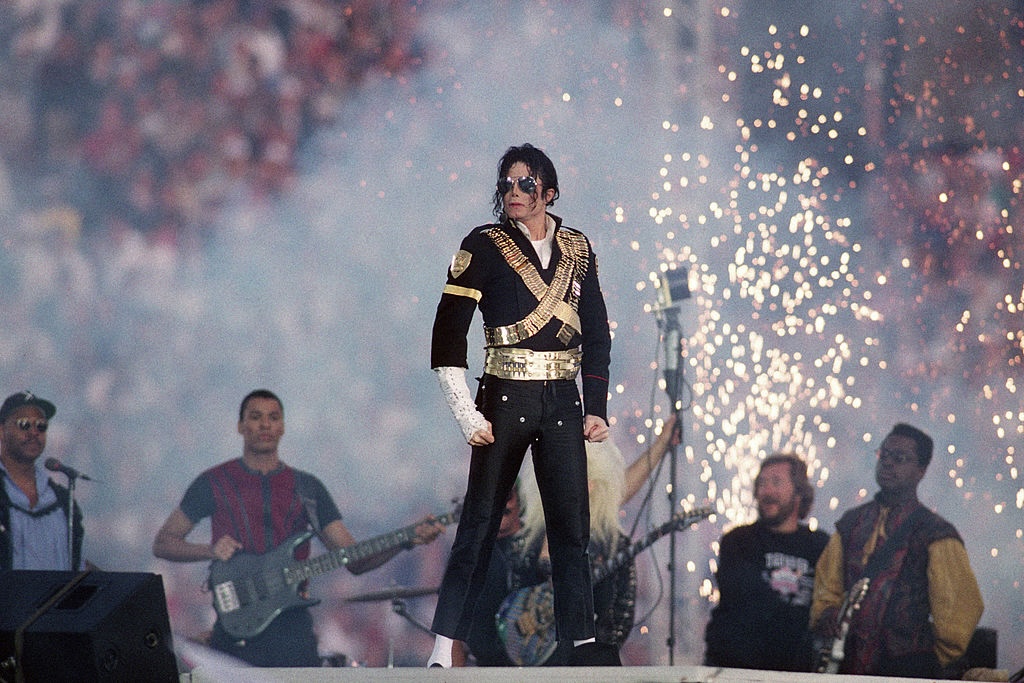
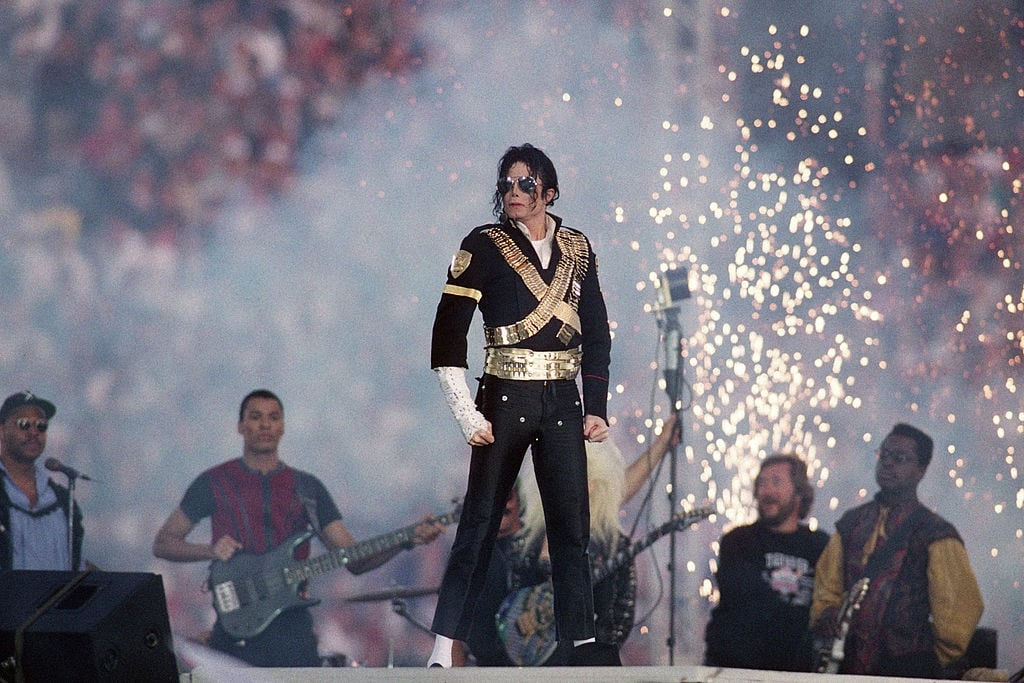
Michael Jackson —Courtesy of Getty Images

Last November, when Lionsgate dropped the trailer, just over a minute long, for the long-awaited biopic Michael, it got more than 116 million views the first 24 hours—more traffic than Taylor Swift: The Eras Tour (96.1 million), more than Bohemian Rhapsody (57.6 million), and more than the Bob Dylan biopic A Complete Unknown (47.2 million). People from Chicago to Tokyo to Johannesburg started plotting what to wear to the 0lm’s opening and the parties to celebrate it—maybe a bejeweled glove or a red leather jacket. On TikTok, fans offered “ground rules” for the occasion. But the trailer also triggered debate: Could a single film distill the story of one of the world’s most complex and consequential artists? Which Michael Jackson would Michael resurrect—the glorious mythical icon, the wounded man, or both? Would the film, starring Jackson’s nephew, sanitize the controversies that have plagued the King of Pop for more than a quarter century? The conversations reflected something deep and global: the degree to which Michael Jackson remains an extraordinarily relevant cultural phenomenon more than 15 years after his death. There are, of course, what feels like a gazillion films, documentaries, and interviews about the King of Pop, but not yet a definitive biopic that reflects his place in our cultural memory. The truth is, for someone whose career began more than 50 years ago, Michael Jackson has never felt more present.

Consider this: Michael reached his peak a generation before social media’s AI-driven amplification could literally manufacture fame out of the mediocre. In today’s crowded media ecosystem, it’s hard to imagine an artist whose raw talent alone could break through at that scale. To understand why, you have to zoom out. It’s hard to describe Michael Jackson’s cultural legacy in full, because it’s endless and unmatched. But let’s start here: He provided, indisputably, the original blueprint for the modern celebrity artist. Elvis helped give birth to American pop music. The Beatles elevated rock. But Michael industrialized the package, fusing music, dance, style, and branding. His template guides Beyoncé and Taylor Swift, and will likely inform every aspiring cross-genre juggernaut for generations. On the commercial front, Michael pioneered the modern artist-as-enterprise model. He sold more than 400 million records, easily making him one of history’s most successful solo artists. More than four decades after its release in 1982, Thriller remains the best-selling album of all time and by some estimates has reached 100 million copies globally. He was a savvy investor (and also a world-class spendthrift), buying ATV Music Publishing, later merged into Sony/ATV, which controlled some of music’s most valuable catalogs, including works by the Beatles, Elvis, and Little Richard.

From the Great Mausoleum in Glendale, California, Michael continues to outearn hundreds of thousands of living artists. His estate is estimated to have generated as much as $3.5 billion since 2009. On Spotify, he has surpassed 60 million monthly listeners. On many nights each week, crowds line up to see MJ: The Musical in New York, London, and Hamburg, with touring productions traveling through the U.S. and Australia—an Asian tour is planned for late 2026, the U.K. in 2027. Meanwhile, in Las Vegas, Cirque du Soleil’s Michael Jackson ONE has run since 2013 and is extended through 2030, a very big deal in a city where residencies often drift in a few seasons. All of this helps to explain why Michael’s biopic lands with such force. The truth is, Michael isn’t just tapping into nostalgia. It’s meeting an audience that never really let him go.

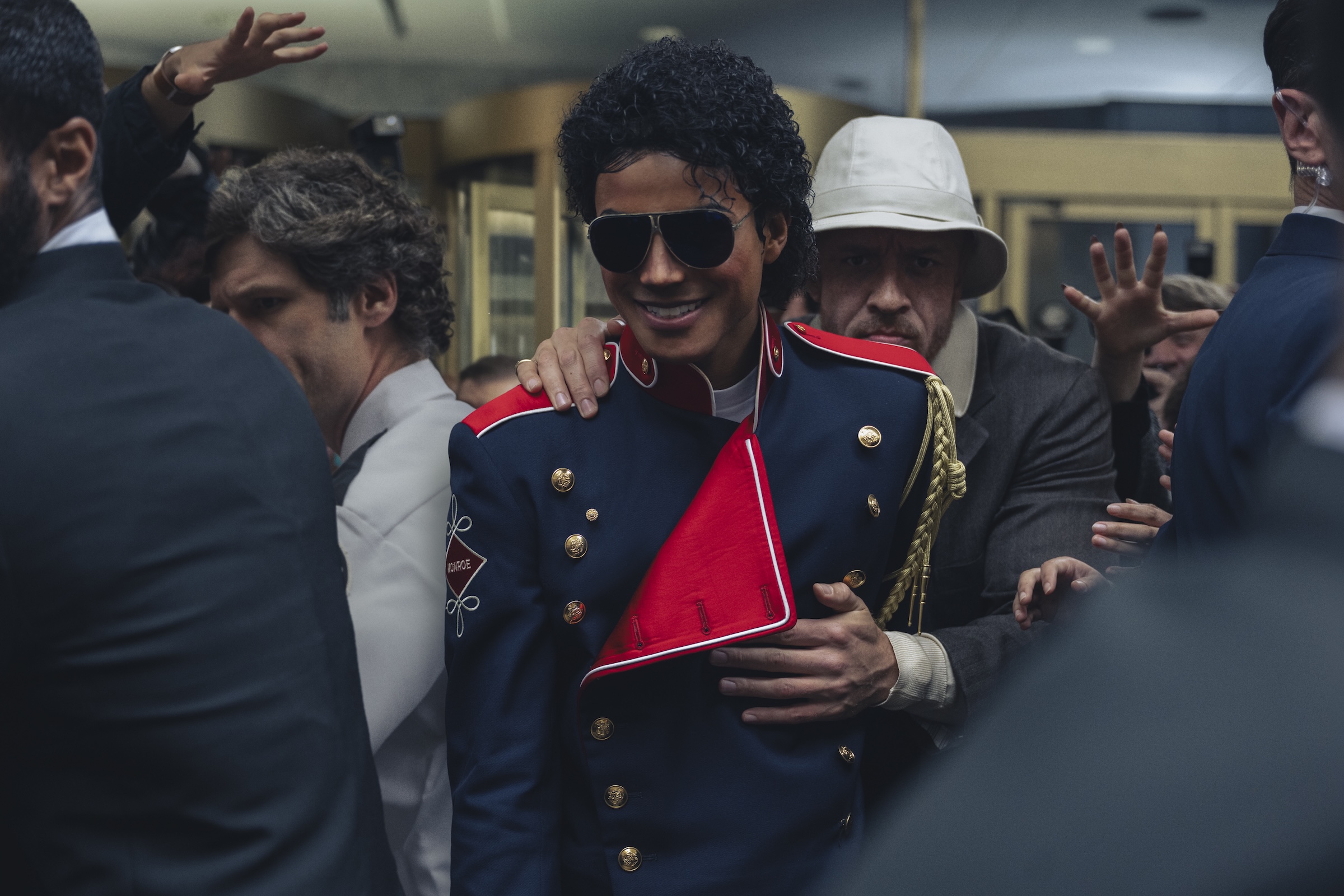
Michael —Courtesy of Lionsgate

An American origin story

An assessment of Michael Jackson’s life starts with a familiar American story—one rooted in the Great Migration, when many Black families carried their hopes northward in search of dignity and steadier work. Michael’s father, Joseph, was born in Arkansas, met his wife, Katherine, in East Chicago in 1949, and in 1950 the couple set out for Gary, Indiana, where Joe found a job and set aside his own music ambitions to catapult his sons into the limelight. At first, the Jackson 5 performed in community shows in northern Indiana, and then on amateur show circuits from Chicago to Harlem. Joe drilled into his sons a disciplined, nearly militaristic pursuit of perfectionism, because the stakes were high: Black kids had to be twice as good to succeed.

So the Jackson 5 embodied that aspiration: polished, electrifying, tight, and still soulful. They also personified Motown’s “Sound of Young Amer-ica” strategy, which used pop-soul as a subversive racial integration tool. Black families across America felt a collective pride. My mom still talks about the night she trailed her older sister into a Jackson 5 concert in New Orleans, swept up in the miracle of seeing young men who gloriously looked like them commanding a stage in a country that insisted it wasn’t theirs. By the early 1970s, as a young teen, Michael had become the group’s undeniable star. It was his rare combination of innocence and command of pitch, dynamics, and tone that convinced Motown’s founder, Berry Gordy, to launch him into solo recordings with “Got to Be There.” But it was Off the Wall, produced by Quincy Jones in 1979, that unlocked Michael’s genius. The album delivered some of his most powerful, captivating songs, and on the tour and videos that followed, Jackson was the ultimate showman. Steeped in Motown’s soulful elegance, sharpened by Jones’ precision, and driven by instinct, Jackson fused funk, R&B, rock, gospel, and dance into something unmistakably American and Black—and yet a funhouse-mirror version of Michael Jackson, a distorted silhouette so vivid it began to overshadow the man himself.

The accusations against Michael Jackson 

“International furor stirred by allegations on Jackson,” read an August 1993 Los Angeles Times headline. A therapist hired by the parents of 13-year-old Jordan Chandler had told police the boy had been molested by Michael Jackson. Police raided Jackson’s Southern California homes, including the Neverland ranch north of Los Angeles, while he was on the Asian leg of his Dangerous World Tour. As the investigation deepened, the news coverage became more grotesque, sending Michael into a medical tailspin. In November, he abruptly canceled the rest of the Dangerous Tour, citing exhaustion and addiction to painkillers, and went to Europe to recover.

In January, he came back to the U.S. and settled with the Chandlers for a reported $23 million without admitting wrongdoing. In May 1994, he suddenly married Lisa Marie Presley in the Dominican Republic. That September, the newlyweds appeared on stage together at the MTV Video Music Awards and, in the cringiest of moments, kissed. It registered less as romance than tableau. America, after all, loves the illusion of redemption—until we don’t. Lisa Marie’s own mother, Priscilla Presley, observed in her memoir: “He married her at a time when he desperately needed good publicity that depicted him as a desirable heterosexual man. It was one thing to legally fight the child molestation charges against him. There was no way to come out of that looking good. But photos of him with Elvis’s daughter wearing that huge diamond engagement ring he’d had made for her? That image was pure gold.” By the end of 1996, the King of Pop and the Princess of Rock and Roll were divorced.

Michael’s transformation continued with the birth of his children, Prince Michael in 1997, Paris in 1998, and Bigi (formerly Blanket) in 2002. Being a father helped humanize the singer in the eyes of the public, which reacted positively to media coverage of him as a doting, protective dad, not just an eccentric pop star—even if some of Jackson’s parenting methods were considered unconventional (such as making the children wear face masks when they were young). Yet as his family grew, there were more allegations about inappropriate contact with children. In one case in 2000, criminal charges were filed, leading to a trial in which Jackson was acquitted.

Michael Jackson’s shocking death

The news of Michael Jackson’s death broke on an ordinary afternoon, June 25, 2009. It arrived like a blow—sudden and hard to believe, like an online hoax. TMZ posted the story around 2:45 p.m., less than 20 minutes after Jackson was pronounced dead and before major traditional news outlets confirmed it. The internet convulsed—numerous edits to Jackson’s Wikipedia page overwhelmed the site—as millions of us reached for something to explain our loss. America, and the world, had built Jackson into a mythical, immortal creature. Now, the dream collapsed. We soon learned the complicated truth.

Michael had been in deep rehearsals for a monumental return to the stage—This Is It a 50-show series in London, designed to prove that he could rise above not only the scandals but also the standard we’d come to expect from him. In rehearsal video footage, Jackson’s talent remained astonishingly intact, even as his body visibly told another story: restless and fragile, with signs of a man stretched thin by insomnia and his own perfectionism. Into that vulnerable space stepped Conrad Murray, a physician who forgot his oath. Jackson hired Murray as his personal physician.

Murray would later testify that for several weeks during the grueling rehearsals, he provided Jackson with propofol—a powerful anesthetic often used in medical procedures—to help him sleep. In the early-morning hours of June 25, Jackson was in a rented Los Angeles mansion. Murray gave him a series of sedatives and, ultimately, propofol. Then, in the late morning, Murray left Jackson alone. When Murray returned to the house, he found Jackson unresponsive. Paramedics and detectives arrived and found an oxygen tank, prescription bottles, disposable needles, orange juice, and latex gloves. Jackson was taken to a hospital and pronounced dead. Autopsy and police reports noted that Jackson, then 50 years old and 5 feet 9 inches tall, weighed just 136 pounds. He wore a wig. His lips had been tattooed pink. Three weeks later, about 31 million people watched Jackson’s memorial service on U.S. television—slightly fewer than the number who had watched Barack Obama’s inauguration six months earlier. It’s estimated that a billion people tuned into the service globally, online and on television. We mourned not only the performer but also to reconcile the enormity of his life and the starkness of its ending.

Read more: TIME Special Edition — Michael Jackson: His Music. His Life. His Legacy

Murray was convicted of involuntary manslaughter. Jackson’s family searched for legal accountability. And as the details of his case emerged, the presence of over-prescriptions pointed the story toward what was, at least in the realm of music celebrity, familiar territory. Regardless of wealth, fame, or influence, each individual, in the end, is mortal. Michael’s passing was a reminder of the pressure we place on our brightest talents, and that even the most extraordinary lives are fragile. In that recognition, we find the shape of the tragedy: a man elevated beyond measure, and a society that failed to keep him safe. His death was negligence, but it was also a failure to see the human beneath the icon.

Michael Jackson’s persistent dominance reveals something about us. We’re drawn to complexity until it gets too uncomfortable and asks us to sit with it. We reward simplicity, clear heroes and villains, clean story endings. Jackson’s story is anything but tidy. In parts of the world, contradiction is survivable; an artist can be luminous and flawed in the same breath. In America, we tend to expect a verdict. We live in an algorithmic age that delivers culture and outrage in silos calibrated for super specific tribes. Jackson, even in death, refuses to stay in a single box because he built something very hard to digitally manufacture: a shared pulse—the kind you hear on street corners, at wedding receptions, at bar—where any of us can, for a moment, look up from our feeds and Beat It.

That, really, is why Michael matters now. We may not all agree on which Michael we love or which version of him we’re willing to confront. But that tension—between communion and discomfort—isn’t a problem for his legacy. It’s the reason we can’t stop celebrating his brilliance.

© Courtesy of Getty Images

Michael Jackson

Breaking Down the Ending of Horror K-Drama If Wishes Could Kill

2026年4月25日 05:13
If Wishes Could Kill —Courtesy of Netflix

In the past few decades, South Korea became globally known for stylish and eerie horror stories through movies like A Tale of Two Sisters, The Wailing, and Whispering Corridors. But horror has not been quite as integral an element in the success of Korean dramas. While series like zombie horror All of Us Are Dead or monster drama Sweet Home have found massive success, there has yet to be an occult K-drama that truly breaks through. If Wishes Could Kill, with its clever mix of teen drama, tech horror, and occult mystery, stands to break the curse. The reimagining of an age-old ghost story is an intriguing blend of Korean folk tradition and modern tech anxieties that keeps viewers guessing until the very end. 

How does Girigo’s curse work?

If Wishes Could Kill is an eight-episode K-drama about a group of school friends who get mixed up with a deadly app. The app, called Girigo, grants wishes. All someone has to do is submit a recorded video of him or herself making their wish with their name and birthdate visible, and their wish will be granted. But, as is often the case with these kinds of monkey’s paws, the granting of a wish comes at a great cost—the wishmaker’s life. Once someone’s wish is granted, a 24-hour countdown on the app will start. Once it hits zero, the wishtaker will die.

When class clown Hyeon-wook (Lee Hyo-je) uses the app to wish for a perfect score on his next math test, he is ignorant of the cost. When he aces the test, he happily tells friends Se-ah (Jeon So-young), Geon-woo (Baek Sun-ho), Na-ri (Kang Mi-na), and Ha-joon (Hyun Woo-seok) about Girigo, sending them a link to what he thinks is a godsend. They don’t take the app seriously, until Hyeon-wook cuts his own throat in front of their class, seemingly driven by an unseen force.   

Over the course of the series, the surviving friends learn more about the rules of the curse, including that a wishmaker’s countdown will stop once someone else makes a wish. In this way, Girigo has a kind of chain letter logic—you can evade the negative consequences of the curse by convincing someone else to make a wish. Also, only those who have made a wish can see the ghosts that drive the curse. Because of this, they are vulnerable to tricks, including receiving texts and calls designed to convince them their loved ones are talking behind their backs. 

All of the wishes made in If Wishes Could Kill

By the time Hyeon-wook dies, two other members of the friend group have already made their own wishes. Geon-woo, who has just started dating Se-ah, wishes that Se-ah’s weekend track training will get canceled so that she can attend Hyeon-wook’s birthday party. And Na-ri, unbeknownst to the rest of her friend group, drunkenly wishes for the deaths of Hyeon-wook and an older friend she parties with named Dong-jae, both of whom are currently annoying her. Na-ri’s countdown stops when Geon-woo makes his wish.

Later, with Geon-woo facing seemingly certain death, Se-ah makes a wish to save her boyfriend, which starts her own countdown. With time running out, Se-ah travels with Ha-joon to visit Ha-joon’s older sister, Ha-sal (Jeon So-nee), who is a powerful shaman. Ha-sal lives in the countryside with her boyfriend and fellow shaman Bang Ui (Roh Jae-won). 

What is Korean shamanism?

If Wishes Could Kill draws much of its cultural detail from the tradition of Korean shamanism, or mu-sok, a religion indigenous to the Korean peninsula. In this belief system, ancestral spirits have an influence on our lives, causing humans good or bad fortune. Korean shamans, or mu-dang, act as a bridge between the spirit world and the mortal world, and use this ability to help clients with a diverse scope of needs, including healing, protection, solving specific problems, or more generally for bringing good fortune or avoiding misfortune. Most Korean shamans are women. It is relatively common for Korean people to visit shamans, even if they are part of an organized religion or do not consider themselves religious.  

Shamans have always been a part of life in Korea, but they have faced some prejudice and stigma in modern society. That being said, shamans are currently experiencing a moment in Korean pop culture that recontextualizes mu-dang as hip. There have been several recent reality competition shows featuring Korean shamans, including 2026’s Battle of the Fates on Disney+. In 2024, horror film Exhuma—which is about a group of shamans working to quell a violent and vengeful spirit—became a breakout hit in Korea and internationally. If Wishes Could Kill represents shamanism in a similar way to Exhuma, depicting its shaman characters as low-key warriors capable of great sacrifice and power.

'If Wishes Could Kill' —Courtesy of Netflix

Who are Kim Si-won and Do Hye-rung?

The Girigo app has its origins in a tragedy that took place at the protagonists’ school a few years prior to their enrollment. A student, Kim Si-won was the daughter of a local shaman. Ashamed of her mother’s calling and blaming her for the death of her father, Si-won preferred to sleep in an abandoned warehouse rather than at home. The only person at school who knew the truth about Si-won’s mother was her good friend Do Hye-rung (Kim Si-ah).

Si-won was also a tech genius, and worked an app coding challenge with some of the most popular kids in school, including Hye-rung’s crush Gi-tae. When one of the group suggested a wish-making app that incorporates shamanism, Si-won went along with it, desperate to stop discussing anything that could expose her relationship to her “quack” mother. 

Meanwhile, a well-meaning Hye-rung was one of the only people in touch with Si-won’s mom, who has developed an alcohol dependence. When Si-won discovered this, she was furious. She launched her app, sending a video of Hye-rung wishing for Gi-tae to fall in love with her all over school. When Gi-tae found out, he ridiculed and physically assaulted Hye-rung, at Si-won’s request. 

A humiliated Hye-rung used the app to wish death on Si-won and Gi-tae before killing herself. The wish worked. But before she died, Si-won made her own blood-soaked wish, giving a terrible, ongoing power to the Girigo app. It is the spirit of Si-won that drives the malevolence of the app, though Hye-rung is also trapped by the curse’s power. 

'If Wishes Could Kill' —Courtesy of Netflix

If Wishes Could Kill ending explained

In the final episode of If Wishes Could Kill, Se-ah and Ha-sal go into the spirit world to break the curse once and for all. While Ha-sal holds off the spirit of Si-won, Se-ah looks for Si-won’s phone. According to Ha-sal, they must destroy the phone in order to break the curse. Unfortunately, Se-ah’s task is made harder by Na-ri.

In one of the great tragedies of the series, Na-ri turns against her friends. Guilt-ridden about Hyeon-wook’s death and tricked into thinking her friends didn’t care whether she lived or died by Si-won, Na-ri becomes one of the series’ antagonists. Though Na-ri is possessed by Si-won at points, she ultimately chooses of her own free will to try to kill Se-ah. Se-ah must fight Na-ri off again in the spirit world, killing her in self-defense. After taking down her former friend, Se-ah finds Si-won’s phone and destroys it with one of Ha-sal’s arrows. The curse is broken, and Si-won and Hye-rung finally seem able to move on.

While it isn’t a happy ending, given the deaths of Hyeon-wook and Na-ri, the series wraps up with Se-ah, Geon-woo, and Ha-joon still alive. Bang Ui, who was gravely injured while trying to protect the teens from vengeful spirits, also makes it to the end of the series alive. He and Ha-sal have the teens over to dinner, and for a ceremony for Hyeon-wook’s peaceful passing into the next world. 

If Wishes Could Kill Season 2

The ending of If Wishes Could Kill leaves the door open for another installment of this series, either with the same characters or with a new set of characters. In the series’ epilogue, Hyeon-wook’s Discord friend, who was the person to originally tell him about Girigo, seeks out Na-ri’s abandoned phone on the school campus. He is led to the phone by a mysterious contact on Discord, who also has the passcode for the phone. When he unlocks Na-ri’s phone, the app is still installed, implying it could be used again. 

It’s not clear who the person on the other side of the Discord message is, but it’s possible the messages are being sent by the spirit of Na-ri. Not only would she know where she left her phone and the phone’s password, but she also has a bone to pick with her friends, whom she sees as having betrayed her. We know that the Girigo curse cannot work without someone’s bloody wish at the heart of it; could Na-ri have started a new iteration of the curse before she died?

© Courtesy of Netflix

If Wishes Could Kill

There Is No Redemption Arc in the Real Michael Jackson Story

2026年4月25日 04:26
Michael Jackson during the HIStory World Tour in 1997 —Dave Hogan—Getty Images

The arrival of the biopic Michael is reopening a question that never stays buried: What do we do with a genius whose story is shadowed by allegations of harm? A big-budget studio film doesn’t simply revisit a public figure—it situates him in our cultural memory, smoothing some edges, flattening others, and elevating or puncturing myths. That makes the movie, and the arguments that will inevitably follow, a celebration and test of our selective attention: what we preserve, what we minimize, what we cannot bear to hold alongside the undeniably brilliant music. With Jackson, the realities collide: The awe is real. So is the enduring discomfort raised by the alleged child sex abuse—resurfaced forcefully by Leaving Neverland—and the fact that no retelling can offer a clean, perfect ending.

The cultural shock of Leaving Neverland

Michael Jackson’s career soared through the 1980s with a velocity matched only by his startling physical transformation. The first pause came with allegations that he’d sexually abused a boy. Jackson denied the claims, reached a settlement with the 13-year-old’s family, and entered a period of relative domesticity. He married and divorced, had three children. Our skepticism lingered, and by the turn of the millennium, the King of Pop’s stardom had shifted from dominion to drift. More allegations followed. And in 2009, he died.

In many ways, the memory of Jackson operates on two distinct tracks. On one, there’s a sprawling business empire fueled by Jackson’s talent and the public’s embrace of it: Las Vegas, Broadway, West End, and global musical tours. On the other track sit the persistent allegations. The arguably most destabilizing chapter of the second track arrived in 2019, with Leaving Neverland, HBO’s two-part documentary. In it, James Safechuck and Wade Robson—men now, looking back on their boyhoods—described what they said were years of sexual abuse by Jackson. They recalled, in explicit detail, the intimacy that unfolded within the Jackson orbit, an environment shaped by the intoxication of being chosen from relative obscurity.

Both of the accusers had previously defended Jackson in court cases, insisting he hadn’t abused them. Then, after Jackson’s death, they reversed course and pursued legal claims against Jackson’s estate. In 2013, Robson told NBC’s Matt Lauer, “I never forgot one moment of what Michael did to me. But I was psychologically and emotionally unable and unwilling to understand that it was sexual abuse.” He was referring to experiences he alleged occurred between ages 7 and 14. 

There’s a grim plausibility here that doesn’t necessarily need certainty, only the willingness to sit with honesty. People can—and do—survive trauma without naming what happened to them. Trauma can be compartmentalized and rationalized, sometimes for years, until something breaks the seal: a triggering memory, the arrival of a new child. It’s possible that, especially at a young age, you may not have the language or context to pinpoint that what you’ve experienced is, in fact, abuse. Leaving Neverland premiered at Sundance in late January 2019, landing in the midst of the #MeToo moment, when Americans were being rewired to more deeply scrutinize power. So the response was swift. Oprah aired a special interview, After Neverland, with Safechuck and Robson. Broadcasters in New Zealand and Canada pulled Jackson’s songs from playlists. The Simpsons removed an episode that featured him.

The documentary became its own legal battleground. Jackson’s estate sued HBO for a reported $100 million. Robson and Safechuck continued their civil claims; a trial is expected for late 2026. (Jackson’s family has dismissed the suits as a money grab.) By the end of 2019, the news of the biopic was confirmed, with Jackson’s estate as co-executive producers. There was always going to be a Jackson biopic at some point—there’s too much money and myth at stake for Hollywood to resist. But the timing of the film, and the degree of the estate’s involvement, reads differently depending on where you stand. Is it all a bid to reclaim and sanitize Jackson’s narrative so the fortune continues flowing? Or is it a good-faith attempt to set the story straight—even if the culture is too diffused to agree on what a “straight” telling of Michael Jackson’s story means? There’s no easy answer, even from the Jackson family. Jackson’s nephew Jaafar will portray the King of Pop. The star’s daughter, Paris Jackson, wasn’t involved in the production, and said, according to Deadline, “The thing about these biopics is—it’s Hollywood. So it’s fantasy land…. The narrative is being controlled, and there’s a lot of inaccuracy.”

Michael Jackson's Neverland ranch —Paul Harris—Getty Images

Neverland, the refuge—and the warning

Jackson created Neverland Ranch as a sanctuary, nestled in the grassy valleys northwest of Los Angeles, far away from the paparazzi’s gaze. It was a sunny place the performer could explore himself, and sometimes he invited kids to experience the magic of a childhood he lost. But at some point, between the carousel, the ferris wheel, and Bubbles the chimpanzee sleeping in his bedroom—Jackson rode Neverland’s roller coaster far away from the bounds of reality and social norms, into fantasy.

One of the most vivid moments in Jackson’s public unraveling came during his 2003 interview with Ed Bradley on 60 Minutes, as yet another wave of allegations arrived. Jackson was clearly in damage control mode, yet he insisted it was perfectly acceptable for an adult man to share a bed with children who weren’t his own. “If you’re going to be a pedophile or Jack the Ripper, if you’re going to be a murderer, it’s not a good idea. That, I’m not,” he said with certainty. Moments later, he sought refuge in his chart positions. “My album is No. 1 all over the world. America is the only one…I don’t want to say too much.” He paused, sensing the precipice beneath him. “It’s a conspiracy.” 

Jackson seemed on the edge of acknowledging what he believed to be the accusations’ root: not just his accusers’ financial motivations or his own view of behavioral norms, but racism—the way America compresses Black men into archetypes, no matter how singular their gifts. He’d lived so long above gravity, insulated by fans and fantasy, that he appeared to forget the peculiar rules Black people in America carry. The rules say that eccentricity is rarely acceptable. You may only step so far out of line before being humbled back to earth. Nothing can spare you: not a physical transformation, not wealth, not Ivy League degrees or a suit.

There was something mournful in watching Jackson grapple with the realization that his fame, talent, or the myth of him could save him from the reckoning or the boundaries of appropriate behavior with children. His delusion was almost childlike: The world he dazzled would never turn on him. It’s worth asking how much of our interpretation of Jackson is a failure of our cultural vocabulary. In the 1980s and 1990s, a man who moved with so much softness, who treated appearance as a canvas and refused the cues of conventional masculinity, was rarely granted compassion. He was turned into a spectacle. Today, thankfully, we have more space for gender expression and self-reinvention. None of this is absolution. It could explain why Jackson may have been misread in a different era, but it leaves untouched the question: What, exactly, do we owe the art when the artist is accused of harm?

Michael Jackson in 2003 —Courtesy of Getty Images

America's reckoning, the world's memory

The truth is, parts of America never fully welcomed Jackson back after the court cases. His popularity’s decline was shaped partly by race, partly by our deep but uneven revulsion toward scandal involving children, and partly by a media ecosystem that devours spectacle. But in Asia, Latin America, Europe, and Africa, Michael’s music never stopped playing. The devotion persisted—a reminder that the world saw him not simply as a symbol of American chaos but as an artist whose radiance outlasted the noise.

Read more: TIME Special Edition — Michael Jackson: His Music. His Life. His Legacy

Reconciling someone as complicated as Michael Jackson is an exercise in living with contradictions. His music endures because it’s universal: Play “Don’t Stop ’Til You Get Enough” on a street in Lagos or London, and you can bet total strangers will start bopping instinctively. The biopic will inevitably tap into that timelessness. But any credible retelling must somehow deal with the allegations that shadow Michael’s legacy. We turned Michael into a god, and his unraveling is a reminder of what happens when gods are accused of very human harms. The world loves redemption narratives. But absolution—total and final—is an impossible sell.

Michael, at his peak, offered us a cosmopolitan dreaminess that feels too remote in today’s hyper-fractured world. His story reminds us of a time when a single artist could cut across borders, identities, and politics, when ambiguity wasn’t a liability but a connective force. His story is, in the end, a parable about the brilliance and limits of the American imagination. And even now—especially now—we may still find ourselves needing the optimism and joy he once made possible.

© Dave Hogan—Getty Images

Michael Jackson during the HIStory World Tour in 1997

The New Energy Priorities Emerging From This Moment of Chaos

2026年4月25日 02:45
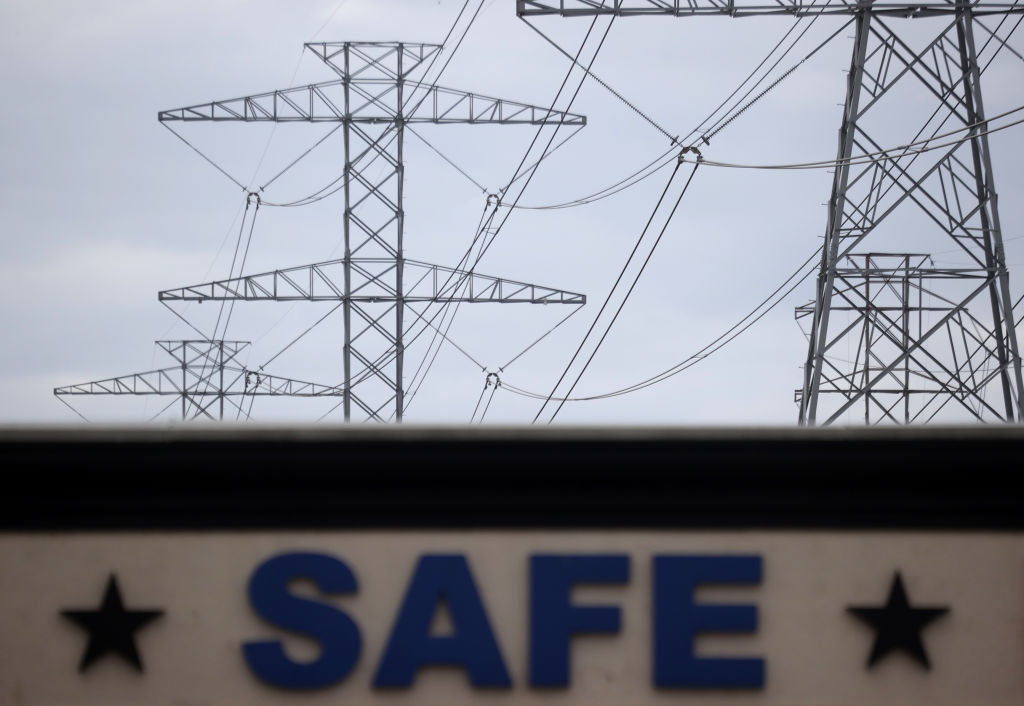
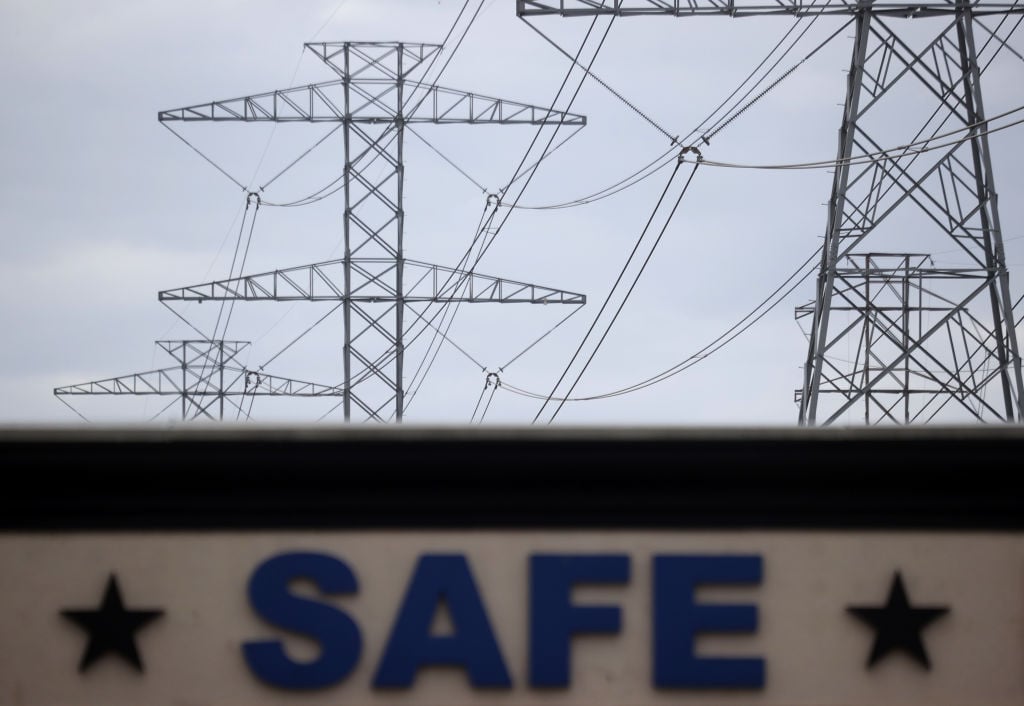
A view of high voltage transmission towers on February 21, 2021 in Houston, Texas. —Justin Sullivan—Getty Images

I got to know U.N. Secretary General António Guterres through his work on climate. Throughout his tenure, he’s been an outspoken voice warning about the risks of rising emissions. But what struck me as the most relevant Future Proof insight during our fireside chat at the TIME100 Summit in New York this week wasn’t his climate warning but rather his concern over the breakdown of international norms. 

“If international law is disrespected, if countries do not care about the norms they have themselves established, the result is the kind of chaos we are witnessing in so many parts of the world,” he said. 

Energy depends on global supply chains, international cooperation, and the rule of law. Just a few years ago, all of that could be taken largely for granted, allowing most executives to focus on execution. But chaos, as Guterres described it, threatens all of those things and makes geopolitics an urgent concern. The Iran war and the crisis at the Strait of Hormuz is just the start.

The system that emerges from this moment is impossible to predict, but it’s safe to expect a few bedrock assumptions to change. After decades where efficiency has been prioritized above everything else, countries and companies may be increasingly willing to pay a premium for both locally sourced resources and redundancy. And, while energy markets have always been subject to government influence, the pressure on public officials to create policies that prioritize security over efficiency will only grow.

“Every nation should be looking at energy supply, energy security, food supply, food security,” Jamie Dimon, the CEO of JPMorgan Chase, told me last week, ”in addition to military security.”

There's no carpet quite like the TIME100 Red Carpet. Watch the 2026 TIME100 Red Carpet highlights here.

The idea of redundancy is nothing new. Countries stockpile oil in strategic reserves to protect from disruption. In electricity markets, power companies make a whole business around spare capacity for days when the power system is stressed. 

But the scale under discussion today is something new entirely. New oil pipelines, for example, to avoid the Strait of Hormuz at the cost of tens of billions of dollars, have become a key talking point. Others are pushing for new mines in the U.S. to give the country access to critical minerals whose supply chains are currently controlled by China.  

Importantly, the concern isn’t coming just from policymakers and a select few executives whose businesses would benefit. In my conversations with executives across a wide range of sectors, cost has become a secondary concern to securing supply, full stop. Boards are also electing members with geopolitical expertise. And banks and consulting firms are increasingly bulking up on geopolitical risk advisory. A 2024 EY survey found that more than 80% of boards were considering political risk in their strategy, up from 40% just three years prior. And the risks have only grown since then.

Inevitably, this means new demands on government. In our conversation, Dimon reiterated his call for the U.S. to embrace well designed industrial policy that will help protect the country.  “National security is energy security,” he said. 

The climate implications cut in different directions. Localized supply chains can reduce emissions from shipping products around the world many times over. On the other hand, redundancy means higher emissions as duplicative facilities and processes are built. Of course, as I’ve written about before, there is also the possibility that countries and companies turn to renewable energy because it helps avoid the mess of volatility altogether. 

Climate advocates, Guterres included, like to emphasize that renewables are cheaper and faster. In an era of energy security concerns and a focus on redundancy, that may no longer be the best argument. “The sun will not disappear, the wind will not stop blowing,” said Guterres. “Every country that bases its energy in [renewable energy] will have safety in the use of energy.”

To get this story in your inbox, sign up to TIME's Future Proof newsletter here.

© Justin Sullivan—Getty Images

A view of high voltage transmission towers on February 21, 2021 in Houston, Texas.

Why U.K. Lawmakers Have Called for King Charles’ Visit to the U.S. to Be Canceled

2026年4月25日 02:47
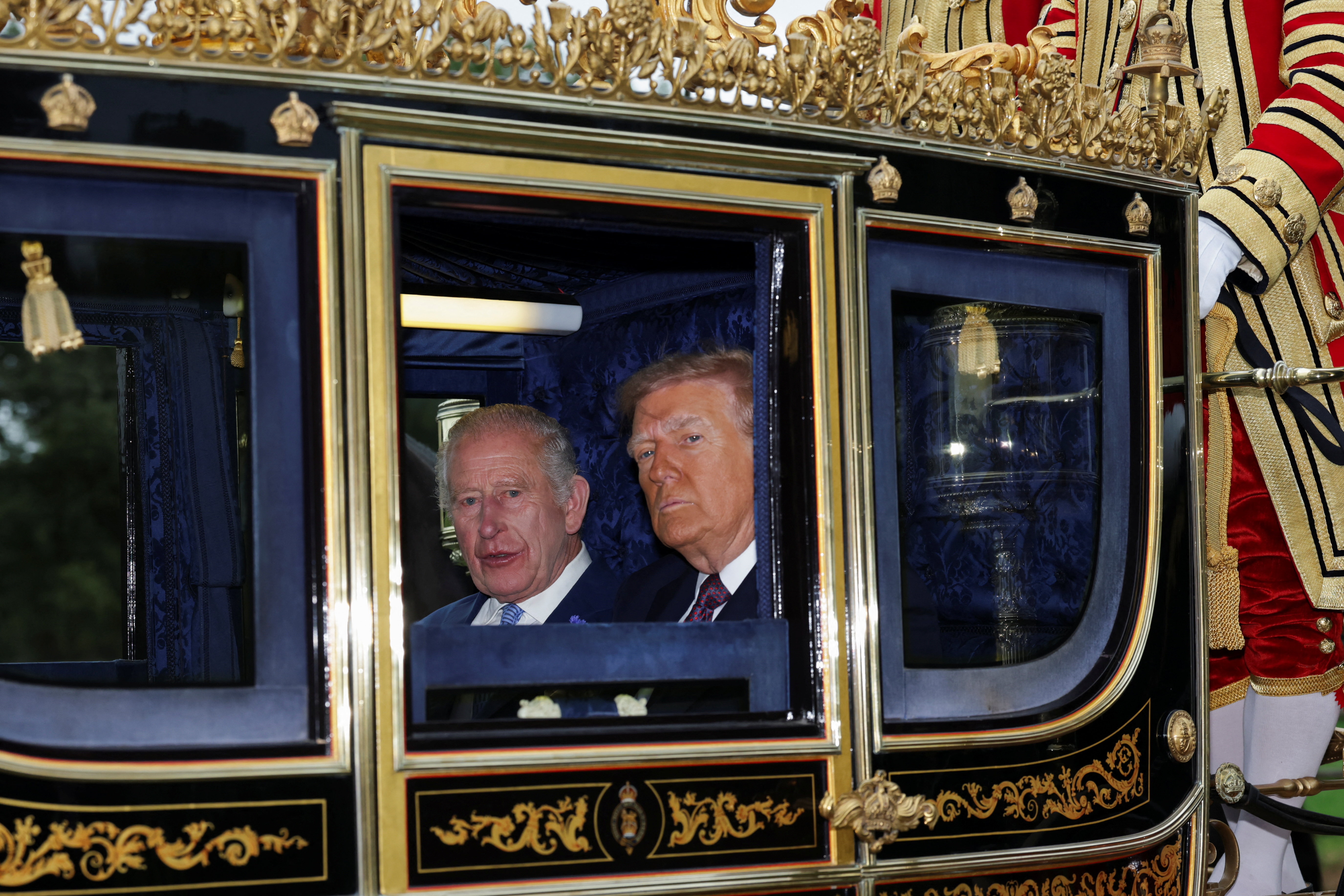
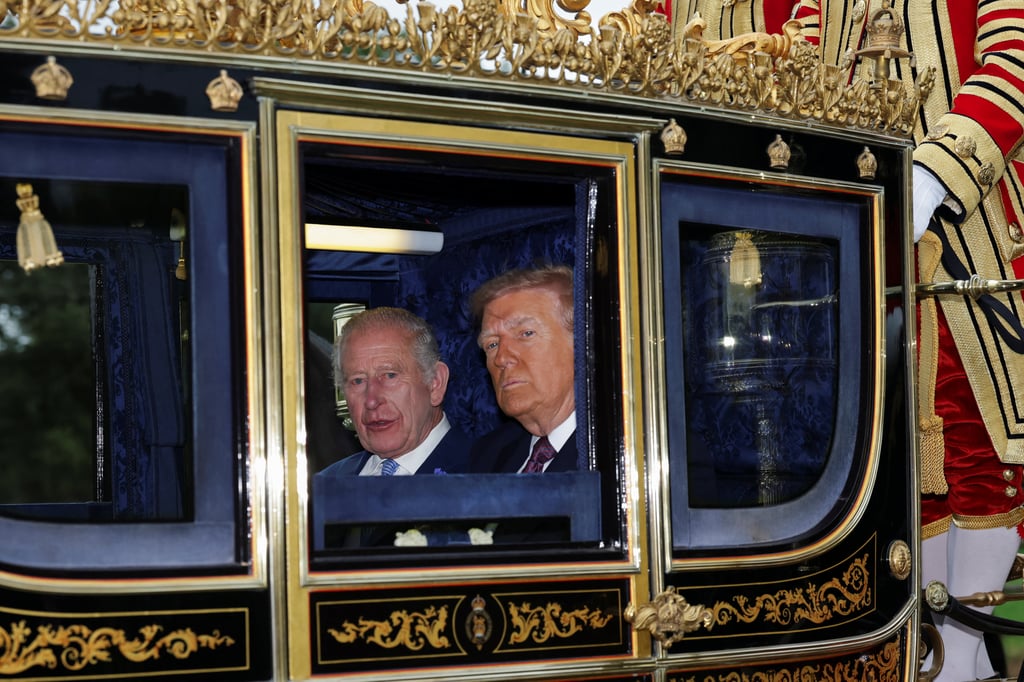
King Charles III and U.S. President Donald Trump sit in a carriage during a procession through Windsor Castle on Sept. 17, 2025, in Windsor, England. —Toby Melville—Getty Images

King Charles III’s upcoming state visit to D.C. has been heralded by President Donald Trump as a chance to repair frayed U.K.-U.S. relations, but some British lawmakers are calling for it to be canceled. 

Set to start on April 27, the four-day trip will see Charles and Camilla enjoy a state dinner at the White House while also traveling to Virginia and New York as they honor the 250th anniversary of American independence.

It’s the first U.S. state visit made by a British Monarch since Queen Elizabeth II was hosted by President George Bush in 2007, but the backdrop of the trip is wrought with geopolitical tensions.

The fallout of the Iran war has splintered U.K.-U.S. relations and fractured the once-prosperous alliance between Trump and British Prime Minister Keir Starmer.

Trump has directed a series of complaints and warnings toward the U.K. on account of Starmer refusing to get actively involved in the conflict. This week, he threatened to impose a “big tariff” on the U.K. if it doesn't drop its digital services tax on U.S. tech companies.

The threat renewed the unease many British lawmakers have expressed over the timing of Charles’ visit.

Ed Davey, leader of the Liberal Democrats, on Friday said: “Why is Keir Starmer rewarding this bullying behaviour with a state visit from the King?”

He previously appealed for Starmer, the leader of the ruling Labour Party, to recall the trip, citing the Iran war and the resulting increase in energy prices impacting U.K. homes.

“Keir Starmer should advise the King that the state visit to the U.S. scheduled for April should be called off. At a time when Trump has launched an illegal war that is devastating the Middle East and pushing up energy bills for British families, it’s clear this visit should not go ahead,” Davey urged in March.

He argued that a state visit from Charles “would be seen as yet another huge diplomatic coup for President Trump” and that such a reward “should not be given to someone who repeatedly insults and damages our country.”

Davey renewed his efforts to have the trip reconsidered last week, after Trump, while referring to the “sad” state of London and Washington relations, warned that the U.K.-U.S. trade deal reached in 2025—which was celebrated at the time for its “reciprocity and fairness”—could be changed.

“This must be the last straw. Surely the Prime Minister can't send our King to meet a man who treats our country like a mafia boss running a protection racket,” Davey said in an address to parliament.

Starmer, in response, reaffirmed the broader significance of the U.S.-U.K. relationship and expressed the importance of the King’s trip.

"The purpose of the visit is to mark the 250th anniversary of relations and independence of the U.S.,” he said. “The monarchy is an important reminder of the long-standing bonds and enduring relationship between our two countries which are far greater than anyone who occupies any particular office at any particular time.”

Still, Davey is far from the only British lawmaker to raise issue with Charles' trip.

With the U.K.-U.S. relationship under increasing strain, here’s what else to know about the state visit, its purpose, and the lawmakers who are opposed to it going ahead.

What is the purpose of King Charles' state visit?

The visit will mark the King’s first state visit to the U.S. since he ascended the throne in 2022 and is intended to commemorate the 250th anniversary of American independence.

It’s “an opportunity to recognize the shared history of our two Nations,” Buckingham Palace said.

Trump, a long-time admirer of the royal family, described the trip as a “momentous occasion” and said he plans to host a “beautiful” banquet dinner at the White House.

The King is also expected to address a joint session of Congress on April 28—the second time a British monarch has done so, following Queen Elizabeth II’s address in 1991.

Evie Aspinall, director of the British Foreign Policy Group, tells TIME that “given Trump has a kind of strong affinity for the royal family” the visit represents “a unique opportunity to strengthen the bilateral relationship at a moment where it is fracturing.”

Trump echoed this sentiment when asked recently if the royal visit could help repair the historically strong relationship, answering: “Absolutely, the answer is yes.”

"I know him well, I've known him for years," Trump said of the King. "He's a brave man, and he's a great man.”

The trip will also include a visit to New York where Charles is expected to attend a wreath laying at the 9/11 memorial, as well as a stop in Virginia, where the royals are set to meet Appalachian and Indigenous communities.

Why are some lawmakers concerned about King Charles' trip—and what have they said?

Against the backdrop of the Iran war and Trump’s continued criticism of the U.K., some lawmakers have argued the visit poses more risks than benefits.

Members of the Liberal Democrats have been the most vocal, with 29 MPs calling on Starmer to cancel the visit “given President Trump’s ongoing war and disparaging remarks about the U.K. and other allies who were not consulted on the decision to go to war.”

Green Party leader Zack Polanski has also raised grave concerns.

“The King should be going nowhere near Donald Trump at this time. The truth is, Keir Starmer has waved this visit through because he’s scared to stand up to this rogue President,” he argued

Emily Thornberry, a senior figure in Starmer’s Labour party, is quoted as telling BBC Radio 4 that, given the war, it was worth questioning whether it would be appropriate to proceed with the visit or to “delay it.”

"If it was to go ahead, it would go ahead against a backdrop of a war and that, I think, is quite difficult—and the last thing that we want to do is to have their majesties embarrassed," she said in March.

Aspinall acknowledges that Trump is “a very volatile character,” but warns that canceling the visit could have had broader consequences.

“It would be devastating for the U.K.-U.S. relationship if King Charles were to pull out,” she tells TIME. “Whilst other leaders might deal with it differently, almost certainly you would see very volatile comments about the U.K., threats around tariffs, and undermining U.K. security.”

Public opinion, meanwhile, remains divided.

A YouGov poll published in late March found that 49% of Britons oppose the visit, compared with 33% in favor.

How the Iran war has strained relations between the U.K. and U.S.

Relations between the U.K. and the U.S. began to deteriorate following Starmer’s initial refusal to allow U.S. forces to access British bases for their initial strikes against Iran.

While the U.K. later permitted the use of bases for defensive purposes, Starmer maintained that Britain would not be actively involved in the war.

Those decisions have drawn the wrath of Trump, who described Starmer as “no Winston Churchill” and accused him of wanting to “join wars after we've already won.”

Starmer, in turn, has stepped up his criticism of Trump, saying he is “fed up” with the global economic instability caused by his decisions, while other senior U.K. officials have accused the Administration of entering the Iran war without a “clear exit plan.”

The British Prime Minister also emphasized this week that, despite Trump’s critical remarks, he will not be "diverted or deflected" from acting in, what he believes to be, the “best national interest" of the U.K.

© Toby Melville—Getty Images

King Charles III and U.S. President Donald Trump sit in a carriage during a procession through Windsor Castle on Sept. 17, 2025, in Windsor, England.

Can Countries Create a Roadmap for Ditching Fossil Fuels?

2026年4月25日 00:54
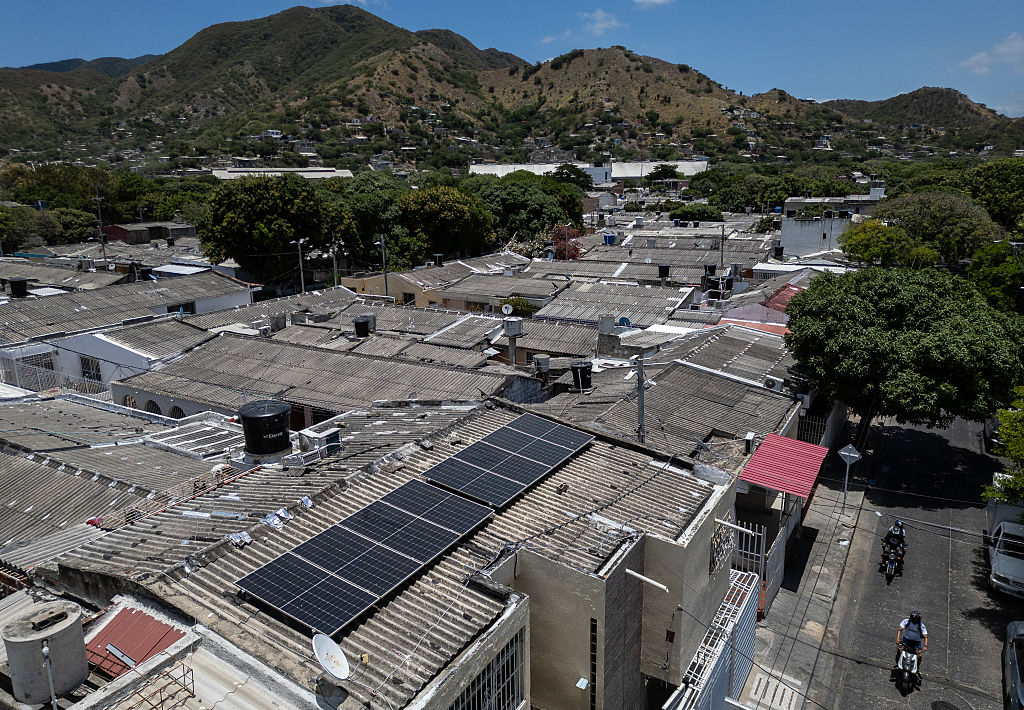
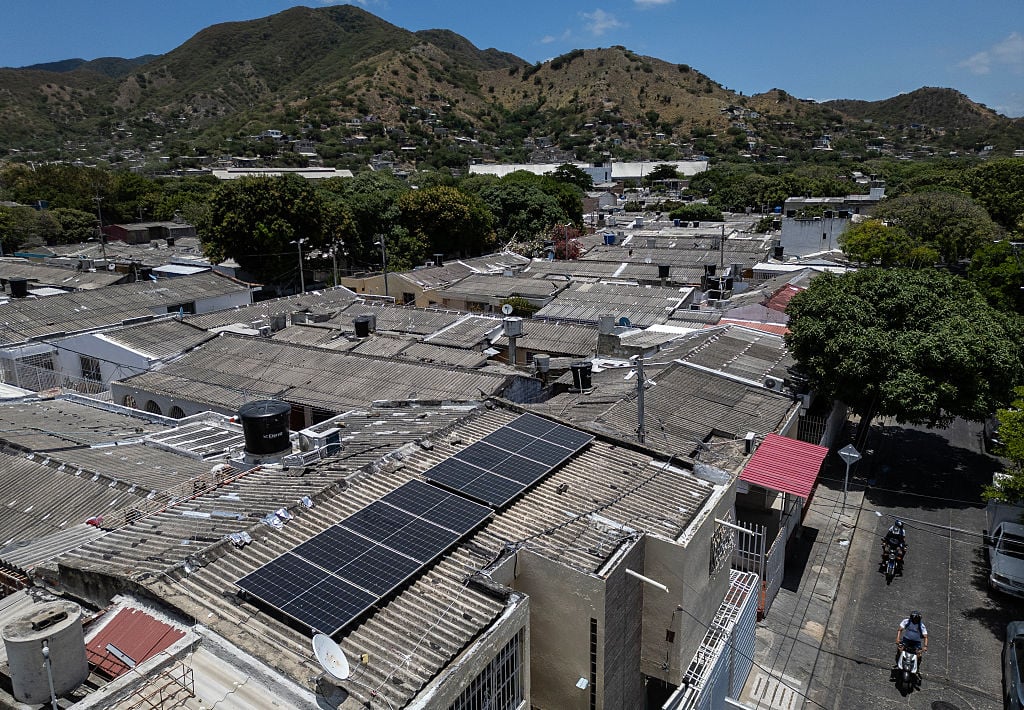
Aerial view of solar panels powering Hernan Sarmiento's grocery store in Santa Marta, Magdalena department, Colombia, on April 20, 2026. —Luis Acosta—Getty Images

More than 50 countries are meeting today in Santa Marta, Colombia, for the first international conference on phasing out fossil fuels—in what could prove to be a global turning point for global climate action. 

“This is the first serious attempt to center fossil fuels in global climate cooperation,” says Nikki Reisch, director of the climate and energy program at the Center for International Environmental Law. “The conference here really represents a historic opportunity for countries willing to take action on the root cause of climate change, to come together and strengthen international cooperation on the implementation of a phase out of fossil fuels.”

The conference, which was first announced at the annual U.N. climate summit COP30 in Brazil last fall, will be held from April 24 to 29 and co-hosted by the Netherlands and Colombia. Since taking office in 2022, Colombian President Gustavo Petro has made winding down fossil fuels a national priority. 

The conference comes as countries around the world are feeling choked by rising energy and gas prices from as the war in Iran and closure of the Strait of Hormuz has pushed oil and gas prices up globally. “The crisis has really exposed the real cost of depending on fossil fuels—in terms of price volatility and energy insecurity,” says Natalie Jones, a senior policy advisor in the International Institute for Sustainable Development’s energy program. “It's really underscored that the transition to renewable energy, electrification, and energy efficiency is more important than ever—and these are all the topics that will be discussed at this conference.” 

Around the world, clean energy is emerging as a more reliable and cost-effective power source. Last year, clean energy generation surpassed the global rise in electricity demand with the share of renewables like solar, wind, and hydropower making up more than one-third of the world's electricity mix for the first time in modern history. 

But coordinated global action towards formally transitioning away from oil and gas has so far been absent. While countries meet every year for global climate negotiations, the annual summits are notoriously quiet on the topic of fossil fuels. The 2015 Paris Agreement does not mention fossil fuels, and it took nearly three decades for governments to agree to transitioning away from fossil fuels at COP28 in 2023. In recent years, thousands of oil, gas, and coal lobbyists have participated in the climate summits, which are meant to be focused on reducing greenhouse gas emissions. The most recent global climate conference, COP30, ended last year with no mention of fossil fuels. 

What’s more, the COP process requires a consensus, which means that a small minority can block action. 

“This conference is so important because it's the first time that countries are getting together outside of COP to really talk about the real cause of climate change, which is fossil fuels,” says Jones. 

The countries participating represent one-third of global fossil-fuel demand and one-fifth of global production, according to the Colombian government. However, some of the world’s biggest emitters—including the U.S., Russia, India, and China—will be absent. 

That’s not necessarily a bad thing. “What's so valuable about this space is that it affirms that countries willing to take action can do so in spite of the persistent resistance of the biggest petro states and polluters,” says Reisch. “The momentum behind getting off of fossil fuels is unstoppable. The biggest blockers and laggards who have for years really stymied progress in the U.N. climate talks, their absence is in some ways, an opportunity for other countries to step in and to explore what they can do together without those states.”

The conference presents an opportunity to come up with pathways for countries looking to transition away from fossil fuels, and eliminate some of the barriers that encourage fossil fuel reliance. 

“The point of it is to be able to get into some of the tricky questions about how to phase out fossil fuels,” says Leo Roberts, associate director for energy transitions at E3G, a climate change think tank.

That includes discussions on how to phase out systems that encourage fossil fuel reliance—like investor-state dispute settlement systems, which allow big companies to sue governments for adopting environmental protection laws, or creating preferential trade agreements for countries that are committed to the transition.

“They're not just things that one country can do by itself,” says Alex Rafalowicz, executive director of the Fossil Fuel Treaty Initiative. 

The conference sets the stage for states to come together to develop a treaty on transitioning away from fossil fuels. Organizers hope to establish, within a year, formal negotiations for a Fossil Fuel Treaty, a binding international framework that would manage a fossil fuel phase-out. A second international conference hosted by the Pacific Island nation Tuvalu, will be hosted within the year.

Experts also hope to see countries come up with their own individualized road maps of what a transition away from fossil fuels might look like on a national level. 

“The challenge I would issue to all countries who are attending is what are you doing back home? What are the measures you are taking? What are the plans you are putting in place?” says Jones. “It's all very well to come to these international forums and say, ‘We think this is really important,’ but are you putting your money where your mouth is?” 

© Luis Acosta—Getty Images

Aerial view of solar panels powering Hernan Sarmiento's grocery store in Santa Marta, Magdalena department, Colombia, on April 20, 2026.

Netanyahu Says He Underwent Treatment For Prostate Cancer

2026年4月25日 00:46
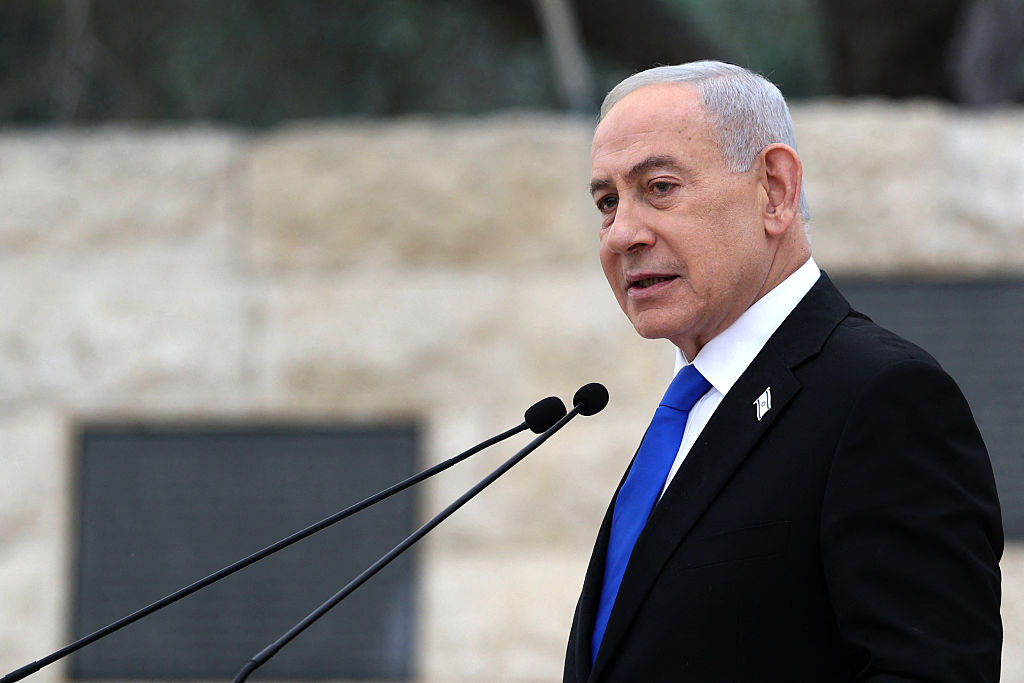
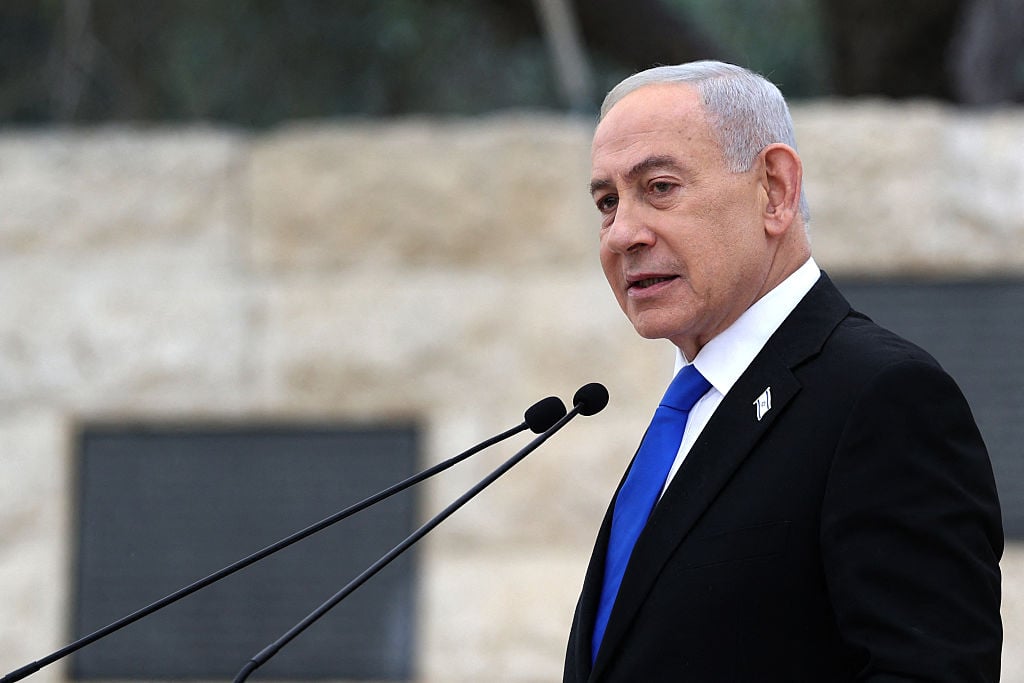
Israel's Prime Minister Benjamin Netanyahu speaks during a ceremony commemorating Israel's Remembrance Day for fallen soldiers, or Yom HaZikaron, at the Military Cemetery on Mount Herzl in Jerusalem on April 21, 2026. —Ilia Yefimovich—Pool/AFP/Getty Images

Israeli Prime Minister Benjamin Netanyahu said on Friday that he was recently diagnosed with and treated for prostate cancer, and has since made a full recovery.

Netanyahu’s announcement on X came the same day that his annual medical report was released to the public. The Prime Minister said that he “requested to delay its publication by two months so that it would not be released at the height of the war, in order not to allow the Iranian terror regime to spread even more false propaganda against Israel.” The U.S. and Iran are in the midst of a tenuous ceasefire, backed by Israel, in the war that began with Israeli and American forces striking Iran on Feb. 28. Israel and Lebanon also reached—and extended—a temporary ceasefire deal after weeks of Israeli attacks targeting the Iran-backed militant group Hezbollah amid the conflict.

Netanyahu, 76, said on Friday he wanted to share that he is healthy and “in excellent physical condition,” but that he “had a minor medical issue with my prostate that was completely treated.”

“A year and a half ago, I underwent successful surgery for an enlarged benign prostate, and since then I have been under routine medical monitoring,” Netanyahu said. “In the last monitoring, a tiny spot of less than a centimeter was discovered in the prostate. Upon examination, it turned out to be a very early stage of a malignant tumor, with no spread or metastases whatsoever.”

His doctors told him that he had two options, he said: not undergo treatment but continue monitoring the spot, or undergo treatment.

“You already know me,” Netanyahu said. “When I’m given information in time about a potential danger, I want to address it immediately. This is true on the national level and also on the personal level. That’s what I did.”

The Prime Minister said he “underwent targeted treatment that removed the problem and left no trace of it.” He thanked his doctors and medical team, and urged his constituents to “take care of your health.”

“The spot disappeared completely,” he said. “Thank God, I overcame this too.”

© Ilia Yefimovich—Pool/AFP/Getty Images

Israel's Prime Minister Benjamin Netanyahu speaks during a ceremony commemorating Israel's Remembrance Day for fallen soldiers, or Yom HaZikaron, at the Military Cemetery on Mount Herzl in Jerusalem on April 21, 2026.

Is the U.S. Trying to Suspend Spain From NATO? Sánchez Addresses Reported Pentagon Email

2026年4月25日 00:41
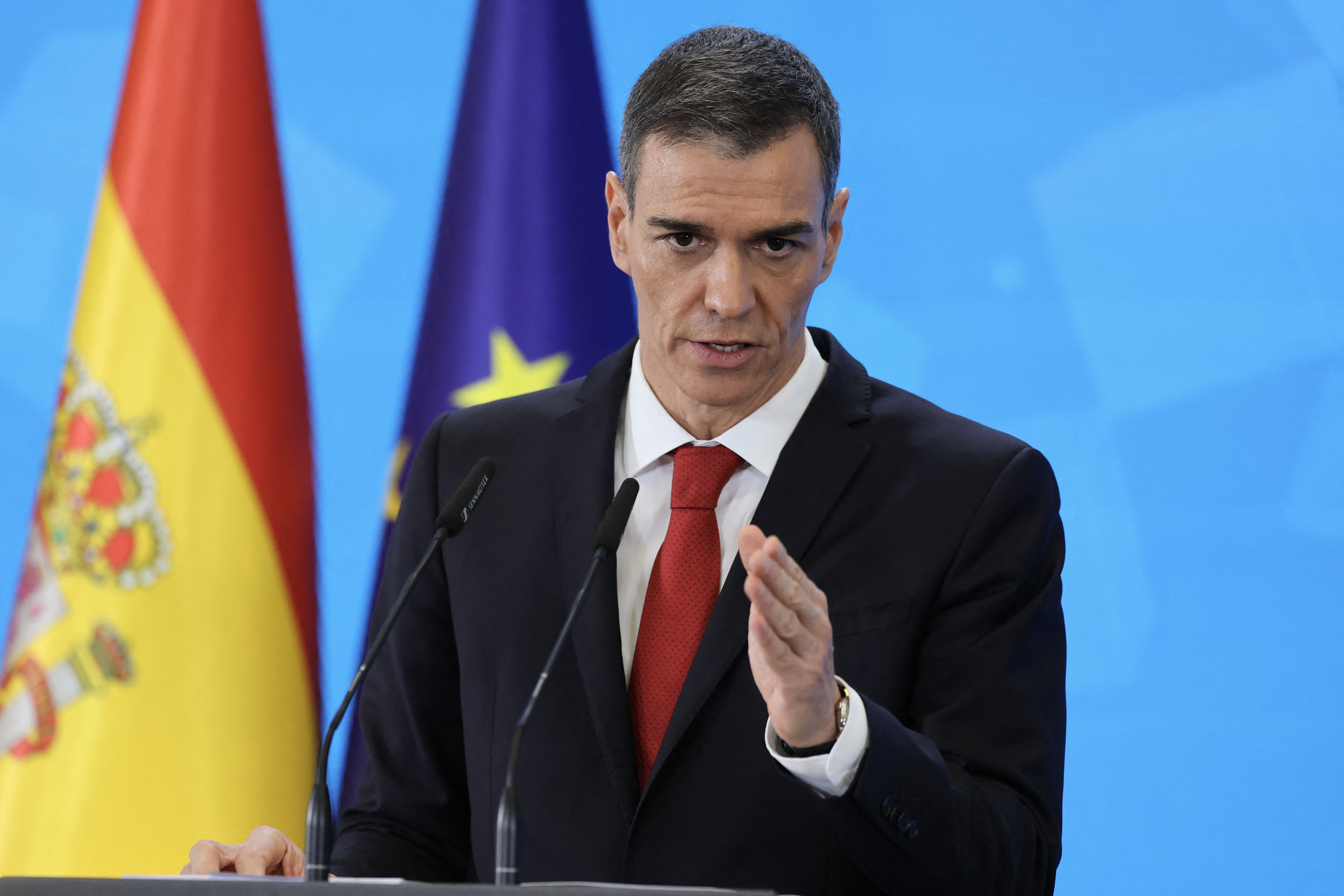
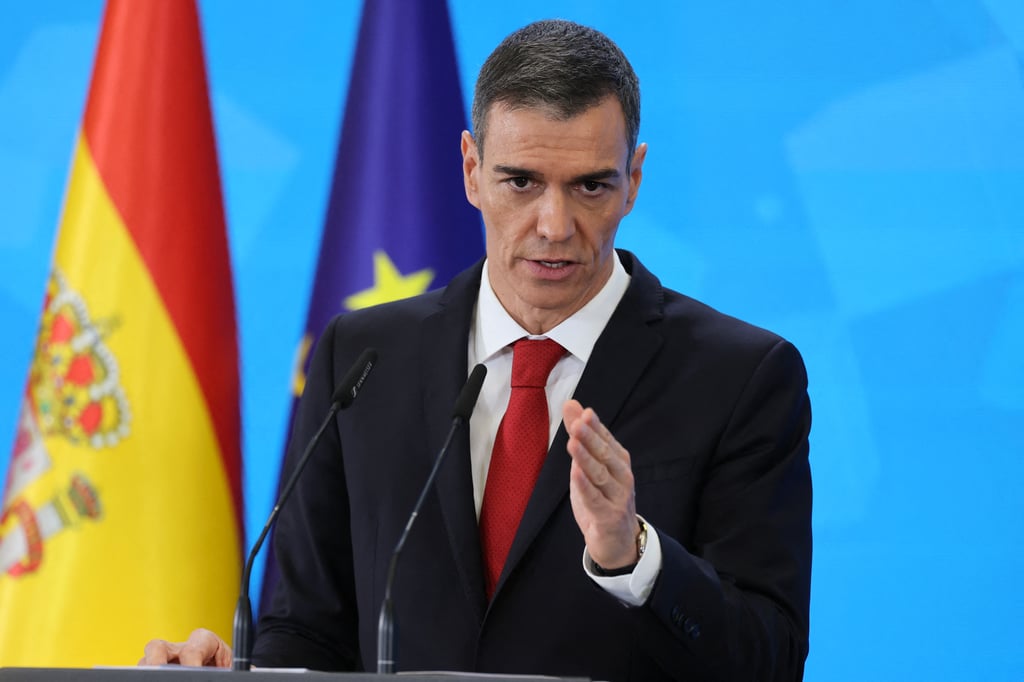
Spain's Prime Minister Pedro Sanchez during a press conference at the Moncloa Palace in Madrid on Dec. 15, 2025. —Thomas Coex—Getty Images

Spanish Prime Minister Pedro Sánchez dismissed reports that the U.S. is floating the idea of suspending Spain from the NATO alliance.

An internal Pentagon email reportedly suggested various ways the Administration could punish NATO allies it believes let the U.S. down by not actively supporting operations in the Iran war, according to Reuters.

"We do not work with emails," Sánchez told reporters when asked about the matter at the European Union summit in Cyprus on Friday. "We work with official documents and positions taken, in this case, by the government of the United States."

Reaffirming Spain’s opposition to the Iran war, which he has repeatedly referred to as “illegal,” Sánchez added: "The position of the government of Spain is clear: absolute collaboration with the allies, but always within the framework of international legality.”

NATO, meanwhile, has said there are no provisions to expel members.

“NATO’s Founding Treaty does not foresee any provision for suspension of NATO membership, or expulsion,” a NATO official told TIME.

TIME has reached out to the Pentagon for comment.

Since the start of the Iran war, Spain has been among the most vocal European critics, accusing the U.S. of dragging the world into a conflict that has brought nothing but “insecurity and pain.”

Spain denied the U.S. permission to use jointly-operated bases to attack Iran and went on to close its airspace to U.S. planes involved in the conflict.

Months earlier, Spain resisted Trump’s calls for all NATO members to increase defense spending to 5% of GDP.

Spain’s opposition to the conflict in the Middle East, and its defiance to heed Trump’s calls for support from NATO allies, has prompted strong rebuke from the U.S. President.

“Spain has been terrible. I told Scott [Bessent, Treasury Secretary] to cut off all dealings with Spain,” Trump warned in March, threatening economic repercussions. “We’re going to cut off all trade with Spain. We don’t want anything to do with Spain.”

And it’s not only Spain that has incurred the wrath of Trump, as he has also made threats against the United Kingdom, with relations between the once-close allies now strained amid the Iran war.

The discussed Pentagon email reportedly suggests reviewing the U.S. position on Britain’s claim to the Falkland Islands, as well as removing “difficult” allies from key NATO roles and positions.

Trump’s tensions with NATO have been years in the making, as he was critical of the alliance throughout his first term.

Last month, Trump warned NATO allies of a “very bad” future should they not help secure the Strait of Hormuz. European countries responded to Trump with caution and resistance, declining to send warships to the vital trade waterway.

Shortly after, Trump said he was strongly considering pulling the U.S. out of the alliance, insisting they had failed his “test” when asked to assist the U.S.

Experts told TIME that although Trump could explore a select few avenues to pursue leaving NATO, the legalities involved would be murky, at best. 

But the mere suggestion of the U.S. leaving NATO has caused a lot of damage, they added.

“The very idea of a U.S. exit erodes trust, cohesion, and the credibility of collective defense,” Ilaria Di Gioia, a senior lecturer in American law at Birmingham City University, told TIME. 

“Trump’s repeated questioning of the alliance weakens deterrence, shakes European security planning, and emboldens adversaries.”

© Thomas Coex—Getty Images

Spain's Prime Minister Pedro Sanchez during a press conference at the Moncloa Palace in Madrid on Dec. 15, 2025.
Received before yesterdayTIME

What to Know About Trump’s Reclassification of Medical Marijuana

2026年4月24日 21:43
—Getty Images/Yuri Kriventsoff

On April 23, acting U.S. attorney general Todd Blanche signed an order changing the federal classification of medical marijuana. The move, which came at the behest of President Donald Trump and will make the substance a Schedule 3 drug, will bring enormous tax benefits to medical marijuana producers in the 40 states where medical use is legal and may speed research into its effects, experts say. 

But it does not legalize marijuana at the federal level, nor does it change the status of marijuana grown for recreational use. Here’s what you need to know.

What is a Schedule 3 drug?

In the Drug Enforcement Administration (DEA)’s classification system, drugs are assigned a category according to whether they have an accepted medical use and whether they’re likely to cause addiction. Since 1970, marijuana has been a Schedule 1 drug, alongside heroin and LSD; Schedule 1 drugs have no accepted medical use and a high risk of dependence, and possessing them may have legal consequences. 

Schedule 3 drugs, where medical marijuana will now be classified, have a moderate-to-low risk of addiction. Drugs in this category include ketamine and testosterone.

A federal reclassification of medical marijuana, given its extensive use as a legal medical treatment at the state level, has been discussed before: President Biden pushed for reclassifying marijuana in 2024. Indeed, there are a number of substances whose Schedule 1 status may not be appropriate, says Alex Stevens, a professor of criminology at University of Sheffield in the U.K. who studies cannabis policy in the U.S. and other countries. MDMA, for example, “is a promising, but perhaps not yet proven, treatment for depression,” he says. “So there are still things in Schedule 1 that shouldn't be.” 

What does the Justice Department order mean?

It means that state-licensed makers of medical marijuana will be able to claim tax benefits that would not have previously been available with the Schedule 1 classification. 

Read More: What Anesthesia Does to the Brain, According to a New Study

The rescheduling may also make it easier for scientists in the U.S. to study substances derived from marijuana. “Cannabis research is really, really limited by the previous scheduling,” says David Nutt, professor of neuropsychopharmacology at Imperial College London.

The order may also simplify the process of getting medical marijuana for some people, says Stevens. “It should, in theory, make it easier for people who need cannabis-based medical products to get them, and if it opens the door to insurers covering them, then that's a great benefit for people…who can't afford to pay the quite expensive costs of medical cannabis in the free market,” he says. 

It does not change the legal status of marijuana for recreational purposes.

What will happen going forward?

The reclassification follows Trump’s executive order on April 18 to speed the consideration of psychedelics as treatments. These recent moves suggest that many drugs that have long been difficult to study—not just cannabis–may soon be easier to research, says Nutt.  

Stevens speculates that future changes, whatever they may be, will reflect the goals of a variety of groups. “This power struggle between campaigners who want free access to cannabis for lots of different purposes, medical regulators who want to retain control over who gets to use it and who doesn’t, and businesses who want to make as much money as possible—the dynamic between those three policy actors is what’s going to affect the future of the cannabis market,” he says. 

© Getty Images/Yuri Kriventsoff

Why Trump Is Threatening to Impose a ‘Big Tariff’ on the U.K.

2026年4月24日 21:39
President Donald Trump and British Prime Minister Keir Starmer during the announcement of a technology deal at Chequers, England, on Sept. 18, 2025. —Leon Neal—Getty Images

President Donald Trump has threatened to impose a “big tariff” on the United Kingdom if it doesn't drop its digital services tax on U.S. tech companies.

“They think they're going to make an easy buck. That's where they've taken advantage of our country,” said Trump late Thursday. "We've been looking at it, and we can meet that very easily by just putting a big tariff on the U.K.” 

The digital services tax was introduced in 2020 and imposes a 2% levy on the revenues of several major U.S. firms.

Citing his “obligation to protect” American companies, the President doubled down on the threat, warning the British government to be “careful” as “if they don’t drop the tax... we'll reciprocate by putting something on that's equal or greater than what they're doing."

Downing Street issued a defiant response Friday morning, confirming its outlook on the levy remains the same.

"Our position on that is unchanged. It is a hugely important tax to make sure that those businesses continue to pay their share. So it is a fair and proportionate approach to taxing business activities in the U.K.,” a Downing Street spokesperson told TIME.

The White House reiterated its stance Friday afternoon, with spokesperson Kush Desai telling TIME that "defending America’s innovative and leading technology industry from foreign countries’ digital service taxes and other exploitative policies has been a top priority for President Trump" and the "Administration continues to address these issues with our trading partners."

Trump’s threat to apply economic pressure to yield desired results is the latest display of how the so-called “special” relationship between the U.K and U.S. has significantly splintered since the start of the Iran war.

Just last week, Trump warned that the U.K.-U.S. trade deal reached in 2025—which was heralded at the time for its “reciprocity and fairness”—could be changed.

“Well, it’s been better, but it’s sad,” he said of the deteriorating relationship. “And we gave them [the U.K.] a good trade deal, better than I had to, which can always be changed.”

Trump has lashed out repeatedly at British Prime Minister Keir Starmer for refusing to get actively involved in the Iran war. He criticized Starmer's initial refusal to grant U.S. access to British military bases at the start of the war, claiming it cost American forces crucial time.

He also continues to criticize the U.K.’s handling of the Chagos Islands deal and referred to NATO allies as "useless" after they refused to send warships to secure the Strait of Hormuz.

In turn, Starmer recently said he was “fed up” with people in the U.K. encountering economic instability due to the actions of Trump during the war, the fallout of which has sparked a worldwide energy crisis.

With relations between Europe and the U.S. under great strain, the Pentagon is now reportedly considering a number of options to punish U.S. allies for showing restraint to directly intervene in the war. According to Reuters, a U.S. official described a Pentagon email in which high-up officials were reviewing the U.S. position on the U.K.'s claim over the Falkland Islands. 

TIME has been unable to independently said email and has reached out to the Pentagon for comment.

In response to the reports, a Downing Street spokesperson told TIME: "The Falkland Islands have hugely voted overwhelmingly in favor of remaining a U.K. overseas territory, and we've always stood behind the islanders' right to self-determination and the fact that sovereignty rests with the U.K." 

They added: "We've expressed this position previously clearly and consistently to successive U.S. Administrations and nothing is going to change that."

Stephen Doughty, the U.K.’s Minister of State for Europe, North America and Overseas Territories, also issued a defiant response, insisting: “The Falkland Islands are British.”

These latest threats against the U.K. come just days before King Charles III and Queen Camilla are set to make a highly-anticipated state visit to the U.S., where they will be hosted by Trump for a banquet dinner at the White House.

It’s the first U.S. state visit from a British Monarch since Queen Elizabeth II was greeted by President George Bush in 2007, and the stakes are undoubtedly high as it could serve as an opportunity to calm the escalating tensions between the U.K. and U.S.

Here’s what to know about the tax that Trump is taking issue with and where the U.K.-U.S. relationship now stands.

What is the digital services tax?

Introduced by the previous U.K. government in April 2020, the digital services tax imposes a 2% levy on the revenues of “search engines, social media services and online marketplaces which derive value from U.K. users.”

The first £25 million ($33.7 million) in revenue gained from U.K. users by these companies is not taxed by the government. 

Between April 2021 and April 2025, the tax generated over £2.4 billion ($3.2 billion) in revenue for the British government.

A 2022 audit of the tax from the British National Audit Office found that in the first year of its implementation, around 90% of the total revenue came from five businesses, with 18 companies paying the tax as a whole that year.

Trump previously voiced his disapproval of a similar tax put forth by Canada amid a trade war between the two countries. In June 2025, the President said he would be “terminating all trade negotiations” with Ottawa because of the levy. 

The Canadian government then announced its decision to rescind the tax “in anticipation of a mutually beneficial comprehensive trade arrangement with the United States.”

The tax, which was officially rescinded last month, applied a levy of 3% on revenues similar to those taxed by the U.K. 

Can King Charles’ state visit to D.C. save the "special" U.K.-U.S. relationship?

With the visit of British royals now just days away, Trump is eyeing up the meeting with King Charles and Queen Camilla as an opportunity to reestablish a stronger connection between London and Washington. 

When asked if the royal visit could help repair the historically strong relationship, Trump said: “Absolutely, the answer is yes.”

Praising the royal family, who he has long admired, Trump referred to Charles as a “great man, a brave man.”

Trump visited the King and Queen last September during his unprecedented second state visit to the U.K, staying at Windsor Castle and attending a number of events alongside Charles. 

During the visit, the President also met with Starmer at his country residence, Chequers, where the pair signed a “groundbreaking” billion-dollar technology prosperity deal.

© Leon Neal—Getty Images

President Donald Trump and British Prime Minister Keir Starmer during the announcement of a technology deal at Chequers, England, on Sept. 18, 2025.

'Too Dangerous to Release' Is Becoming AI's New Normal

2026年4月25日 04:35
OpenAI CEO Sam Altman testifies before the Senate Committee on Commerce, Science, and Transportation on May 8, 2025. —Chip Somodevilla—Getty Images

On April 16, OpenAI announced GPT-Rosalind, a new AI model targeted at the life sciences. It significantly outperforms their current publicly available models in chemistry and biology tasks, as well as experimental design. As with Anthropic’s Claude Mythos and OpenAI’s GPT-5.4-Cyber, also released this month, the model is not available to the general public—reserved, at least initially, for “qualified customers” through a “trusted access program.” 

The releases signal a new and concerning trend of AI companies deeming their most capable models too powerful to entrust to the general public. “I think frontier developers are restricting access to their most capable models because they are genuinely worried about some of the capabilities these models have,” says Peter Wildeford, head of policy at the AI Policy Network, an advocacy group. 

It is unclear why OpenAI decided to restrict access to GPT-Rosalind in particular. An OpenAI spokesperson said in an email that giving access to trusted partners allows the company to “make more capable systems available sooner to verified users, while still managing risk thoughtfully.”

Who decides? 

The rapid advance of AI capabilities raises the question of whether private companies should be making the increasingly weighty decisions about whether and how potentially dangerous AI models should be built, and who should be allowed to use them. “I think the federal government has a role to play,” says Rep. Mark DeSaulnier, a California Democrat. 

Anthropic’s Mythos release appears to have improved its previously fraught relationship with the White House, which said last week that it had held a “productive and constructive” meeting with Anthropic CEO Dario Amodei. The NSA has also reportedly begun using Claude Mythos. In February, President Trump ordered federal agencies to stop working with the “radical left, woke company,” after a contract dispute with the Pentagon. 

The restrictions on access to the recent series of models were voluntary on the part of Anthropic and OpenAI. But as the risks posed by AI models become more severe and complex, some are calling for stricter external oversight. 

“We don't allow companies to decide how much toxic pollutant they're allowed to put in my child's drinking water—this is the government's decision,” says Connor Leahy, U.S. director of ControlAI, an AI regulation advocacy group. “We can argue [whether] the government is doing a bad job or a good job, but it's about the separation of powers.”

‘Science research and making a bioweapon look very similar’

Dual-use capabilities, such as biological and cybersecurity research, pose a challenge to AI companies. The same tools that help a cybersecurity researcher find and patch vulnerabilities in software can assist a would-be attacker. An AI that helps study viruses could, hypothetically, help a bioterrorist design a more lethal strain. “Cyber defense and cyber offense look very similar,” says Wildeford. “Science research and making a bioweapon look very similar.”

In the past, companies have chosen to restrict these capabilities for everybody. Many chatbots refuse queries on which COVID mutations cause the virus to become more transmissible, for example. While this doesn’t bother the average user, it is a challenge for researchers. “It’s frustrating,” says James Diggans, vice president of policy and biosecurity at Twist Bioscience, a DNA synthesis company. “But I think it’s the right thing to do.”

The recent model releases relax some of these constraints for trusted parties. OpenAI says it grants access to GPT-Rosalind only to organizations with “strong internal controls” that ensure the model will not be misused. Anthropic has partnered with U.S. government agencies and private companies that use Mythos to find and patch cybersecurity vulnerabilities. However, Steph Batalis, research fellow at the Center for Security and Emerging Technology, says that defining “legitimate” researchers is harder outside U.S. institutions, raising equity concerns for international researchers. 

Deciding which models should have restricted access is a delicate balancing act that varies by domain. It’s easy to measure whether an AI model poses a potential cyber threat, says Diggans: “Can they crack existing systems?” Biological research is a more complex, multi-stage process that takes longer than cyberattacks; it’s less clear whether harm would come from a model such as GPT-Rosalind if it were publicly released. “We know that people want to, and do, commit cyber attacks,” Batalis says. “We just don't have that same sample size with the biological risks.” Other domains may become more contentious as AI capabilities continue to advance. Communications campaigns could be seen as propaganda operations in the wrong hands. 

‘Cyber capabilities are going to diffuse’

Open-source models, which can be downloaded and run for free, may change the calculus around AI model restrictions. The capabilities of open-source models have historically lagged proprietary models by three to seven months, according to Epoch AI, a research institute that studies AI progress. This means that, if the trend continues, an AI model with GPT-Rosalind- and Mythos-level capabilities could be publicly available by the end of the year.  “Cyber capabilities are going to diffuse,” the OpenAI spokesperson said. “Defenders need better tools earlier, not later.”

Open-source models could benefit international cyberattackers. In November, Anthropic announced that it had disrupted a Chinese state-sponsored group that was using the company’s paywalled models, by blocking their access to the AI. If similarly capable models are freely available on the open web, this would reduce Western companies’ leverage.

However, some open source developers have previously relied on outputs from leading proprietary systems to help train their models. The recent access restrictions on recent models may slow or stop the diffusion of the most advanced capabilities into open-source models—as long as companies can enforce the restrictions. (Some unauthorized users have reportedly already succeeded in accessing Claude Mythos.)

Whether or not open-source models catch up with the leading proprietary models, Mythos and GPT-Rosalind are the new floor of frontier AI capability—and the growing opportunities and risks posed by AI show no sign of slowing. “I think the government has a strong interest in managing that,” says Wildeford. “I don't really know how you get around the need for government intervention.”

© Chip Somodevilla—Getty Images

OpenAI CEO Sam Altman testifies before the Senate Committee on Commerce, Science, and Transportation on May 8, 2025.

Arbor Day Is Actually About Infrastructure

作者Dan Lambe
2026年4月24日 20:55
An aerial view of Central Park in New York, New York. —simonkr—Getty Images

There is an inherent understanding that roads, bridges, and water systems are vital to a functioning society. Their value is obvious, their absence is disruptive, and their failure can be catastrophic. As we work to build more resilient cities—addressing everything from severe storms and extreme heat to public health—we have an urgent opportunity to reinforce our aging gray infrastructure with something more green, literally.

True infrastructure resilience is rooted in trees. And we need to continue transitioning from a model that uses trees as tools for beautification to one that emphasizes their importance for biological resilience and infrastructural strength. 

Beyond their symbolic and feel-good appeal, trees serve as critical infrastructure in our neighborhoods. They cool our cities, reduce stormwater runoff, improve air quality, lower energy costs, and even extend the lifespan of other infrastructure. When a system provides this much essential value, it can no longer be categorized as a “nice-to-have” accessory; it should be managed as a “must-have” utility.

Trees are one of the few investments that deliver returns across environmental, economic, social, and public health outcomes.

According to the World Meteorological Organization, the last 10 years have been the hottest on the planet. The rising heat has proven to be a public health crisis. The Yale School of Public Health reports deaths linked to heat exposure surged more than 50% over the past two decades. As the rate of extreme heat increases, so must our response. Trees significantly reduce surface and air temperatures by providing shade, with shaded surfaces being 20 to 45°F cooler than unshaded ones. In cities, trees can lower air temperatures by up to 10°F by shading homes and streets and releasing water vapor through their leaves, which further enhances their cooling effect.

The same is true when storms hit. As global temperatures rise, the nature of precipitation is changing. We are now seeing more frequent and intense bursts of rainfall that often outpace the soil's ability to absorb it, creating a dangerous and unpredictable flooding landscape for our communities. Recent estimates suggest the total annual economic costs of U.S. flooding range from $179.8 billion to $496 billion, including direct and indirect commercial impacts. 

What’s more, trees are a proactive insurance policy. Traditional pipes and sewers have a fixed capacity, while trees are adaptable. Their roots act as a living sponge, helping to absorb rainfall, reducing runoff that overwhelms drainage systems and floods streets and homes. Strategic planting and maintenance can mean the difference between resilience and costly recovery. In this way, trees work alongside traditional infrastructure, strengthening their protection and impact.

Well-placed trees increase property values and reduce energy costs. In Cincinnati, community trees save the average household $56 annually in cooling costs, totaling $4.8 million in savings citywide. The U.S. Department of Energy estimates that planting just three trees in strategic locations can reduce household energy bills by $100 to $250 per year and cut energy use by up to 25%. Trees function as a high-performing utility. Unlike most infrastructure that depreciates, a strategic investment in green systems provides an immediate return on investment, delivering savings that can be reinvested.

In urban areas, increased tree canopy has been linked to lower crime rates in some cases. For instance, Baltimore found that a 10% increase in tree canopy correlated with a 12% decrease in crime. A well-maintained tree canopy signals that a neighborhood is active, cared for, and monitored by its residents, helping to foster a safer environment.

Adopting a “must-have” tree mindset means mirroring the strategic investment we already provide for roads and utilities. It means planning for them, funding them, and maintaining them with the same rigor. It means setting canopy goals, investing in long-term care, and ensuring that every neighborhood benefits from their protection. It means integrating trees into broader policy conversations around climate, housing, and public health.

Most importantly, it means changing how we think.

We don’t ask whether we can afford sidewalks or clean water systems—we recognize them as essential. Trees belong in that same category. They are living systems that support our built environment and make our communities safer, healthier, and more resilient.

This Arbor Day, let’s celebrate by planting trees. But let’s also commit to something bigger: recognizing trees for what they truly are—not just amenities, but essential infrastructure we can no longer afford to overlook.

© simonkr—Getty Images

An aerial view of Central Park in New York, New York.

Charlize Theron Is Almost Enough to Make Apex Worth Watching

2026年4月24日 19:00
Taron Egerton and Charlize Theron in 'Apex' —Courtesy of Netflix

The problem with movies in which women triumph over the men who brutalize them is that you have to watch the women being brutalized first. That’s the issue with Baltasar Kormákur’s Apex, in which Charlize Theron plays a confident, experienced adventurer who nonetheless finds herself terrorized in the Australian wilderness by a male nutter, played by Taron Egerton. The movie is sometimes thrilling; often it’s just sadistically unpleasant. But at least Theron mitigates some of the material’s problems, because she can mitigate pretty much any movie’s problems. Even when you want to look away from the movie’s glimpses of rusty meat hooks and bloated corpses,  there’s no way to keep your eyes off Theron.

Theron’s Sasha is the kind of woman you know you don’t need to worry about. In the movie’s opening scene, she shows phenomenal muscle strength and perseverance as she scales the imposing, snow-dotted Norwegian rock face known as Troll Wall. Whose butt couldn’t she kick? But that early scene also reveals the tragedy that has scarred Sasha: Her partner both in life and all sorts of thrill-seeking adventures, Tommy (Eric Bana), doesn’t make it up that rock face, and Sasha feels partly responsible for his death. Earlier, huddled in their tiny tent, he’d revealed to her that he wanted to slow things down; he’d become tired of tagging along in her ceaseless quest for the ultimate adrenaline rush. In Sasha’s eyes, their spark somehow both sharp and muted, you can see that she fears he’s becoming tired not just of their shared adventures but of her. And all this happens before the movie’s opening credits. Theron is a supremely economical actor. She can outline a character’s significant traits in the space of a few seconds, which may be why she’s so great at playing action heroes. She doesn’t have a moment to waste.

Theron hangs off a rock face in 'Apex' —Courtesy of Netflix

Next thing we know, Sasha is pulling into a remote Australian gas station, ready for her next challenge, a solo kayaking trip in a sprawling national park. Yet there’s something somber and closed-off about her; it’s clear she still hasn’t gotten over Tommy’s death. A park ranger warns her against traveling solo, pointing ominously to a board cluttered with pictures of missing persons, ostensibly victims of nature’s wrath, its snakes, or at least its twisty, bewildering trails. But Sasha is unfazed. Not even a bunch of leering hunters, stopping in for last-minute gas and provisions and virtually undressing her with their eyes, can rattle her. A gentleman bystander—he makes and sells meat jerky, and he’s dropping off his latest batch—witnesses the goons’ behavior and later apologizes to her for not speaking up. Sasha waves him off—she doesn’t need any man’s protection—though later, because he seems friendly enough, she asks him for directions. He describes a special, secret, tantalizingly remote spot and tells her exactly how to get there. The warning bells don’t go off for her, even if they’re probably clanging boisterously for you.

If Theron's Sasha can't outrun Egerton's Ben, at least she can outthink him —Courtesy of Netflix

The rest of Apex is a little The Most Dangerous Game, a little Silence of the Lambs, a little Deliverance, though it hardly reflects the best bits of any of those movies. Theron’s Sasha is the prey; her aggressor, Egerton’s Ben, is a lunatic with mommy issues. She can almost outrun him, but not quite. Yet in the end she can outthink him, and Apex hinges on our knowledge that she will prevail.

Still, do we really want to see her tied up and menaced, or yowling in pain as the jaws of a metal trap clamp around her leg? Kormakur is a versatile director: he’s made boilerplate action thrillers like Everest and Beast, though movies like the 2024 Touch prove he’s not immune to the charms of romantic melodrama. Apex is efficiently made, and Theron is such an assured performer that she doesn’t allow the audience to linger unduly on Sasha’s suffering. But Apex fails to work either as a vehicle for sick thrills or an excuse for lots of feminist butt-kicking. Ben’s twisted misogynist savagery is exhausting from the start. It’s a wonder he doesn’t die in the movie’s first half, struck down by the deafening clatter of our collective eye rolling. Instead, we have to wait for Theron to finish the job, and even in her capable hands, it takes too long.

© Courtesy of Netflix

Taron Egerton and Charlize Theron in 'Apex'

Cuba Is Not a Prize. It Is a Warning.

2026年4月24日 18:00
Farmers sell charcoal in Havana on February 6, 2026 as Cubans scramble to cope with electricity blackouts and shortages worsening under economic pressure from President Donald Trump. —Adalbrerto Roque–AFP via Getty Images

Even as the world is consumed by the war in the Middle East, there is a growing sense that something is about to unfold in Cuba. Yet whatever the United States may have in store for the island seems less like a strategy for Cuba itself than a response to another problem.

The world of the Cold War is gone, and so is the one that came after it. From the election of Hugo Chavez as President of Venezuela in 1998 to the early hours of Jan. 3, when his successor Nicolas Maduro was forcibly removed by the U.S., the Castro regime acted as the Chavismo project’s political mentor. Caracas bailed out Cuba by sending millions of barrels of oil to fill the gaping economic hole left by the collapse of the Soviet Union, its chief sponsor and political mentor until the early 90s. In return, Cuba sent doctors, teachers, and security agents to Venezuela.

Now, Caracas is becoming a U.S. protectorate, and Havana may soon follow the same path. Maduro’s capture and extraction alarmed the Cuban leadership. They have accepted, almost in silence and as never before, the humiliation of hearing an American president talk about Cuba with contempt, treating it as a mere formality, as though it already belonged to him. 

Cuba has no oil, no rare earths, no major natural resources. Yet the government still clings, against all odds, to what remains of the Cuban revolution’s political prestige. At this point it might have been better for Castroism to preserve nothing at all, because in the geopolitical theater of a post-neoliberal world, the fall of the regime could serve Washington as a consolation prize. If things go badly in Iran, as they seem to be, Havana may end up paying the price. Empires in decline take revenge on their lesser enemies. Cuba under Castro’s successors is a much smaller, much weaker rival.

On the island, ordinary Cubans watch all this with a mixture of expectation and uncertainty, even as they protest the endless blackouts and the misery around them. Food and gasoline prices have risen, but widespread shortages and lack of electricity long predate the fuel blockade imposed by Trump in January. It is worse now, but it has not been better for several years. Much of the international press and public opinion has only now taken notice of Cuba and found a country in ruins. Yet this alarming situation did not begin when they finally started paying attention. That is my issue with much of what passes for truth in the West, even the version I politically identify with. The story is almost always told in relation to Washington’s role in a conflict, or its direct intervention in it, and at times the Cuban people seem to matter only when big capital moves in.

In recent weeks, politicians, activists, and intellectuals have published articles and issued statements warning of Cuba’s humanitarian crisis. They argue that the U.S. oil blockade will force hospitals to close, cripple food production, and leave people hungry. They would be right, if all of this were not already happening. From my perspective, it is impossible not to question those arguments. In the name of preventing future hunger, they overlook the hunger that already exists or assume that Washington holds a monopoly on injustice and that they, in turn, claim a monopoly on indignation.

Aside from the dehumanization involved in the U.S. strangling a country in an effort to provoke social collapse, the political and economic crises in places like Cuba, Venezuela, and Iran have their own dynamics, their own patterns of state violence, and their own cycles of public discontent. Overlooking the suffering of societies that cannot easily be turned into an argument against capitalism goes a long way toward explaining why the left failed in the last century. Above all, no one should minimize someone else’s injustice in order to advance their own cause. Without a shared moral standard, justice is impossible.

Here is the sad reality of the present moment: even as some kind of change seems inevitable, democracy does not seem to be a real possibility for Cuba. The Cuban regime, having known nothing but authoritarian rule, cannot offer people what it has never practiced, and Trumpism cannot export what, in my view, it despises. It appears that Secretary of State Marco Rubio is trying to strike a deal with the Castroist leadership that would allow large corporations onto the island without restrictions. In return, it seems reasonable to assume, based on the Venezuelan playbook, that the Trump Administration would guarantee the military elite’s continued hold on power.

Apart from the far-right wing of the Cuban exile community and American corporations for whom Cuba’s so-called freedom is above all an economic opportunity, Cubans are hardly celebrating the political situation, nor do we believe Trump’s threatening rhetoric of “taking Cuba.” Miami’s exile community can certainly be loud and reactionary, but from what I have seen, the real possibility of an invasion and the strategy of suffocating the island economically have not received the broad support among the Cuban exiles one might expect. Having lived in America for five years, I have come to understand that the Cuban exile community is far more diverse than it might appear. But it is the most right-wing exiles who dominate the conversation about the future of my country in American politics and media.

The Cuban model isn’t working, and its allies—China, Russia, and the pragmatic wing of Latin American progressivism—seem to have grown tired of the government’s inertia. Cuba faces an economic embargo, but in a globalized world there are many ways to get around or soften its effects, and the post-Castro regime fronted by President Miguel Diaz-Canel has shown little interest in doing so. The authorities fear that any economic reform would entail a loss of political power, using the embargo to justify the system’s lack of productivity.

The orthodox and authoritarian left in Cuba, Nicaragua, and Venezuela has, in many ways, sabotaged and delayed the renewal of the Latin American left. Venezuela has ended up humiliatingly dependent on the Great Power to the north because, with the fraudulent July 2024 elections, it gave the United States the perfect excuse to intervene. The agreement that allowed those elections was promoted not only by the opposition but also by several Latin American leaders negotiating with Washington. Maduro had promised Lula, López Obrador, and Gustavo Petro that he would accept the electoral result, and then he betrayed and exposed his allies. Maduro’s betrayal was seen as proof that Latin Americans could not manage their own region.

The sovereignty of our countries is fragile, always at risk, and not something to be toyed with. Just as in Venezuela, Cuba now stands on the verge of selling it. In reality, it now feels almost inevitable, because those governments had already sold it long before. The United States simply took its time buying it.

Translated by Jacqueline Loss

© Adalbrerto Roque–AFP via Getty Images

Farmers sell charcoal in Havana on February 6, 2026 as Cubans scramble to cope with electricity blackouts and shortages worsening under economic pressure from President Donald Trump.

U.S. Soldier Involved in Maduro Capture Arrested and Charged With Insider Trading on Polymarket

2026年4月24日 17:00
—Davide Bonaldo—SOPA Images/LightRocket/Getty Images

A U.S. special forces soldier involved in the U.S. capture of Venezuelan leader Nicolás Maduro has been charged with using classified information about the military operation to make more than $400,000 in profit through the online betting market, Polymarket, federal authorities announced Thursday.

In the indictment unsealed in Manhattan federal court, federal prosecutors allege that Gannon Ken Van Dyke, a Master Sergeant with the U.S. Army Special Forces, used sensitive classified information to make multiple bets totaling almost $34,000 on Polymarket, a popular prediction market platform, in the lead-up to the operation on Jan. 3.

Van Dyke was arrested and has been charged with unlawful use of confidential government information for personal gain, theft of nonpublic government information, commodities fraud, wire fraud, and making an unlawful monetary transaction. If convicted, he could face decades in prison.

Who is Van Dyke?

Several unnamed officials told CBS News that Van Dyke, 38, of Fayetteville, N.C., was a communications specialist supporting Joint Special Operations Command, a task force that oversees tier-one special mission units. 

According to the indictment, Van Dyke has been on active duty since 2008, and was stationed at the time in the Fort Bragg military complex in North Carolina, where the Joint Special Operations Command is housed.

The indictment said that from around Dec. 8, 2025 to Jan. 5, 2026, Van Dyke was involved in the planning and execution of Maduro’s capture and had access to sensitive, non-public, classified information. 

The extent of Van Dyke’s involvement isn’t clear, though the indictment said that after U.S. forces carried out Maduro’s capture, a photograph of Van Dyke was taken and uploaded to his Google account. The photograph, according to the indictment, depicts him “on what appears to be the deck of a ship at sea, at sunrise wearing U.S. military fatigues, and carrying a rifle, standing alongside three other individuals wearing U.S. military fatigues.”

The federal prosecutor’s office in New York added that Van Dyke had signed nondisclosure agreements, in which he promised to “never divulge, publish, or reveal by writing, words, conduct, or otherwise . . . any classified or sensitive information” relating to military operations.

What is he accused of doing?

On or around Dec. 26, 2025, Van Dyke allegedly created an account on Polymarket, where users can bet on the likelihood of an event happening by buying “yes” or “no” shares. The President’s son, Donald Trump Jr., signed on as an adviser to Polymarket as well as Kalshi, another prediction market platform, last year.

Between the next day and Jan. 2, 2026, Van Dyke purportedly traded on Maduro- and Venezuela-related contracts 13 times, purchasing approximately $33,934 in “yes” shares.

In a parallel complaint filed against Van Dyke, the Commodity Futures Trading Commission, which regulates prediction markets, alleged that Van Dyke had funded his cryptocurrency exchange with around $35,000 from his personal bank account on Dec. 26, 2025, about a week before the Venezuela operation. 

Trump announced the operation in the early hours of Jan. 3, and Van Dyke won his wagers and allegedly sold his positions for profit. On the same day, he withdrew the proceeds from his Polymarket account and transferred them into a foreign cryptocurrency vault and then a brokerage account.

Reports of suspected insider trading about the Maduro operation on Polymarket emerged afterward, particularly focused on a user who made about $400,000 in profit. 

The indictment added that Van Dyke “took steps to conceal his identity as the trader in the Maduro- and Venezuela-related markets” after, including by asking Polymarket to delete his account and changing the email address registered to his cryptocurrency exchange account to one that was not subscribed under his name.

U.S. Attorney for the Southern District of New York Jay Clayton said in the announcement of Van Dyke’s indictment that prediction markets “are not a haven for using misappropriated confidential or classified information for personal gain” and that what Van Dyke did was “clear insider trading and is illegal under federal law.”

Polymarket, in a statement posted on X on Thursday, said that when they identified a user trading on classified government information, they referred it to the Justice Department and cooperated with the investigation. “Insider trading has no place on Polymarket,” the statement read. “Today’s arrest is proof the system works.”

How officials have reacted

Insider profiteering off prediction market platforms has become a growing concern in Washington, and some lawmakers are questioning how to police the platforms amid suspicious activity. Earlier in April, the Associated Press reported that several new Polymarket accounts made very specific, well-timed bets on a U.S.-Iran ceasefire on April 7; those accounts reaped hundreds of thousands of dollars in profit. The White House subsequently warned staff against using confidential information to place trades and bets. Kalshi also recently fined and suspended three congressional candidates whom the company claimed bet on the results of their own elections.

President Donald Trump was asked about the soldier on Thursday, as well as if he’s concerned about federal employees betting on prediction markets, but he said he didn’t know about the specific case and would “look into it” but wondered if the soldier had bet for or against the success of the operation.

“That’s like Pete Rose betting on his own team,” the President said, referring to the late baseball manager and player who was banned for life after he was caught having bet on the sport and his own team, the Cincinnati Reds.

As for suspected insider trading on the outcomes of the war in Iran, Trump said, “Well, the whole world unfortunately has become somewhat of a casino. And you look at what’s going on all over the world, in Europe and every place, they’re doing these betting things. I was never much in favor of it. I don’t like it conceptually, but it is what it is.”

© Davide Bonaldo—SOPA Images/LightRocket/Getty Images

TIME to Bring ‘TIME100 Next’ to India for the First Time in Partnership with Reliance

作者TIME PR
2026年4月24日 09:22
Jessica Sibley, CEO, TIME and Nita Mukesh Ambani speak onstage during the 2026 TIME100 Gala at Jazz at Lincoln Center on April 23, 2026 in New York City. —Photo by Kevin Mazur/Getty Images for TIME

The inaugural TIME100 Next India will spotlight 100 emerging Indian leaders across sectors with an editorial list and gala in December 2026

TIME will launch TIME100 Next India, a new edition of its TIME100 Next franchise, recognizing the next generation of Indian leaders whose work and vision are shaping the future, in partnership with Reliance. The announcement was made on stage during the annual TIME100 Gala in New York City on Thursday by TIME Chief Executive Officer Jessica Sibley and Reliance Foundation Founder and Chairperson Nita Mukesh Ambani.

The TIME100 Next India list will be curated by TIME editors and recognize 100 emerging leaders from India and the diaspora shaping the future of India across arts, science, business, sports, advocacy, and more. It will be published online, and celebrated at the TIME100 Next India Gala at the Nita Mukesh Ambani Cultural Centre in Mumbai in December 2026.

"We are thrilled to bring TIME100 Next to India for the first time,” said TIME Chief Executive Officer Jessica Sibley. “TIME100 Next India reflects our ongoing commitment to recognizing and convening the next generation of leaders who are driving progress across industries and around the world. We are grateful to Reliance for their partnership in making this a reality.”

“At Reliance, we're committed to building India's future by empowering the next generation of talent, ideas, and leadership,” said Founder and Chairperson of Reliance Foundation, Mrs. Nita M. Ambani. “We're excited to partner with TIME to bring TIME100 NEXT India at the Nita Mukesh Ambani Cultural Centre in Mumbai, India, for the first time ever. It has always been our vision to bring the best of the world to India and the best of India to the world.”

"TIME100 Next has become one of the most powerful platforms for identifying the leaders who will define the decades ahead. Expanding to India allows us to bring that spotlight to an extraordinary generation of emerging talent at a pivotal moment and to tell their stories for a truly global audience," said TIME Chief Strategy Officer and Executive Editor Dan Macsai, who oversees the TIME100 franchise.

The launch of TIME100 Next India marks the latest chapter in the global expansion of the TIME100 franchise and the first-ever international iteration of TIME100 Next. To date, TIME has convened TIME100 Impact Awards events internationally since 2021, and, through its rapidly-expanding global events division, has hosted events in cities on five continents. 

Additional details on the inaugural TIME100 Next India list and gala will be announced in the coming months.

About TIME

TIME is the 103-year-old global media brand that reaches a combined audience of over 120 million around the world through its iconic magazine and digital platforms. With unparalleled access to the world's most influential people, the trust of consumers and partners globally, and an unrivaled power to convene, TIME's mission is to tell the essential stories of the people and ideas that shape and improve the world. Today, TIME also includes the award-winning branded content studio and Emmy Award®-winning film and television division TIME Studios; a significantly expanded live events business built on the powerful TIME100 and Person of the Year franchises and custom experiences; TIME for Kids, which provides trusted news with a focus on news literacy for kids and valuable resources for teachers and families; and more.

About Reliance

Reliance Industries Limited (RIL) is India’s largest private sector company, with a consolidated revenue of INR 10,71,174 crore (US$ 125.3 billion), cash profit of INR 1,46,917 crore (US$ 17.2 billion) and net profit of INR 81,309 crore (US$ 9.5 billion) for the year ended March 31, 2025. Reliance’s activities span hydrocarbon exploration and production, petroleum refining and marketing, petrochemicals, advanced materials and composites, renewables (solar and hydrogen), retail, digital services and media and entertainment.

Currently ranked 88th, Reliance is the largest private sector company from India to be featured in Fortune’s Global 500 list of 'World’s Largest Companies' for 2025. The company stands 45th in the Forbes Global 2000 rankings of 'World’s Largest Public Companies' for 2025, the highest among Indian companies. Reliance has been recognized in TIME's list of the 100 Most Influential Companies of 2024, marking the only Indian company to have achieved this honor twice. Website: www.ril.com

© Photo by Kevin Mazur/Getty Images for TIME

Jessica Sibley, CEO, TIME and Nita Mukesh Ambani speak onstage during the 2026 TIME100 Gala at Jazz at Lincoln Center on April 23, 2026 in New York City.
❌